Define the contamination risk
Define particles, residues, ions, extractables, odor, additives or other process-specific concerns instead of using “clean” as a generic target.
Material qualification for R&D and OEM teams
Translate process sensitivity, contamination limits and converting requirements into a controlled film or glove-material qualification brief.
A polymer name or clean production room does not by itself establish cleanroom compatibility. Particle, ionic, extractable, packaging and destination requirements must be defined and evidenced.

Qualification logic
R&D can screen candidate films quickly, but production release needs a controlled construction, process, pack and test record.

Define particles, residues, ions, extractables, odor, additives or other process-specific concerns instead of using “clean” as a generic target.
Link every film or glove sample to formulation, thickness, surface, dimensions, manufacturing route and packing condition.
Set the data, repeat sample and production-control evidence required before moving from lab evaluation to an OEM order.
Cleanroom glove material selection, cleanroom disposable glove materials and R&D cleanroom material sourcing are related but not identical decisions. Material screening explores candidates; a finished glove still needs construction, manufacturing, cleaning, packaging and application-specific qualification.
Common procurement risks
Unbounded language creates incomparable samples and encourages unsupported inferences from the base resin or factory environment.
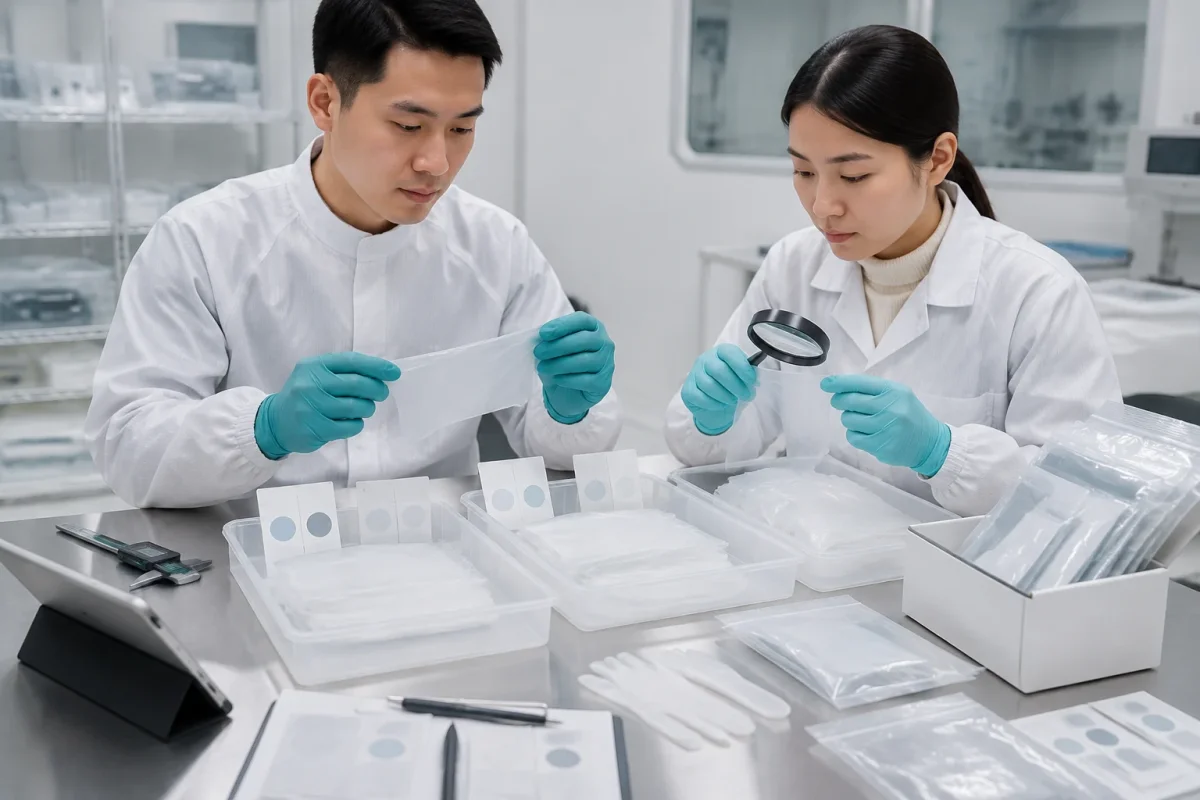
Without named contamination, mechanical and packaging checks, suppliers can submit different interpretations of the same cleanroom request.
Resolve this before approving the sample and specification for repeat orders.
A promising lab sample cannot be reproduced when formulation, thickness or processing history is incomplete.
Production converting, surface treatment, packing and transport can affect the finished article beyond the base film.
Approval checks
Keep every decision traceable to a sample code and dated acceptance record.
Contamination mechanism, contact surface, environment and failure consequence
Polymer route, formulation, thickness, surface and mechanical target
Glove dimensions, seams, cuff, converting, cleaning and packaging
Test method, results, lot traceability, change control and repeat sample
Recommended product options
These pages support exploration; none should be interpreted as automatic cleanroom qualification.

Explore flexible polyolefin film behavior and converting questions for an R&D brief.
Review this route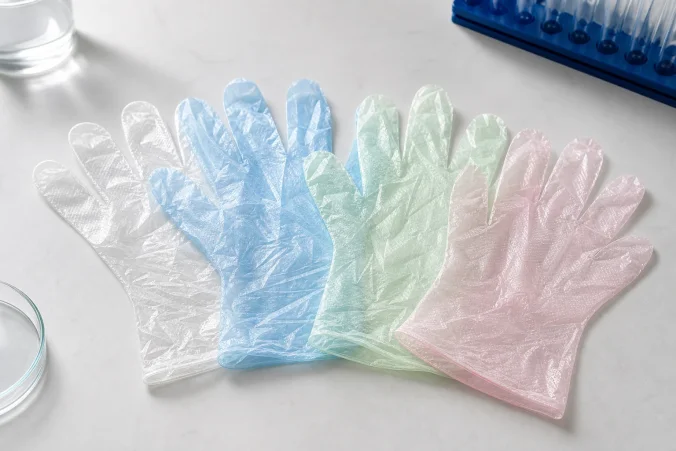
Structure candidate screening around measurable contamination and process needs.
Review this route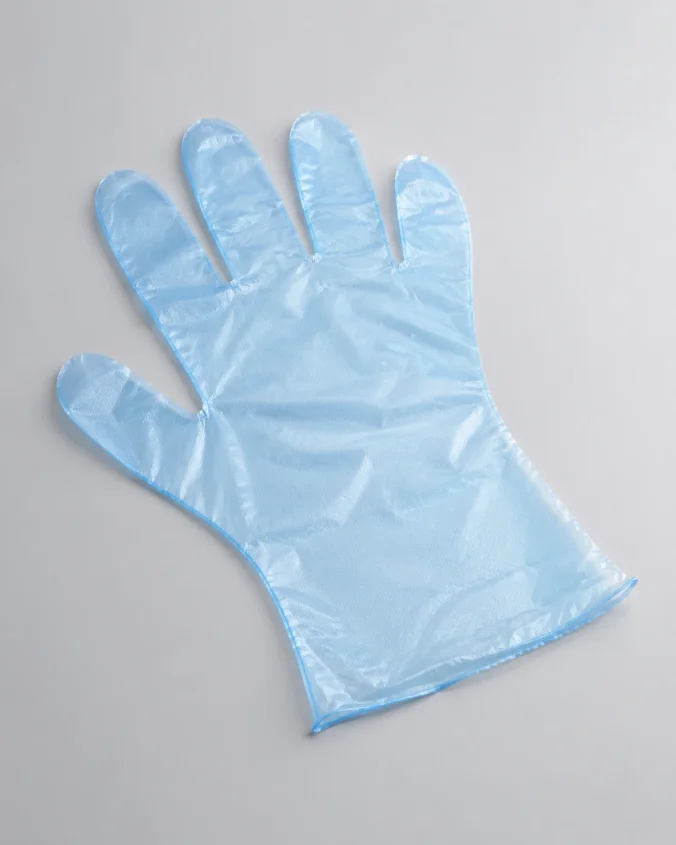
Compare non-nitrile routes against the application requirement without claiming equivalence.
Review this routeConnected sourcing paths
Material data becomes useful only when the finished construction and production change controls remain linked.
Connect R&D screening to sample genealogy, approval and controlled production.
Open related guidance 02Frame elasticity, sealability, thickness and processing tradeoffs.
Open related guidance 03Define contamination and mechanical acceptance criteria.
Open related guidance 04Separate functional targets from unsupported material equivalence.
Open related guidanceBuyer questions
Final answers depend on the exact SKU, intended use, destination, buyer standard and supplied evidence.
No. Facility classification is only one part of the evidence. The finished product, process, cleaning, packaging and application-specific contamination criteria must be reviewed.
Include a unique code, formulation or grade reference, thickness, surface, dimensions, date, processing route, packing state and any relevant lot information.
No. Each material has different structure and behavior. Compare against explicit functional and contamination requirements rather than assuming equivalence.
Define which formulation, supplier, thickness, processing, treatment, packaging or site changes require notice, review and requalification.
Start with a bounded application brief
Worldchamp can then match a product option, sample plan, packaging path and applicable evidence to the intended workflow.
We use necessary cookies to operate this site and optional cookies to improve your experience.