The product is sampled before packing decisions are made.
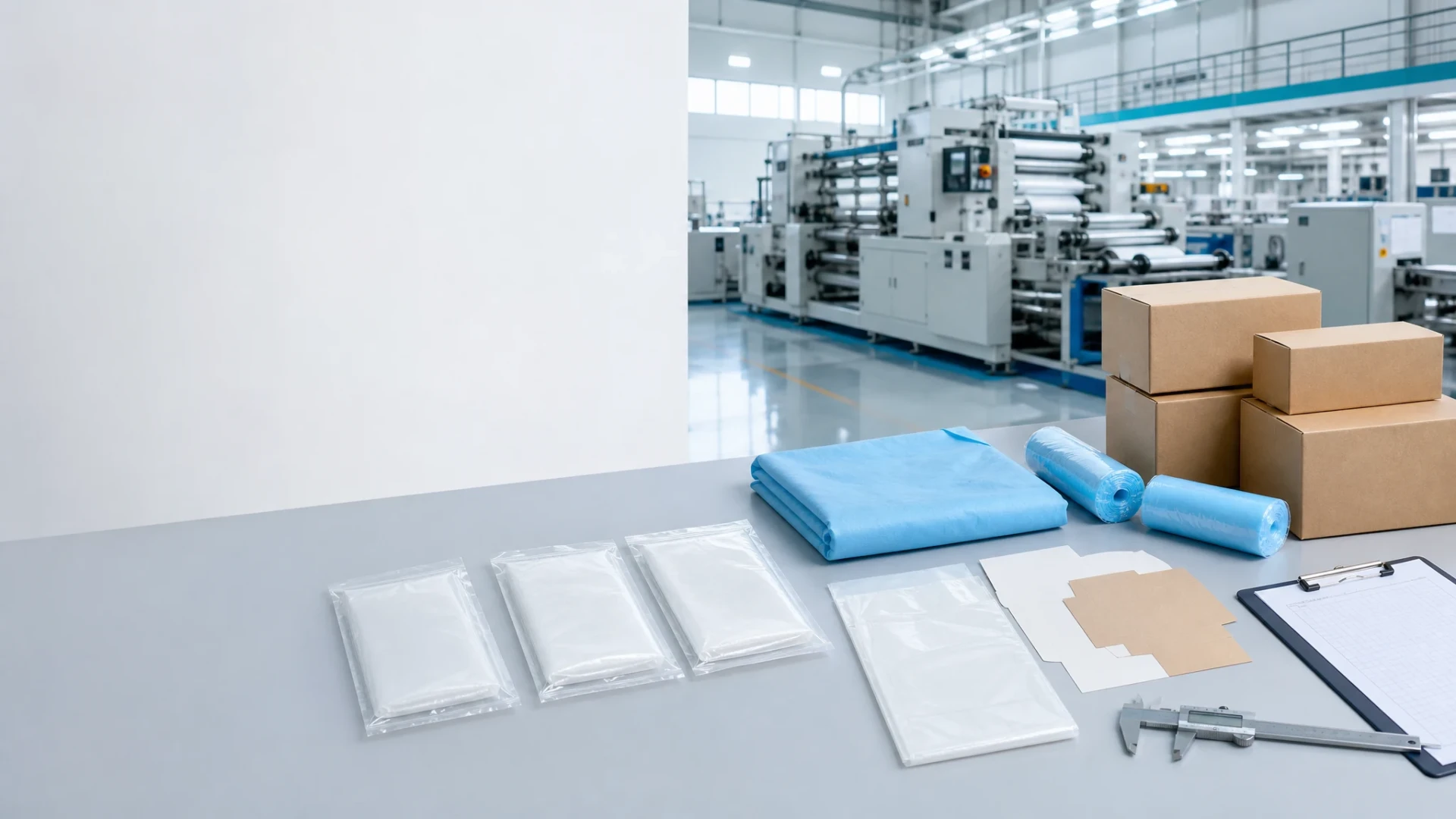
Custom disposable product programs
Move from a product brief to an approved production version
Develop gloves, protective wear or bags with your own brand and agreed packaging. Confirm the material, dimensions, samples and required documents before discussing production and repeat orders.
Minimum order, sample timing, document availability and production timing are confirmed for the exact product, packaging, destination, quantity and current feasibility. No universal threshold or lead time applies to every SKU.
Product and packaging checklist
Approve specifications and packaging for repeat orders
For gloves, protective wear and bags, agree the material, dimensions, unit pack, artwork and carton marks together. Reference the approved specification and sample when discussing repeat orders, and identify any changes for review.
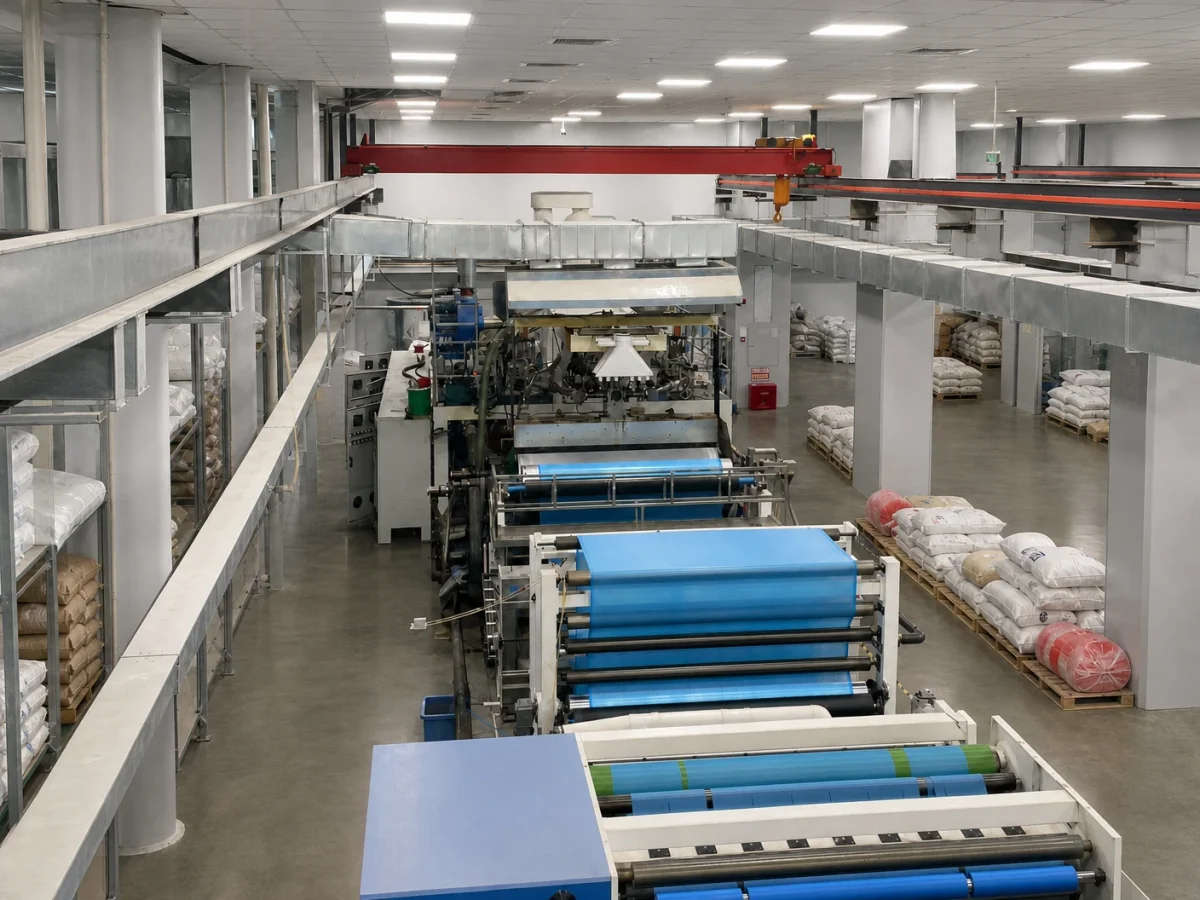
- 01
Product brief
Record the material, dimensions, construction, intended use and acceptance tests in the specification.
- 02
Brand system
Check artwork, languages, pack quantities, carton marks and own-brand packaging together.
- 03
Supporting document file
Applicable certificates, declarations and test records are matched to the exact SKU and destination.
- 04
Repeat order
Use the approved sample, specification and inspection criteria to check repeat orders.
Factory operating base
Check the factory, samples and documents together
Ask how your product will be made and inspected, which documents apply and whether the requested specification and quantity can be produced. Factory size alone does not answer these questions.
- Workflow
- Check the production steps and who is responsible for each one
- Quality checks
- Define incoming, in-process, finished-product and packaging approval points
- Evidence
- Match factory, product and destination documents to their exact scope
- Feasibility
- Confirm MOQ, timing and the specifications that can be produced
Compliance assurance
Match every claim to the correct document scope
Check factory certificates, product test reports and destination-market requirements separately.
E01
Factory-system documents
ISO 9001 and BRC certificate information is available for review; buyers should verify validity, holder and relevance to the requested program.
Review certification scope E02SKU-level product documents
Product claims—especially compostability or market-specific compliance—must remain tied to the exact formulation, product code and supporting document.
Review documents for your own-brand product E03Supplier qualification
Compare a supplier on sample traceability, document matching, inspection records and repeat-order controls, not on a logo strip alone.
Read the OEM selection guideFrom samples to production
Carry approved product and pack details into the next order
Review samples against written specifications, approve the packaging proof and record the agreed files. For repeat orders, confirm which details remain unchanged and which require a new approval.
- Step 1
Brief
Send the product use, material option, dimensions, pack concept, destination and target volume.
- Step 2
Feasibility
We review construction, artwork, required documents, the MOQ calculation and how samples can be prepared.
- Step 3
Sample
Review product samples and packaging proofs against written acceptance points.
- Step 4
Approval
Finalize product specification, artwork, carton marks, documents and quality checkpoints.
- Step 5
Production
Manufacture and inspect against the approved specification before releasing the goods for shipment.
Worldchamp product development
Start OEM discussions with a glove, garment or bag
Our disposable gloves, garments and bags offer concrete starting formats for OEM or ODM discussions. Compare an existing product, a size or pack change, and a new construction as separate project requests.
Which problem are you trying to solve?
A custom request has no agreed starting construction.
| Your need | Our products | How the format helps | Choose the specification |
|---|---|---|---|
| A branded glove range | Material, hand size and dispensing format define the glove that must fit the retail pack. | Choose the glove sample, counts and artwork layers. | |
| A disposable garment | Apron, cape, gown and sleeve outlines provide different coverage and fastening arrangements. | Choose dimensions, openings, folds and pack unit. | |
| A bag made around its contents | Shopping, liner, cup-carrier and pet-roll formats provide distinct openings and dispensing shapes. | Choose the contents, size, components and print requirement. |
Choose your product and request samples
- Send a current sample or drawing with the intended use and destination.
- Agree feasibility, product and pack samples, then quotation and approval starting points.
Product targets to discuss
Choose the product you want to customize
Choose a product type to discuss materials, dimensions and packing. Any target values on the linked pages need factory feasibility review; confirm supply details through product-specific documents and the quotation issued after review.
Disposable Gloves
Product range to discuss- Details to discuss
- Choose material, size, thickness and pack
Compostable Bags
Product range to discuss- Details to discuss
- Choose bag shape, size, handles and print
Protective Wear
Product range to discuss- Details to discuss
- Compare coverage, cuffs, closures and pack
Related guides
Guides for your next question
Choose a guide below for the details you still need to confirm.
Project inputs before approval
Bring the task, supply plan and test basis into one project brief
Before production, check that the product suits the task and working environment, review the required documents and record the approved specification.
Buyer questions
Questions to ask before ordering
Answers depend on the SKU, destination and agreed order requirements.
What is the difference between OEM and ODM for disposable products?
OEM normally starts from a buyer-defined specification or brand requirement. ODM adds more supplier-led product or packaging development. In both cases, approve product and packaging details, define the supporting-document scope and use those records to review repeat orders or changes.
What determines the minimum order for an OEM or ODM SKU?
The confirmed minimum depends on material, dimensions, construction, printing, packaging, tooling, evidence work, quantity and current production feasibility. Submit the project brief so sales and engineering can confirm the order terms for that exact SKU.
Can one project include gloves, protective wear and bags?
A coordinated sourcing program can cover multiple families, but each SKU still needs its own specification, sample, artwork and applicable evidence review.
How are sample and document timings confirmed?
Sample and document timing is confirmed after the product specification, material, artwork, packaging, destination and requested evidence are reviewed. No universal sample lead time or document-response time applies to every project.
Sample approval and dispatch checklist
Keep the sample, specification and shipping details together before arranging collection.
1. Define the product
Share the product reference, application, destination market and requested quantity. Tell us which details are not decided yet.
2. Confirm preparation
Check whether an existing sample is suitable or a new film or pack needs preparing. Availability and preparation time are confirmed for the selected items.
3. Match samples and documents
Agree the item list, sample references and quantities, and request the matching specification sheet. Identify any provisional dimensions or packing information before approval.
4. Review the parcel
Confirm the packed dimensions, actual weight, sample invoice and consignee details before booking a courier. Chargeable weight and customs requirements must be checked with the carrier; do not assume a fixed parcel weight or declared value.
5. Approve the order basis
Record the approved specification, packaging and artwork. Confirm MOQ and production lead time in the written quotation, including the event from which the lead time starts.
Review the document types and scope checks before asking for files.