Define wearer and activity
Record staff, visitor or patient use, movement, wear duration, change conditions and the areas needing coverage.
Isolation gown manufacturer for PE and CPE film
Specify the wearer, construction, private-label pack and documents for a disposable film gown. AAMI Level 3 vs Level 4 is explained in the level comparison, not decided by the film name.
The referenced PE or CPE film gown is non-sterile and light-duty unless a separately validated specification supports another classification or claim.
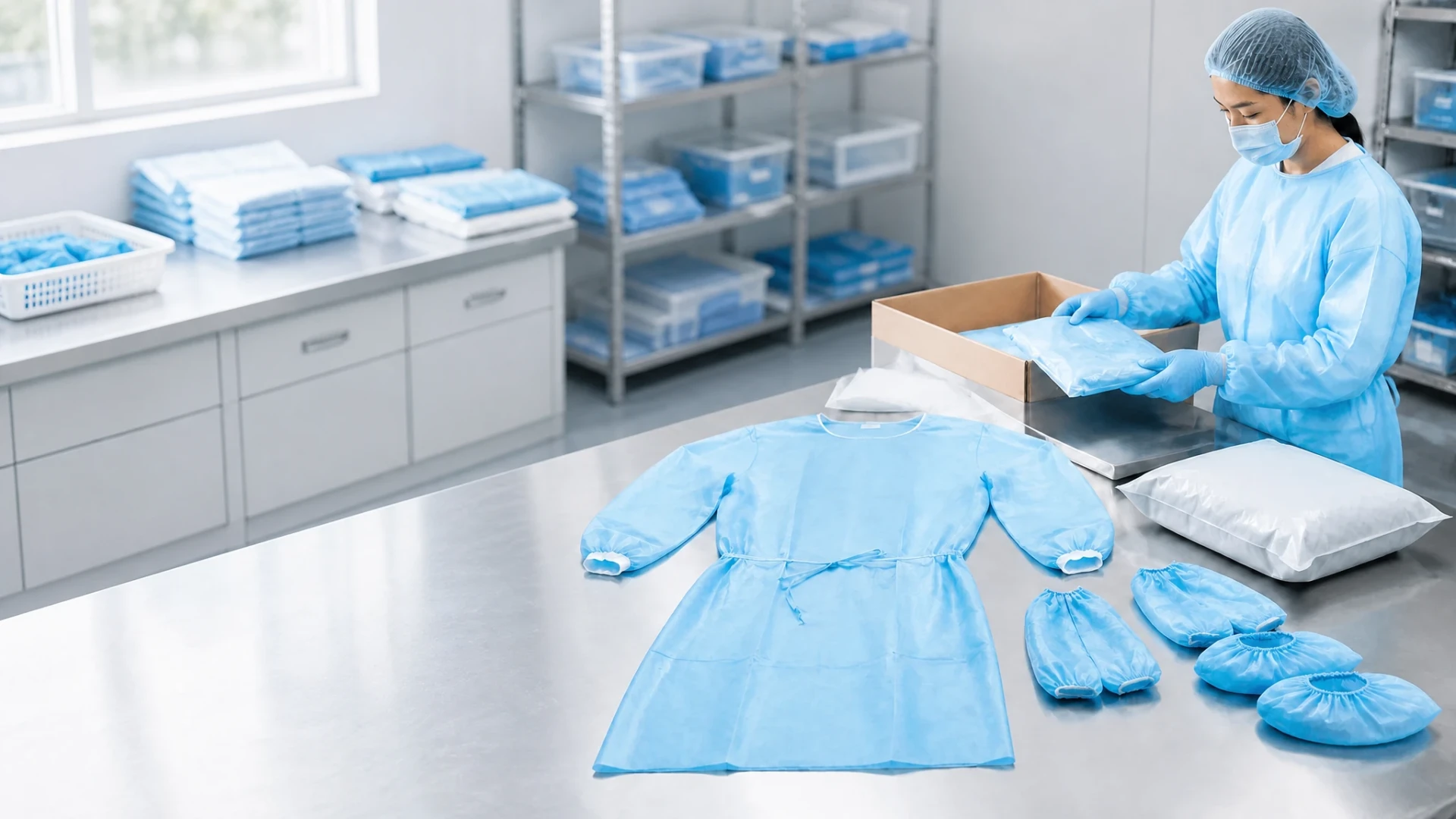
Intended-use boundary
“Isolation gown,” “protective gown” and “patient gown” can imply different constructions, evidence and institutional controls.
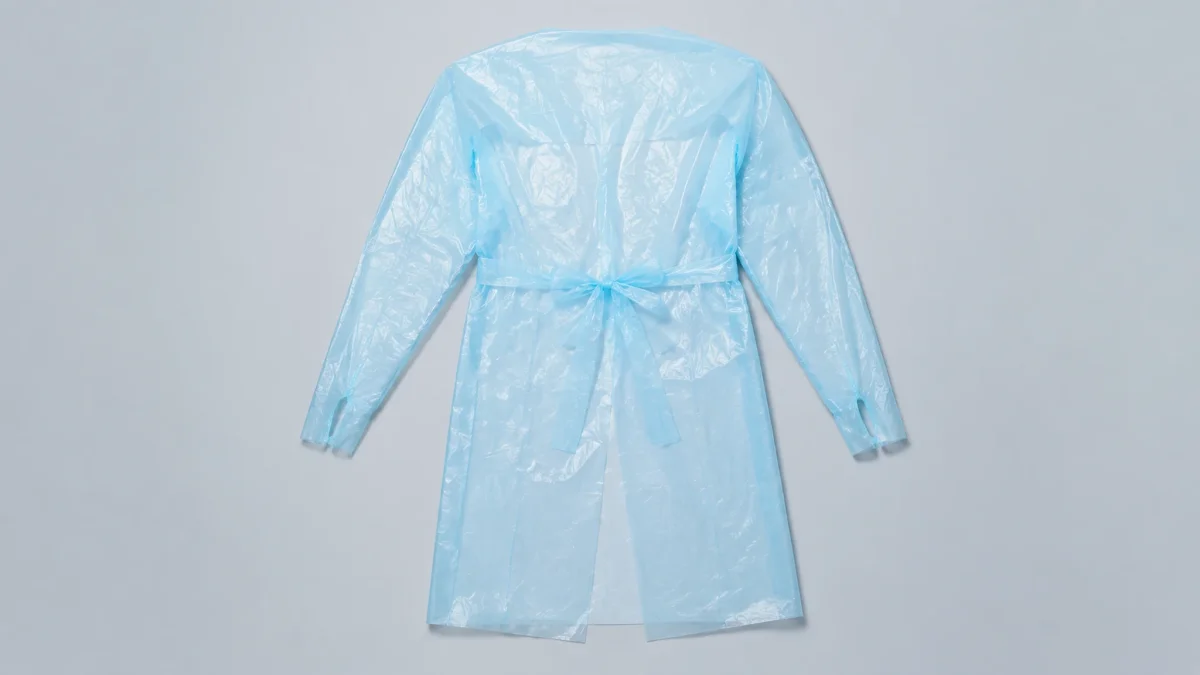
Record staff, visitor or patient use, movement, wear duration, change conditions and the areas needing coverage.
Confirm film, length, chest width, sleeve, thumb slit, open back, ties, folding and pack presentation.
Keep sterility, barrier, medical-device and destination-market wording inside the supplied test and registration scope.
Search terms such as disposable gown medical, disposable medical gowns, medical isolation gowns, protective gowns disposable, disposable medical gowns for patients, disposable medical gowns for sale, disposable medical isolation gown, disposable protective gown and gowns medical disposable describe several different procurement intents. Paper medical gowns are also a different material option from the PE or CPE film construction discussed here.
Common procurement risks
Procurement must keep construction, intended use, sterility, performance evidence and label language aligned.
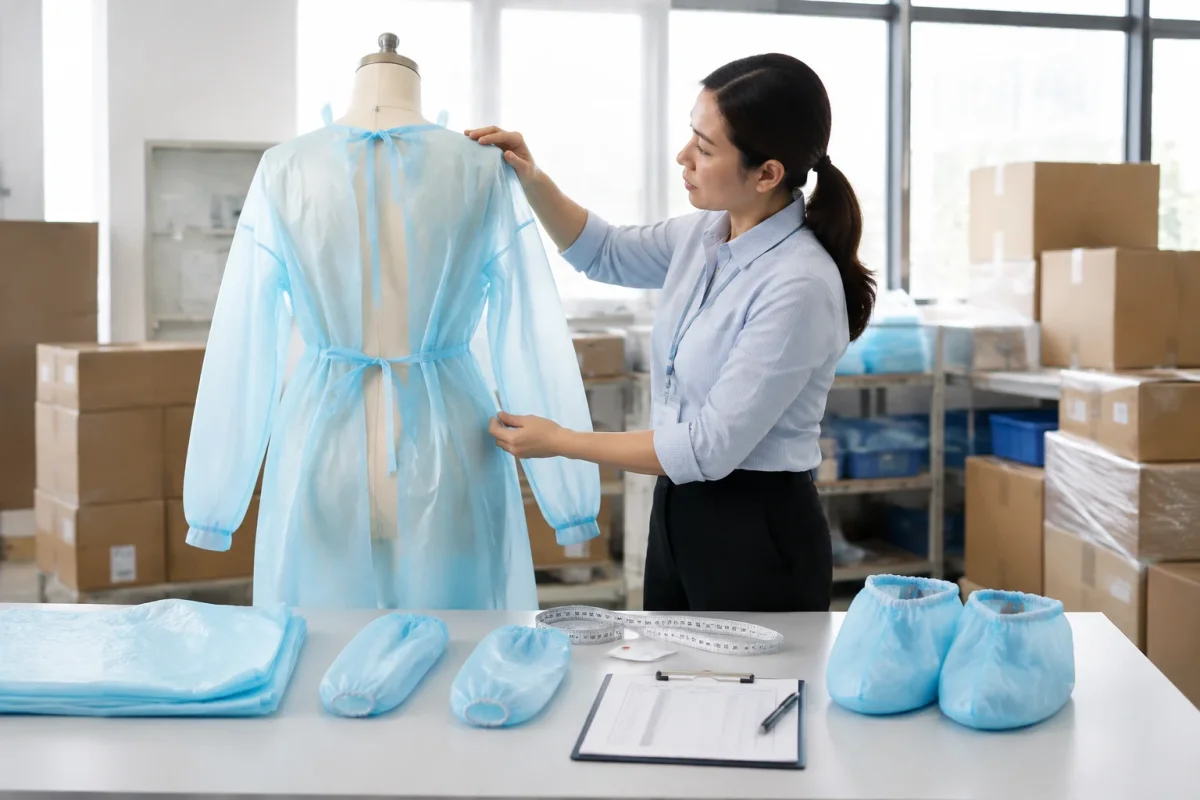
A lightweight open-back film gown should not be assumed to meet surgical, sterile or validated barrier requirements without a separate approved specification.
Resolve this before approving the sample and specification for repeat orders.
Sleeve length, thumb slit, chest width, ties and movement can change practical coverage.
Boot and sleeve covers need their own floor, fit, elastic, sterility and performance boundaries.
Approval checks
Use the physical sample and applicable documents together; neither replaces the other.
Wearer, procedure, environment, duration and contamination route
Material, dimensions, closures, cuffs or thumb slits and movement
Non-sterile or sterile status, barrier wording and destination classification
Folding, unit pack, lot marks, carton and applicable documents
Classification and specification
"Isolation gown specification" and "isolation gown classification" are asked for as one document. They are two: the framework a gown is tested against, and the physical fields you must fix before anyone can quote accurately.
The US framework grades liquid barrier performance from Level 1 to Level 4, running from minimal fluid contact to a viral-barrier requirement. A level only holds when a product-specific test report supports it — a film name such as PE or CPE does not establish a level on its own.
The European standard for surgical gowns and drapes uses different test parameters. A gown tested to an AAMI level does not automatically carry an EN 13795 mark, so confirm which standard the destination market actually requires.
A civil or general-purpose isolation gown covers food handling, cleaning, visitor and light protective tasks. Healthcare use adds intended-use wording, registration and labeling obligations. The same film construction can serve both, but the permitted claim and the evidence package differ.
PE or CPE, nominal thickness or weight, colour and surface finish
Body length, chest width, sleeve length and thumb-slit position
Open or full back, neck and waist ties, cuff type, seam and folding
Non-sterile or sterile, single-use statement and unit pack format
Framework claimed, test report, and registration where medical use applies
Size range, units per pack, carton, lot traceability and destination market
Customs classification follows the material rather than the product name: a plastic-film gown and a woven textile gown do not share a heading, so confirm the code from the supplier material declaration together with your customs broker. For the level-by-level comparison behind these claims, see the isolation gown levels guide. Once the level is fixed, the disposable gown wholesale range sets out the sizes, cuffs and private-label options available for institutional orders.
Worldchamp holds a Class I Medical Device Record and Production Certificate from China's NMPA covering non-sterile disposable protective wear, alongside ISO 9001 certificate 77067/A/0001/UK/En and BRCGS Consumer Products certificate CN-BRCCP-251634, whose scope covers PE gloves, aprons, sleeves and bags. Request the current originals and confirm the registration scope against your intended market. A documented reference is available in the Japanese medical buyer PE apron supply case, and current files are listed on the certifications page.
Recommended product options
Each product covers a different body zone and needs its own sample, permitted environmental wording and packing decision.
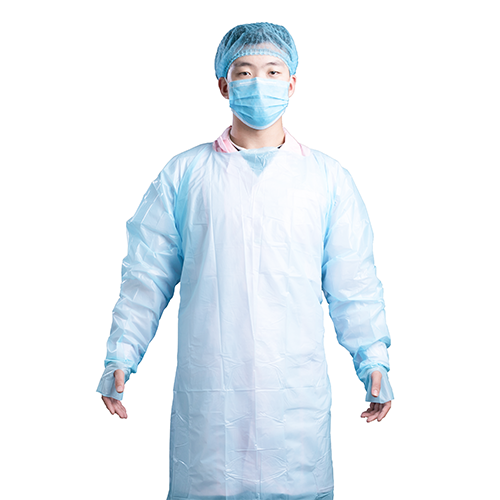
Open-back long-sleeve film gown route with waist ties and thumb-slit hand extensions.
Review this route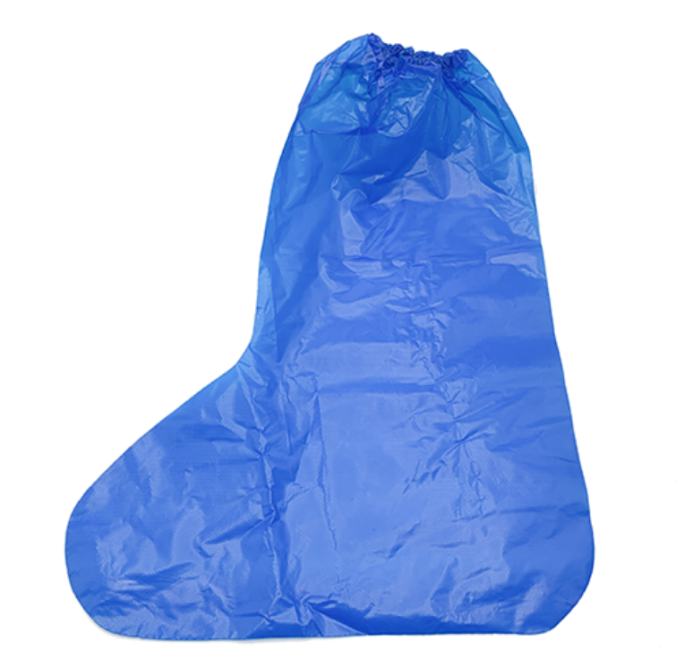
Extended footwear and lower-leg overcover requiring real floor and fit testing.
Review this route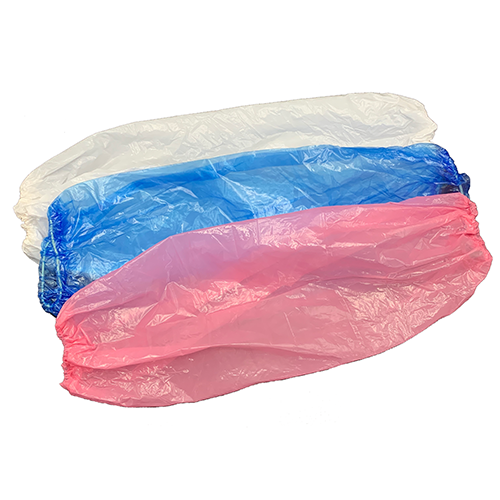
Targeted forearm coverage with elastic openings and configurable length.
Review this routeConnected sourcing paths
Institutional approval should define use, issue, change, labeling and the applicable evidence file.
Compare gowns, aprons, capes, sleeves and footwear-cover routes.
Open related guidance 02Connect intended use and documentation to institutional controls.
Open related guidance 03Send the intended use, construction, sterility status and evidence list.
Open related guidanceBuyer questions
Final answers depend on the exact SKU, intended use, destination, buyer standard and supplied evidence.
No. The current reference is non-sterile unless a separately validated specification, packaging and sterilization route are approved.
Not by default. Surgical use requires a separately defined construction, barrier level, sterility process, testing, labeling and destination evidence.
Review length, chest width, sleeve reach, thumb-slit position, open-back overlap, ties, bending and arm movement on intended wearers.
No. The standard flexible PE bottom should be tested on the intended floor, and no slip-resistance claim should be made without applicable evidence.
Classification is the framework a gown is tested against, such as AAMI PB70 levels or EN 13795. The specification is the physical and commercial description you write: material, dimensions, construction, sterility status, packing and evidence. You need both before quoting.
It depends on the destination market. North American buyers typically reference AAMI PB70, while European buyers reference EN 13795. A gown tested against one does not automatically carry the other, so confirm the buyer's requirement and request product-specific evidence.
Not automatically. A civil or general-purpose gown is intended for food handling, cleaning and light protective use. Healthcare supply adds intended-use, registration and labeling obligations, so treat it as a separate approval question.
Start with a bounded application brief
Worldchamp can then match a product option, sample plan, packaging path and applicable evidence to the intended workflow.
We use necessary cookies to operate this site and optional cookies to improve your experience.