Clean Room Gloves and Gowns: The Short Answer
Clean room disposable gloves and gowns protect sensitive environments from contamination. The right choice depends on your ISO class, the materials you handle, and how long workers need to wear the gear.
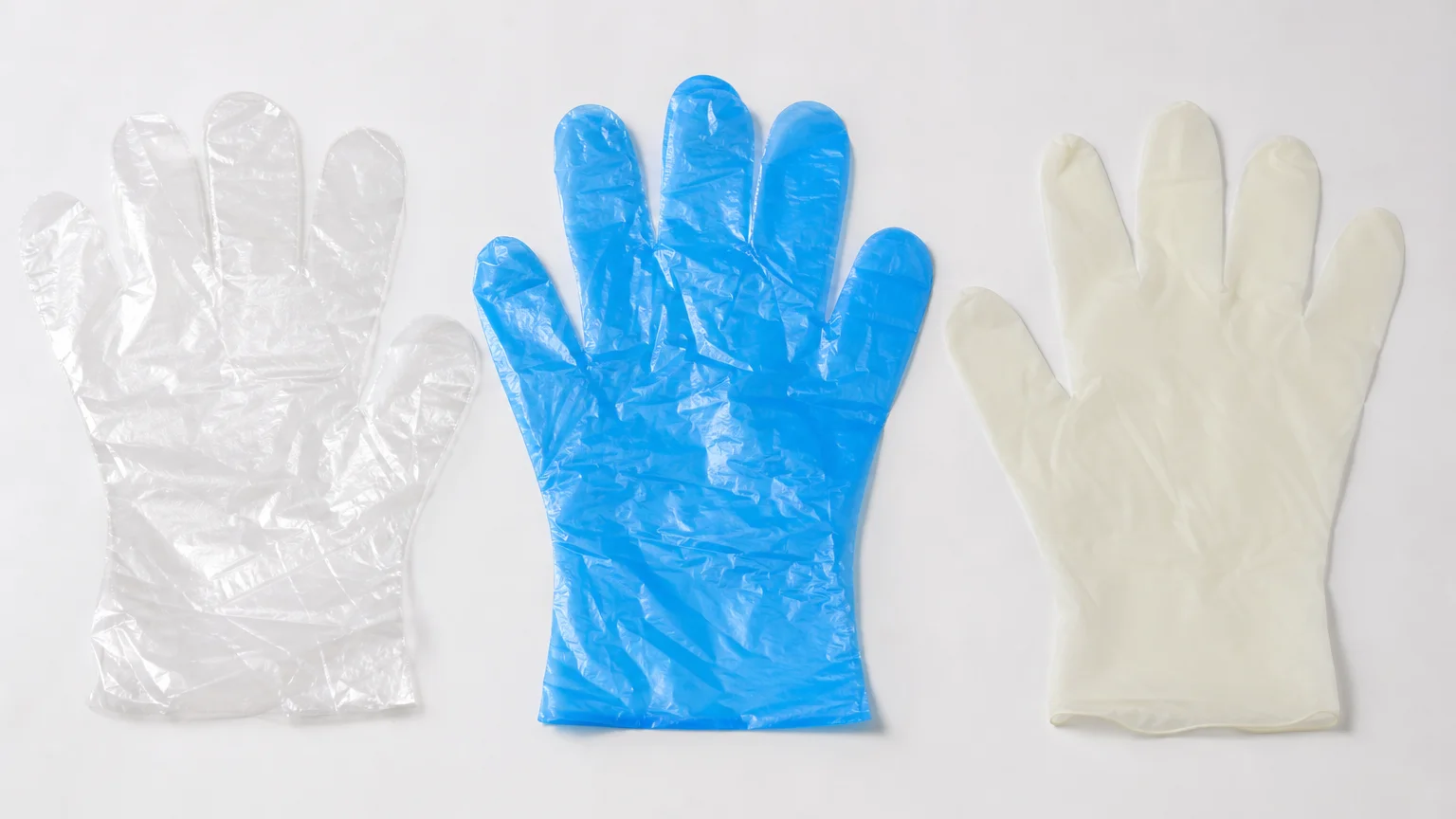
Most buyers sourcing clean room consumables get stuck on one question: PE gloves or something more durable? PE gowns or CPE gowns? This guide breaks it down by environment type, material fit, and supplier qualification — so you can place an order with confidence.
What "Clean Room" Actually Means for Disposables
A clean room is a controlled environment where airborne particles and contamination are kept within defined limits. The international standard is ISO 14644, which classifies rooms from ISO Class 1 (nearly particle-free) to ISO Class 9 (roughly ambient air).
Most light industrial and food-processing operations fall into ISO Class 7 or ISO Class 8 — sometimes called 10,000-class or 100,000-class environments. Semiconductor fabs and pharma sterile-fill lines use tighter classes. The disposable garments you need depend on where on this scale your facility sits.
Why Disposables Over Reusable Garments?
Reusable clean room garments require validated laundering cycles. For many distributors and contract operations, that adds cost and compliance overhead. Disposable gloves and gowns eliminate that. They are worn once, discarded, and reduce cross-batch contamination risk.
The tradeoff is volume. Disposables generate more waste. Many buyers balance this by using disposable PE or CPE gowns for outer-layer protection and reserving reusables for inner layers in tighter ISO classes.
Key Factors to Compare When Sourcing Clean Room Gloves
Not all disposable gloves are clean room appropriate. Here are the factors that matter most when you are evaluating options for an ISO-classified environment.
1. Particle Generation Rate
Every glove sheds particles when flexed. Thinner gloves — like standard PE protective wear — shed fewer particles per flex than thicker CPE or TPE. For ISO Class 7 and 8 environments, standard PE gloves often pass cleanroom-compatible requirements. For Class 5 or 6, you need tested low-linting grades.
Ask your supplier for a particle generation test report if your environment has strict contamination limits. Worldchamp provides batch-level traceability on all protective wear orders.
2. Chemical Resistance
PE gloves handle dry tasks and light liquids. CPE gloves offer better resistance to oils, light solvents, and cleaning agents. TPE gloves add elasticity and a more comfortable fit for longer wear sessions.
If workers handle isopropyl alcohol wipes, acetone-based cleaning agents, or similar fluids, CPE or TPE is the safer choice. If the task is dry handling or inspection, PE is often sufficient — and more cost-effective.
3. Fit and Dexterity
Loose gloves increase the risk of snags and dropped components. For precision work — PCB inspection, pharmaceutical vial handling, optical assembly — TPE gloves offer the snuggest fit among PE-family materials. CPE is close behind. Standard PE is the loosest, which is fine for bulk packaging or light handling.
4. Glove Certification and Compliance
For food-adjacent clean rooms, look for a facility that holds quality management system certifications. Worldchamp's manufacturing facility holds BRCGS Consumer Products Certificate No. CN-BRCCP-251634 and ISO 9001 Certificate No. 77067/A/0001/UK/En — covering PE glove, apron, sleeve, and bag manufacturing.
For US market buyers, FDA 21 CFR references the regulatory framework for food contact materials. Worldchamp can provide facility compliance documentation on request. Confirm your target market's regulatory requirements before placing a bulk order.
Product and Material Recommendations by Environment
Use this table to match your environment type to the right glove and gown material. The goal is the lightest acceptable protection — over-specifying increases cost without reducing contamination risk.
| Environment / Task | Recommended Glove | Recommended Gown | Why It Fits |
|---|---|---|---|
| Food-adjacent clean room (ISO 7–8) | PE gloves (HDPE/LDPE) | PE gown | Economical, minimal particle shed, facility-level BRCGS compliance |
| Light electronics assembly (ISO 6–7) | CPE gloves | CPE gown | Better fit, low static risk vs. standard PE, handles IPA wipes |
| Pharmaceutical packing auxiliary (ISO 7–8) | TPE gloves | PE gown or CPE gown | Snug fit for precision handling; gown material depends on chemical exposure |
| Medical isolation / lab auxiliary (ISO 7–8) | PE or CPE gloves | CPE gown (elastic cuffs) | CPE gown elastic cuffs reduce gap between glove and sleeve |
| General inspection / packaging line | PE gloves (standard) | PE apron or PE gown | Lowest cost, high volume, adequate for non-critical controlled zones |
Glove Materials at a Glance
PE (polyethylene) gloves are the most widely used disposable glove in controlled environments. They are thin, economical, and shed fewer particles per flex than thicker alternatives. They come in HDPE (stiffer) and LDPE (softer) versions. Both are available from Worldchamp's protective wear line.
CPE (cast polyethylene) gloves offer better chemical resistance and a closer fit. They are a step up from PE when workers handle solvents, oils, or cleaning agents regularly. CPE is also the base material for Worldchamp's CPE gowns, which feature elastic cuffs for tighter wrist sealing.
TPE (thermoplastic elastomer) gloves are the most form-fitting option in the PE material family. They stretch more, recover their shape, and feel closer to a fitted glove. They are a good choice for longer wear sessions in ISO 7–8 environments where dexterity matters.
Gown Selection: PE vs. CPE
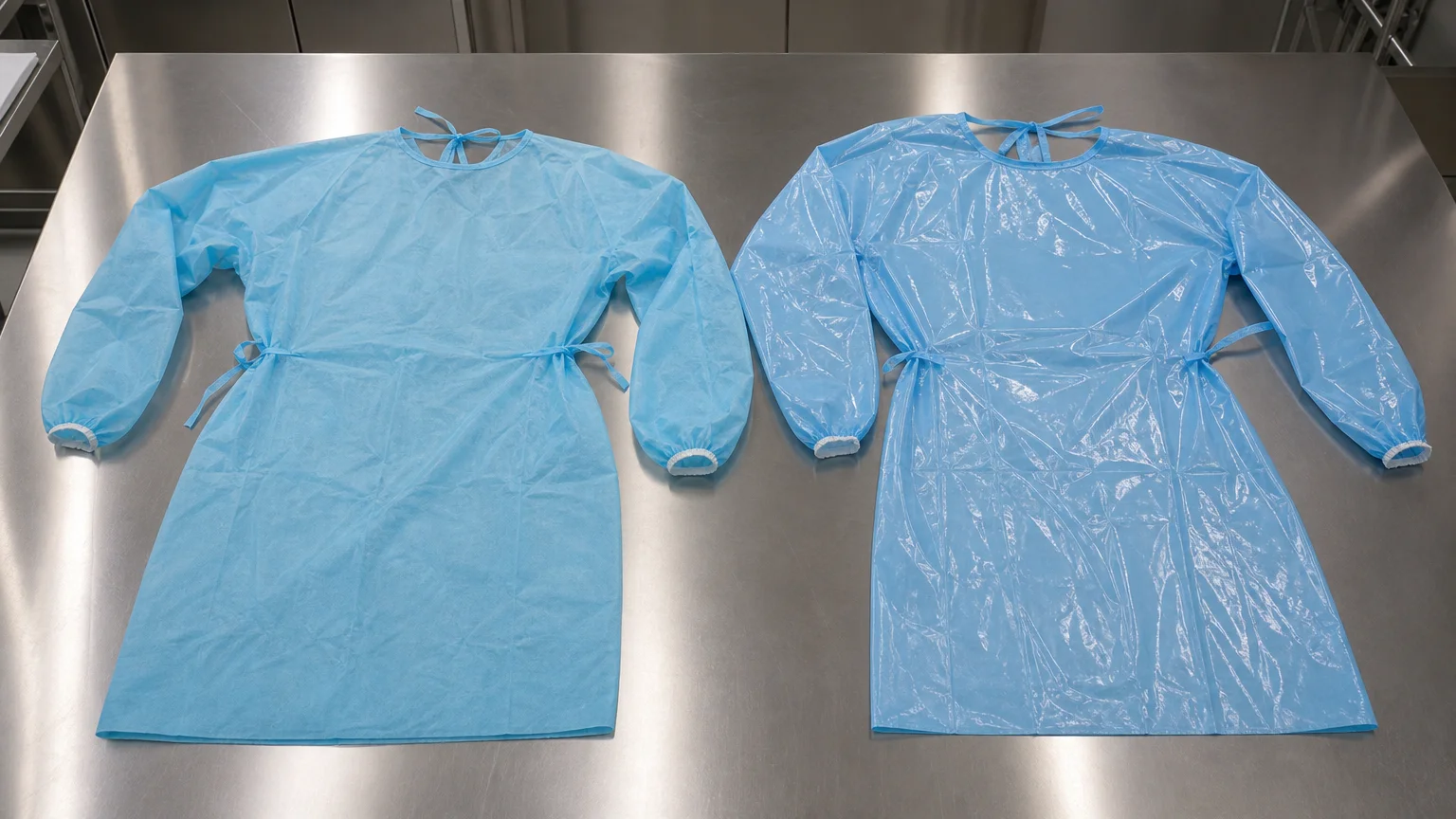
PE gowns cover the full body and are the standard outer garment in food-adjacent clean rooms and light industrial controlled zones. They are economical and available in large volumes. Browse Worldchamp's gowns and isolation wear for sizes and specifications.
CPE gowns use a thicker, more durable film with elastic cuffs. They suit environments where workers move more frequently or where the sleeve-to-glove seal matters. CPE gowns cost more per unit but reduce replacement frequency in high-movement tasks.
For wrist and sleeve coverage without a full gown, PE sleeve covers are a cost-effective option. They are especially common in covers and sleeves procurement for light assembly lines where full gown overhead is not justified.

Worldchamp Manufacturing Context
Monthly output is 350 metric tons (daily: 20 tons). Production runs on automated film blowing and forming lines. Every batch is retained for traceability. The defect rate is under 0.1% (published reference; scope to be confirmed).
Certifications That Apply to Protective Wear
The following certificates cover PE gloves, PE gowns, PE aprons, PE sleeve covers, and related protective wear manufactured at Worldchamp's Huizhou facility:
- BRCGS Consumer Products Certificate No. CN-BRCCP-251634 — covers manufacturing of PE glove, apron, sleeve, and bag through mixing, film blowing, cutting, forming, and bagging processes (audited by ESTS under JAS-ANZ)
- ISO 9001 Certificate No. 77067/A/0001/UK/En — quality management system across the full facility
- Class I Medical Device Record and Production Certificate — covering single-use medical consumable production (China NMPA)
For food-adjacent clean rooms: FDA 21 CFR is the US regulatory framework for food contact materials. Worldchamp can supply facility-level compliance documentation. Contact us with your target market and specific regulatory requirements to receive the right paperwork for your import process.
Ordering Parameters
Put the cleanroom requirement into the quotation instead of ordering by material name alone. State the ISO class, task, glove and gown size, cuff or closure, packaging format, lot traceability, sample quantity, and any particle or food-contact test report required for the target market.
Next Steps for Procurement
Sourcing clean room gloves and gowns is straightforward when you know what questions to ask. Here is a four-step process that works for most B2B buyers. If your specification already fixes the gown barrier level, the disposable gown wholesale terms page covers cartons, cuff types and private-label artwork; otherwise start from the AAMI PB70 gown levels comparison to set the level before you source.
- Confirm your ISO class and task profile — Know whether workers need chemical resistance, extended wear, or precision dexterity. This determines your material tier (PE / CPE / TPE).
- Request samples and a compliance document package — Ask for the BRCGS Consumer Products certificate and ISO 9001 certificate as baseline. Add any market-specific compliance documents for your target country (FDA 21 CFR for the US, REACH for the EU).
- Specify your packaging requirement — Clean room gloves are often individually folded or flat-packed in sterile inner bags. Confirm whether standard packaging meets your environment protocol or if custom packaging is needed.
- Place a sample order before committing to bulk — Worldchamp offers samples within approximately 7 days. Test fit, packaging integrity, and particle behavior in your environment before placing the full order.
Frequently Asked Questions
What is the difference between PE gloves and CPE gloves for clean rooms?
PE gloves are thinner, lighter, and shed fewer particles per flex — making them the default choice for ISO 7–8 environments and food-adjacent controlled zones. CPE gloves are thicker with better chemical resistance and a closer fit. Use CPE when workers handle solvents, oils, or cleaning agents, or when a tighter glove-to-sleeve seal matters.
Do Worldchamp's clean room gloves comply with FDA 21 CFR?
FDA 21 CFR is the US regulatory framework for food contact materials, not a product certification. Worldchamp's facility holds BRCGS Consumer Products Certificate No. CN-BRCCP-251634 and ISO 9001 Certificate No. 77067/A/0001/UK/En. For US market buyers who need specific FDA 21 CFR compliance documentation, contact us with your target application and we will provide the relevant paperwork for your procurement review.
What is the minimum order for clean room disposable gloves?
The published starting threshold is USD 3,000 per SKU. The actual MOQ can change with material, dimensions, packaging, printed artwork, order mix, and current factory capacity, so obtain written sales confirmation before ordering.
Can Worldchamp supply OEM-labeled clean room gowns?
Yes. Worldchamp supports OEM and ODM packaging for gowns, aprons, sleeve covers, and gloves. Custom box print, branded inner bag, and private label are all available. Minimum order values and lead times for OEM runs are the same as standard orders — confirm your packaging spec when requesting samples.
What ISO class is Worldchamp's clean workshop?
Worldchamp's Huizhou facility includes a Class 100,000 clean workshop, which corresponds approximately to ISO Class 8 under the ISO 14644 standard. This is the controlled environment in which Worldchamp's disposable gloves, gowns, and protective wear are manufactured and packaged.
Put this guide into a procurement workflow
Use the decision criteria above to narrow the product scope, then Disposable Apron And Cape Manufacturer. Compare the exact construction and pack instead of approving a material name alone.
When the product direction is clear, discuss the specification with Worldchamp. Share the task, destination, quantity, packaging and evidence requirements so the next review is specific.
Turn the comparison into a sample and document brief
Share the application, market, quantity, pack format and scope of supporting documents. Worldchamp can then respond against a defined product rather than a generic material request.