List every product used
Record the cleaner, dilution, contact time and whether hands may be immersed, splashed or only touch a damp cloth.
Disposable glove planning for facility teams
Match glove material and change frequency to a defined cleaning step, then separate ordinary splash or soil control from chemical-resistance claims.
Disposable film gloves are not universal chemical gloves. Buyers must check the chemical, concentration, contact time and required protection against test evidence.

Task-first selection
Short dusting, light wipe-down and chemical handling should not be treated as one glove requirement.
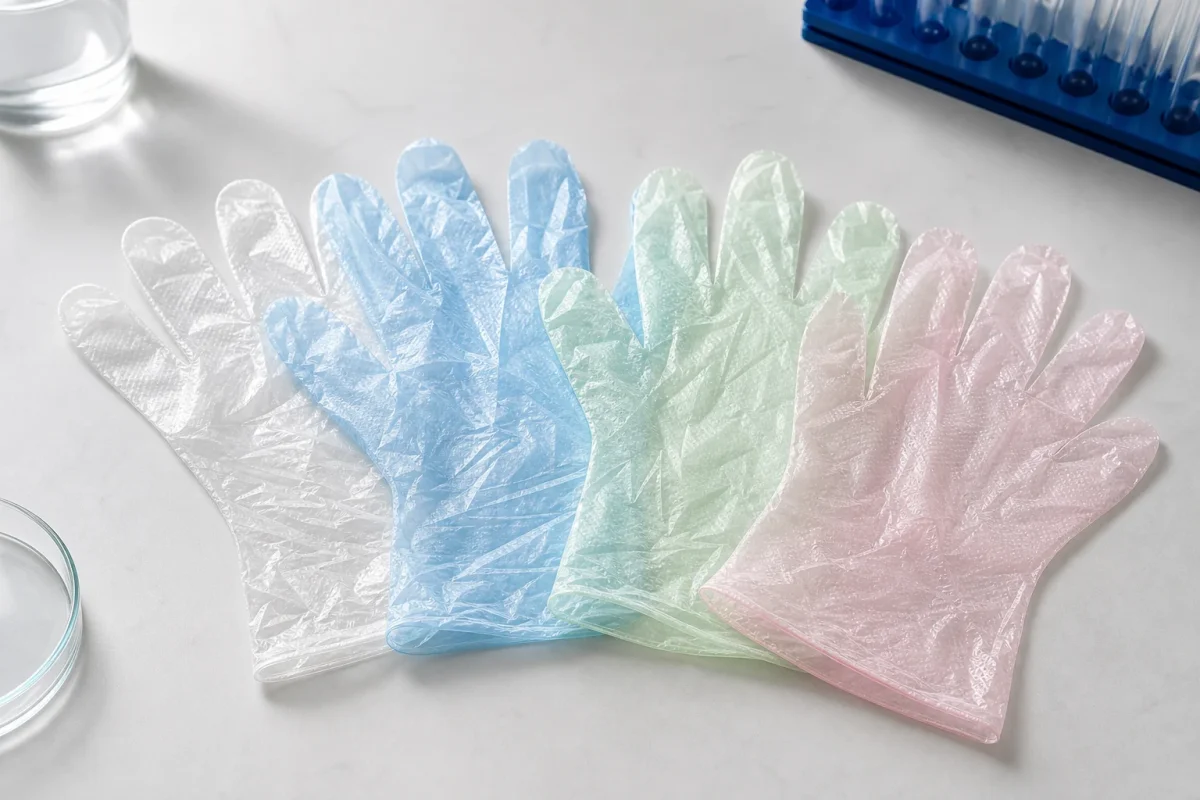
Record the cleaner, dilution, contact time and whether hands may be immersed, splashed or only touch a damp cloth.
Use disposable film routes only where their intended boundary and available evidence match the task.
Define when gloves are removed between rooms, surfaces, chemicals or contamination zones.
Requests for eco friendly cleaning gloves, biodegradable cleaning gloves or eco friendly gloves for cleaning should begin with the task and scope of supporting documents. An alternative material claim does not establish chemical resistance, durability or disposal outcome for a specific facility.
Common procurement risks
Facility teams need clear task boundaries, change procedures and an escalation route for exposures that require a tested chemical-protection glove.

Film material names alone do not prove resistance to a cleaner, disinfectant or solvent at the concentration and duration used.
Resolve this before approving the sample and specification for repeat orders.
Workers may carry soil or chemistry between rooms when change points and issue locations are unclear.
Environmental positioning can distract from fit, opening, tearing and exposure performance.
Approval checks
The accepted glove should be linked to a short list of permitted tasks and explicit exclusions.
Product name, concentration, dilution, contact type and duration
Permitted wipe or soil-control steps and excluded exposures
Donning, grip, tearing, hand feel and planned change points
Pack count, storage, color identification and replenishment
Recommended product options
These options require task validation and should not be presented as universal chemical-protection gloves.

Structured embossed film for selected short wipe-down or soil-control tasks.
Review this route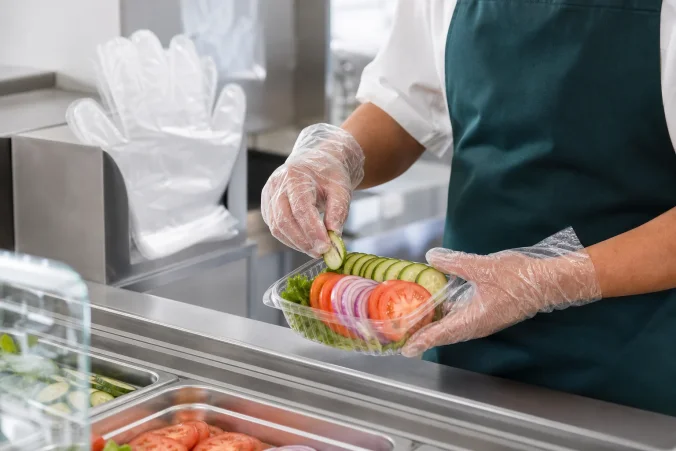
Lightweight frequent-change route for simple dry or low-exposure handling.
Review this route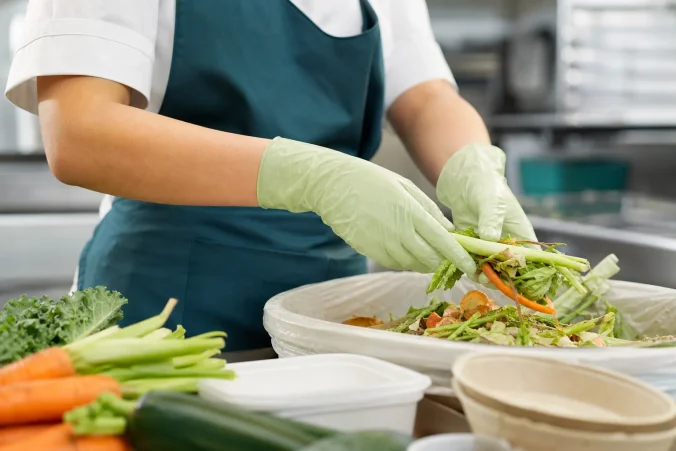
Claim-sensitive route requiring both application testing and exact evidence review.
Review this routeConnected sourcing paths
Use related operating guidance to define zones, issue points and escalation beyond disposable film gloves.
Review material, cuff and dispensing differences before setting the trial.
Open related guidance 02Connect replenishment and change routines to customer-facing facilities.
Open related guidance 03Coordinate cleaning tasks with food-area issue and cross-contact controls.
Open related guidance 04List the chemicals, tasks, destination and sample acceptance points.
Open related guidanceBuyer questions
Final answers depend on the exact SKU, intended use, destination, buyer standard and supplied evidence.
Only when the exact chemical, concentration, contact type and duration fit the product evidence and the buyer-approved task boundary. Material name alone is insufficient.
No. Material claims, production, use, contamination and local end-of-life routes all affect the outcome. Review the exact SKU evidence and disposal context.
Set changes between rooms, contamination zones, chemical products, restroom work, food-contact areas and whenever the glove is damaged or heavily soiled.
Record donning, grip on wet tools, tearing, cuff behavior, task duration, change rate, skin comfort feedback and pack dispensing.
Start with a bounded application brief
Worldchamp can then match a product option, sample plan, packaging path and applicable evidence to the intended workflow.
We use necessary cookies to operate this site and optional cookies to improve your experience.