Define contact and movement
Record food type, temperature, moisture, oil, utensils, grip and duration for each task.
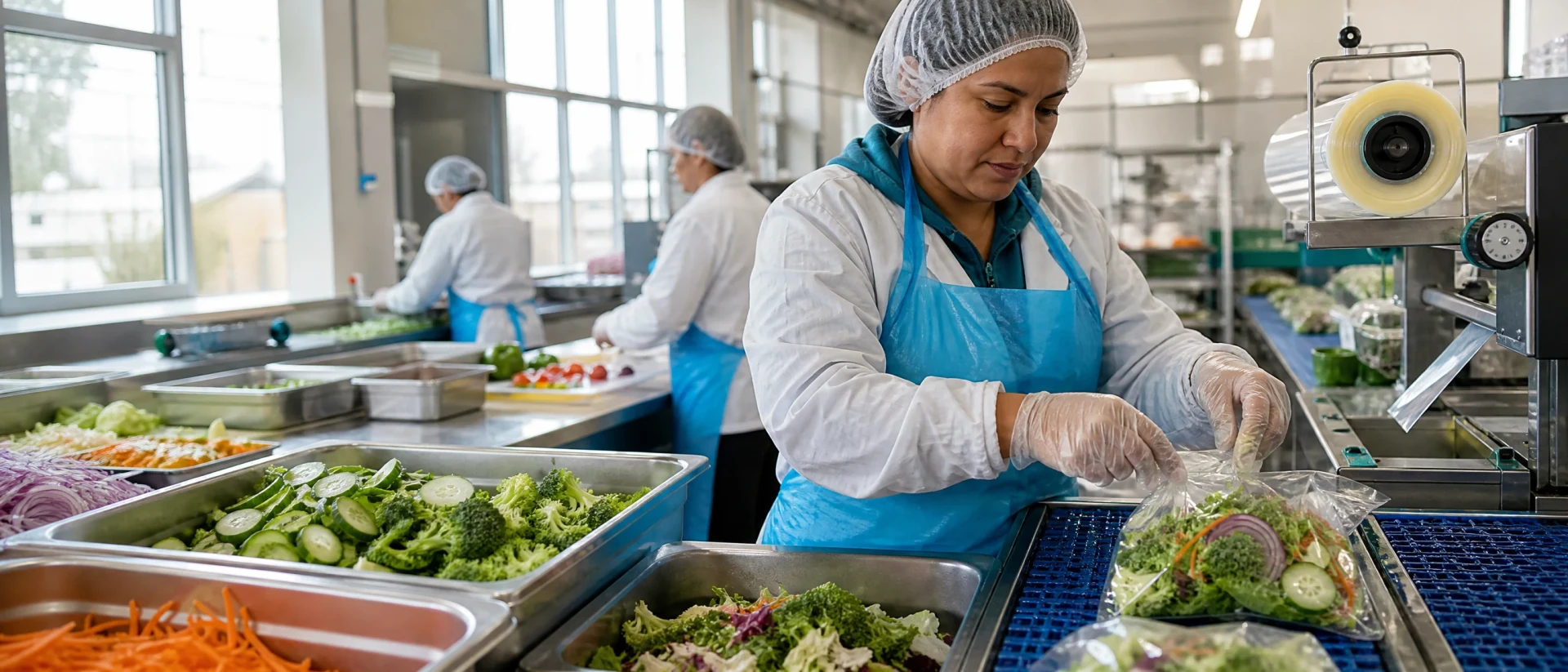
Gloves for each food-processing area
Choose gloves using the food-contact conditions, work area, task duration, replacement procedure and dispenser—not just the material name.
Food-contact suitability and migration evidence depend on the exact glove formulation, ordered SKU and destination. Request the applicable documents before approval.
Map the production zones
For raw, ready-to-eat and packing areas, compare glove samples using the same food, temperature, contact time and movement in each zone. Where forearms or clothing sleeves also need routine splash and soil coverage, add a disposable PE sleeve cover to the workstation trial and confirm sleeve length, elastic openings, pack format, samples and product-specific documents separately. Do not carry a food-contact approval into sanitation chemical work: use separately assessed protection for that exposure.
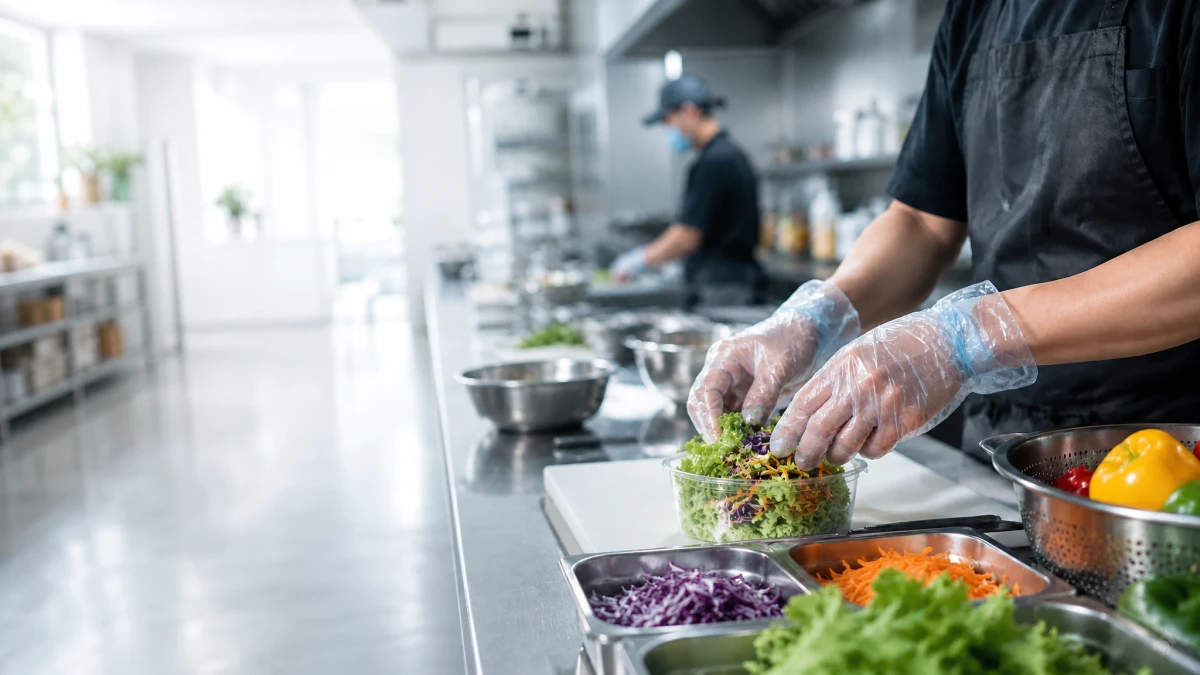
Record food type, temperature, moisture, oil, utensils, grip and duration for each task.
Approve dispenser position, single withdrawal, glove color, change points and replenishment by zone.
Review food-contact documents, labeling and destination requirements for the exact product being ordered.
Guidance for food-line decisions
Check glove fit and dispensing during food handling. Review cleaning tasks separately for chemical exposure, and coordinate glove changes with packing operations.
Compare glove samples under the same task and dispensing conditions.
Read the guide 02Separate light hygiene work from chemical exposures needing different protection.
Read the guide 03Coordinate glove changes with bagging and food-service packaging workflows.
Read the guideWorldchamp food-plant supplies
Our HDPE and booklet-style polyethylene gloves offer short-glove and dispensing choices, while PE disposable aprons and sleeves add separate clothing coverage. Combine formats by food-processing station rather than ordering one glove for every job.
One pack format is used at stations with different change rates.
The apron or sleeve leaves the wrong area uncovered.
| Your need | Our products | How the format helps | Choose the specification |
|---|---|---|---|
| Frequent hand changes | Loose-film and booklet formats offer different ways to present gloves at a preparation station. | Compare size, opening and refills using the actual food task. | |
| Front and forearm coverage | The apron covers the front while separate elastic-ended sleeves extend clothing coverage along the arms. | Choose apron width/length and sleeve overlap together. | |
| Chemical sanitation | Separately selected chemical-protective products | Food-handling gloves do not acquire chemical protection when moved to the sanitation area. | Use the SDS and exposure-specific test data with a specialist supplier. |
Choose your product and request samples
Product targets to discuss
Target reference — supply not yet confirmed
Discuss product targetsTarget reference — supply not yet confirmed
Discuss product targetsTarget reference — supply not yet confirmed
Discuss product targetsTarget reference — supply not yet confirmed
Discuss product targetsFrequently asked questions
Compare samples by work area, match the food-contact report and agree how glove colors will be used.
There is no universal best material. Hold the task constant, compare opening, wear, tearing, grip and change speed, then confirm the exact SKU evidence.
No. Review the product identity, formulation, destination and scope stated in the document.
Color can support zone control, but it should not replace written SKU, issue and change procedures.
Start with your requirements
Send each work area’s food and contact conditions, size, cuff, color, packing, monthly use and destination. We can check candidate samples, dispenser packs and the available food-contact records, and quote the confirmed range by workstation.
We use necessary cookies to operate this site and optional cookies to improve your experience.