Map the order combinations
Record cup count, diameter, height, lid profile, food-container dimensions, weight and temperature.
Carrier-bag planning for food-service handoff
Fit the carrier to the actual cups, containers, lids, temperatures and journey before approving film, handles, closure or print.
A compostable carrier claim does not automatically cover every cup, tray, adhesive or paper component in the complete takeout order.
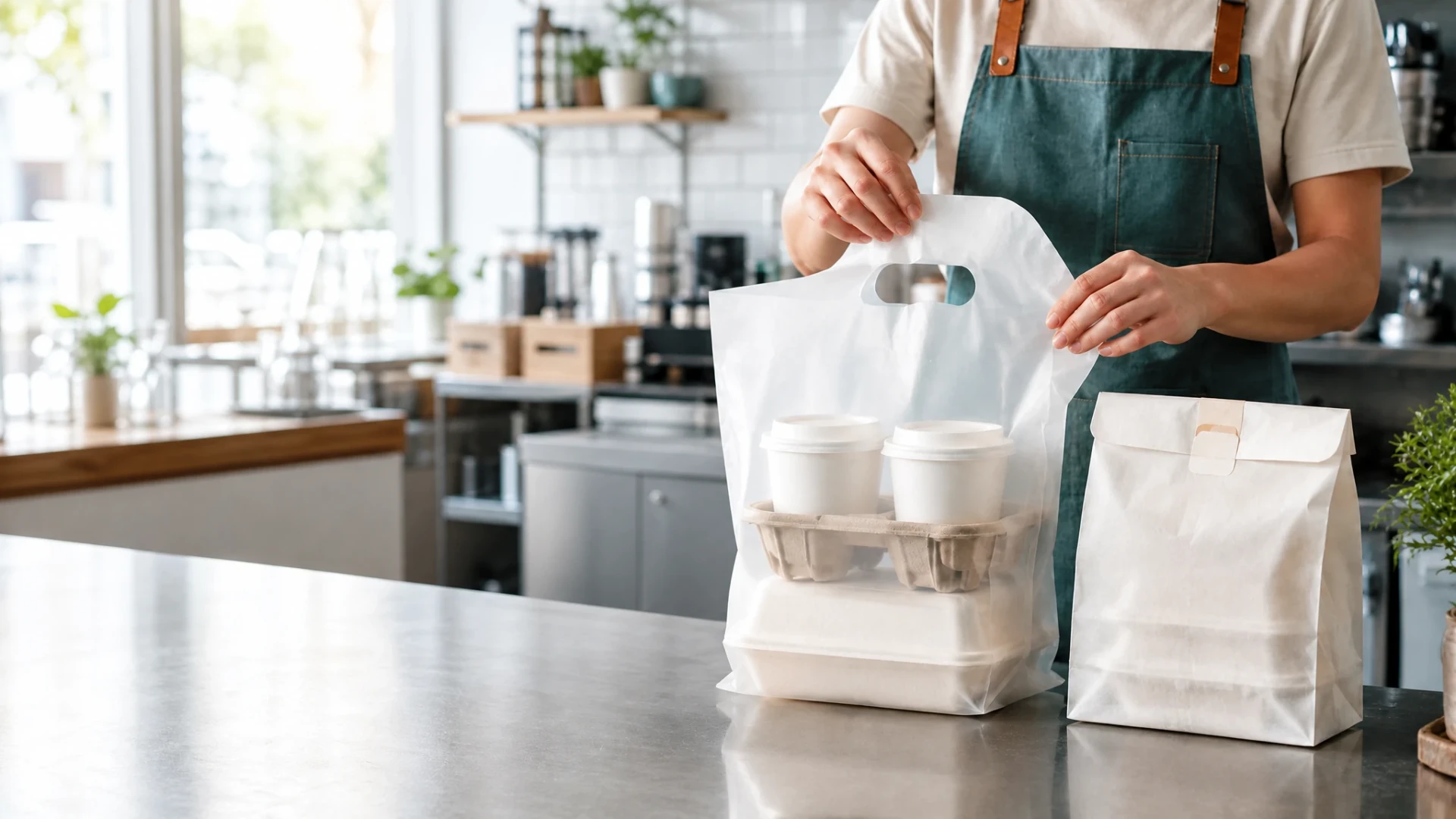
Handoff sequence
The relevant sample test includes loading, lifting, walking, vehicle movement, heat, condensation and removal.

Record cup count, diameter, height, lid profile, food-container dimensions, weight and temperature.
Approve handle geometry, base support, spacing, gusset and film around movement and tipping risk.
Review the bag, adhesive closure, paper pack, cup and food container as distinct scope of supporting documentss.
Compostable takeout packaging is a system-level buying phrase, but the evidence usually belongs to individual components and exact constructions. Keep carrier-bag wording, food container claims and local disposal instructions separated unless the complete system is explicitly supported.
Common procurement risks
A bag can fit an empty cup yet tilt, stretch or spill when loaded with hot drinks and carried through a real delivery route.
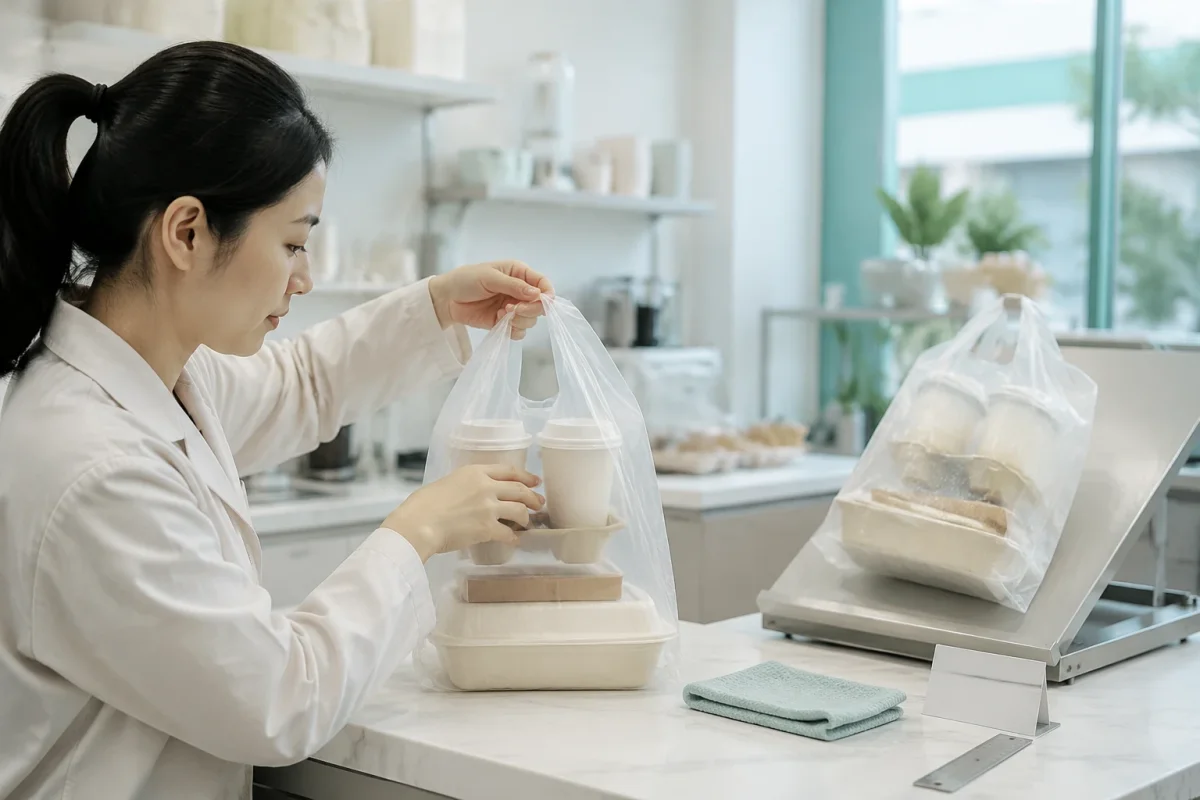
Cup lips, lids, trays, condensation, weight distribution and handle lift all affect real stability.
Resolve this before approving the sample and specification for repeat orders.
Warm containers and condensation can change grip, stiffness and bag behavior during transit.
The carrier bag’s evidence should not be used to describe unrelated cups, lids, paper sacks or adhesives.
Approval checks
Use a complete representative order and the expected transport route.
Cup and container dimensions, lid profile, count, weight and temperature
Bag size, handles, gusset, support, film, thickness and seals
Counter loading, lift, walking, vehicle motion, condensation and removal
Printing, unit pack, carton, component scope and destination-market wording
Recommended product options
Select the main carrier first, then add secondary packaging only where the food-day-to-day workflow requires it.

Purpose-shaped carrier route developed around cup geometry and handoff stability.
Review this route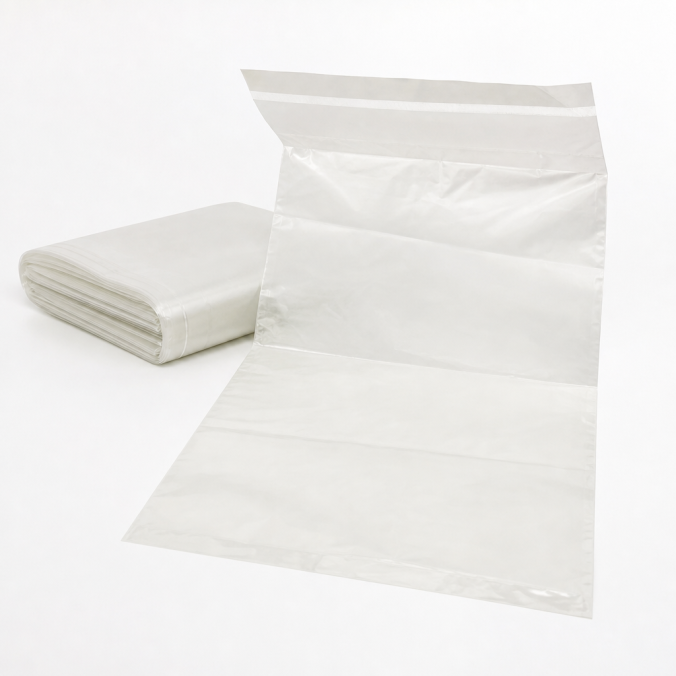
Flat packaging route requiring flap, peel, closure and component-scope review.
Review this route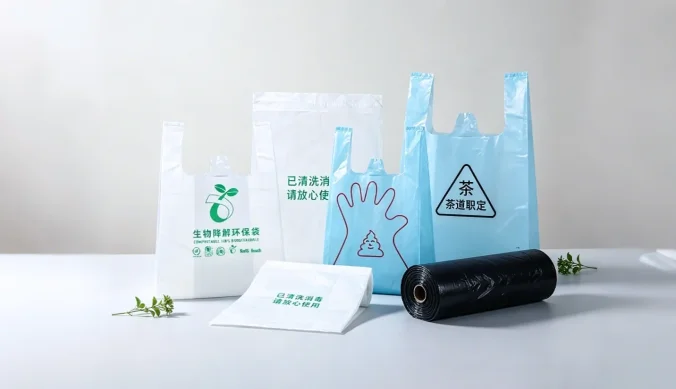
Compare shopping, liner and specialty formats for adjacent food-service needs.
Review this routeConnected sourcing paths
Coordinate food-processing requirements, evidence language and a direct sample brief.
Connect packing stations, hygiene controls and handoff procedures.
Open related guidance 02Separate component-level evidence and disposal wording.
Open related guidance 03Send cup and container dimensions, weights, temperatures, route and artwork.
Open related guidanceBuyer questions
Final answers depend on the exact SKU, intended use, destination, buyer standard and supplied evidence.
Use actual cup diameter, height, lid profile, quantity, carrier or tray, filled weight and desired handle clearance—not nominal cup volume alone.
Load representative hot and cold items, lift from the counter, walk, place in a vehicle, simulate movement, then inspect tipping, stretch, condensation and removal.
No. Cups, lids, trays, paper, adhesives and other components require their own supported evidence and disposal instructions.
Printing can be developed after construction and supportable wording are confirmed. Approve colors, position, marks, languages and carton identity before production.
Start with a bounded application brief
Worldchamp can then match a product option, sample plan, packaging path and applicable evidence to the intended workflow.
We use necessary cookies to operate this site and optional cookies to improve your experience.