What Makes a Disposable Glove Manufacturer "Top-Tier"?
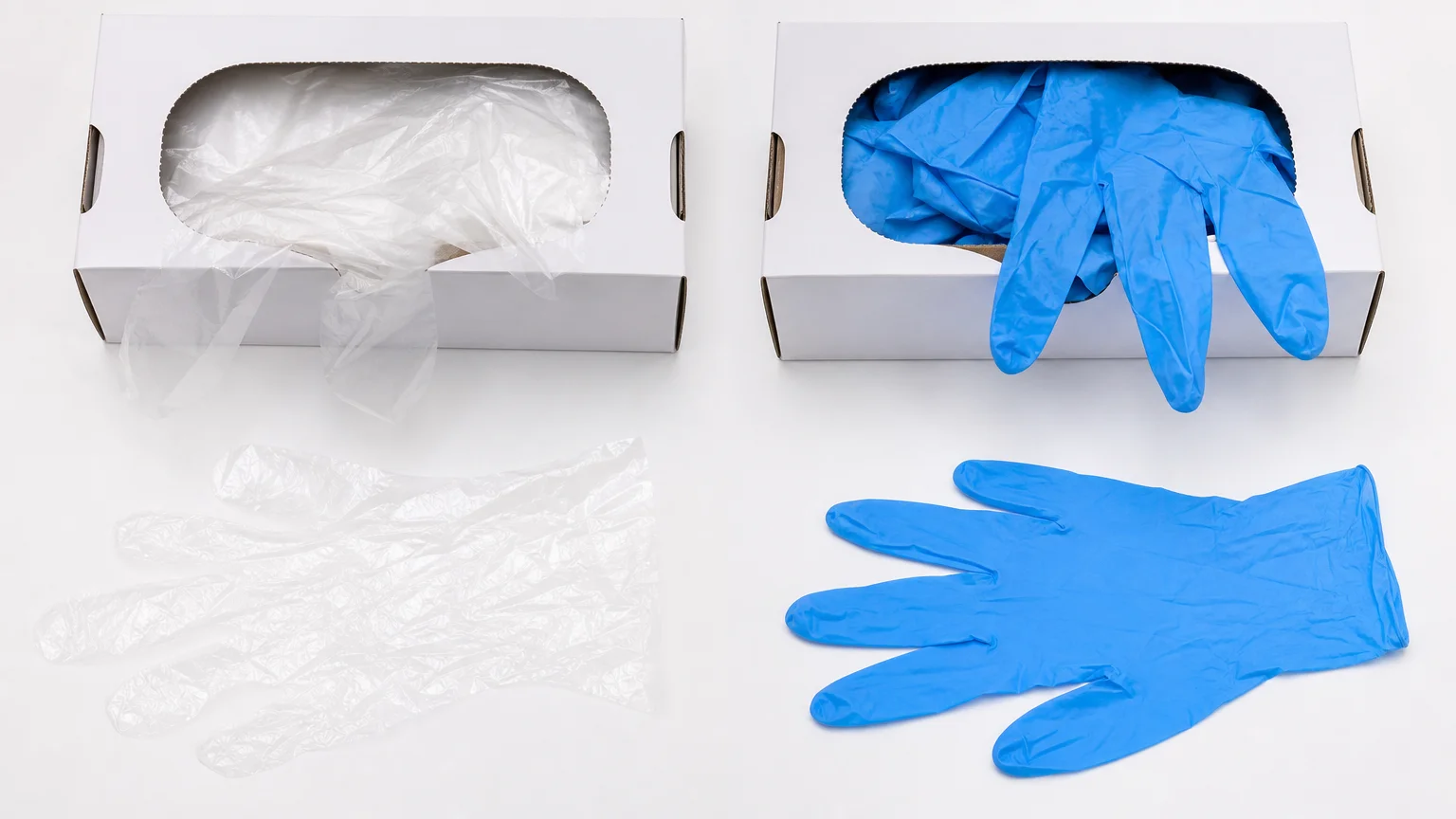
A China PE glove manufacturer makes polyethylene film gloves, not the nitrile or latex gloves that dominate generic “top manufacturer” lists. Compare factories on the film category you actually buy, sample quality, product documents, MOQ and whether they can repeat the order. Revenue rank among rubber glove companies does not answer a PE, TPE or CPE sourcing brief.
A top-tier glove manufacturer is one that can deliver consistent quality, verified compliance documents, and reliable supply at the volume and MOQ your business requires. The category matters. The compliance framework matters. The production environment matters. Revenue rank does not.
Why "Top 10 Glove Manufacturer" Lists Don't Help PE Film Buyers
Most "top glove manufacturers" rankings feature rubber-based producers: Top Glove, Hartalega, Kossan, Supermax — all Malaysian nitrile and latex specialists. These are genuinely large operations. But they operate in a completely different material category from PE film gloves.
If you are buying PE, TPE, CPE, or POE gloves for food service, retail, or household use, comparing a PE film factory to a nitrile giant is like comparing a tire manufacturer to a food packaging film extruder. Both work with polymers. The production equipment, compliance framework, and supply chain are entirely different.
The right question is: What defines a top-tier manufacturer within the PE film glove category? That is what this guide covers.
PE Film Glove Manufacturers vs. Rubber/Nitrile Giants: Know the Difference
Understanding the manufacturing category is step one in finding the right supplier. Here is how the two main glove manufacturing worlds differ.
| Factor | PE Film Glove Manufacturers | Rubber / Nitrile Glove Manufacturers |
|---|---|---|
| Core material | HDPE, LDPE, CPE, TPE, POE film | Natural rubber latex, nitrile butadiene rubber |
| Production process | Film blowing, die-cutting, heat-sealing | Former dipping (ceramic molds into latex/nitrile bath) |
| Primary compliance framework | FDA 21 CFR (food contact), BRCGS Consumer Products, ISO 9001 | FDA 510(k) (medical), ASTM D6319 (nitrile), EN 455 (exam) |
| Typical applications | Food handling, retail, household, hair care, light industrial | Medical exam, surgical, chemical handling, cleanroom |
| MOQ range | Lower — $3,000–$10,000 is common | Higher — typically container-load minimums |
| Price point | Economy to mid-range (PE/CPE/TPE) | Mid to premium (nitrile) |
Most global distributors and importers carry both categories. But you qualify them separately. A nitrile factory's FDA 510(k) clearance tells you nothing about whether their PE film line runs at food-contact standards. And vice versa.
Where POE Gloves Fit
POE (polyolefin elastomer) gloves represent a new subcategory within PE film manufacturing. They offer elasticity closer to nitrile at a lower cost than rubber-based gloves. Worldchamp pioneered POE gloves in 2024 — the first in the industry. This positions PE film manufacturers at a higher performance tier than many buyers expect.
If you are evaluating OEM vs ODM manufacturing routes for PE-category gloves, understanding this material boundary is essential before you approach any factory.
Five Criteria to Evaluate a PE Glove Manufacturer

Once you know what category of manufacturer you need, the evaluation becomes straightforward. These five criteria apply to any PE film glove factory — whether you are placing your first trial order or qualifying a long-term supply partner.
Criterion 1: Certifiable Production Environment
For food-contact and general-use PE gloves, the minimum credible production standard is a BRCGS Consumer Products or equivalent audit. This is not the same as BRC Food — that standard applies to food processing plants, not glove factories.
Ask for the certificate number. Verify it against the BRCGS public directory. Worldchamp holds BRCGS Consumer Products Certificate No. CN-BRCCP-251634, valid through December 2026, covering manufacturing of PE glove, apron, sleeve, and bag products.
Also confirm the factory operates a clean production environment. Worldchamp's Class 100,000 cleanroom workshop — verified by third-party environmental testing — handles the most sensitive SKUs including POE and compostable gloves.
Criterion 2: Product-Level Compliance Documents
Factory certification proves the system. Product documents prove the material. These are different. A top-tier PE glove manufacturer holds both.
- Food contact test reports — SGS or equivalent, citing FDA 21 CFR or EU No. 10/2011 migration limits, specific to the glove material (not just "PE").
- REACH compliance report — for EU importers, confirming no restricted substances above SVHC limits.
- California Prop 65 test report — required for US distributors selling into California.
- Compostable certification (if applicable) — DIN CERTCO, SEEDLING, or BPI, scoped specifically to gloves, not bags.
Criterion 3: Verified Production Capacity and Defect Control
Capacity claims are easy to make. Ask for the number that can be audited: daily output and monthly tonnage. Worldchamp runs at 20 tons/day, 350 tons/month across full-process lines from compounding to finished packing.
Defect rate is the quality signal buyers overlook most often. A high-volume factory with a 2% defect rate will cost you more in the long run than a smaller factory at 0.1%. Worldchamp retains samples from every production batch, with a documented defect rate below 0.1% per batch (published reference; scope to be confirmed). Ask any candidate factory what their retained-sample policy is. That question alone separates serious factories from trading companies.
Criterion 4: OEM/ODM Capability and Packaging Flexibility
Most importers and distributors need branded packaging. A top-tier PE glove manufacturer offers full OEM service: custom print, custom color, custom box count, and private-label packaging — without requiring factory-minimum tooling costs on every variant.
See the full disposable gloves OEM manufacturer evaluation guide for the complete six-dimension checklist including sample process, MOQ negotiation, and compliance document handover steps.
Criterion 5: Export Track Record and Multi-Market Compliance
A manufacturer's export history tells you whether their systems actually survive customs, carrier inspection, and end-customer audits. Look for:
- Number of destination markets served — each market brings its own documentation requirements.
These data points do not appear on a "Top 10" list. But they are exactly what a procurement manager needs to justify a supplier to their internal stakeholders.
Worldchamp Manufacturing Context
Key credentials that meet the five criteria above:
- Clean production: Class 100,000 cleanroom workshop, verified by third-party environmental test
- Innovation: Industry-first POE glove launched 2024; PE glove standard formulator
- Medical device registration: Class I medical device production license (China NMPA)
Worldchamp supplies a full disposable glove range including HDPE, LDPE, CPE, TPE, POE, and compostable biodegradable gloves. Protective wear (aprons, gowns, sleeves, boot covers) and compostable bags are also available from the same certified facility — useful for distributors building out a full PPE or eco-product line from one source.
For private-label and OEM orders, Worldchamp coordinates packaging design, compliance document packages, and export labeling. The private-label disposable gloves program supports US, EU, and Middle East distributor requirements.
Procurement Action Checklist
- Define your category first — PE film, nitrile, or rubber? The answer determines which factory tier and compliance framework applies.
- Request the certificate number and verify it — BRCGS, ISO 9001, and compostable certificates are all publicly verifiable. Do not accept logo images alone.
- Ask for product-level documents, not just factory certificates — food contact test reports, REACH, and Prop 65 must reference the exact material and product you are ordering.
- Order samples before bulk — confirm glove dimensions, thickness, and packaging against your spec before committing to a production run.
Frequently Asked Questions
What criteria define a top disposable glove manufacturer?
The five key criteria are: a certifiable production environment (BRCGS or equivalent), product-level compliance documents (food contact test reports, REACH, Prop 65), verified production capacity with a documented defect rate, OEM/ODM capability with flexible MOQ, and a multi-market export track record. Revenue size or brand recognition alone does not define quality at the factory level.
Are PE film glove manufacturers the same as nitrile glove manufacturers?
No. They operate in entirely different production categories. PE film manufacturers use film blowing and die-cutting to produce thin protective gloves for food handling, retail, and household use. Nitrile manufacturers use former-dipping technology to produce form-fitting exam and chemical-resistant gloves. Compliance frameworks, equipment, and application areas are distinct. Evaluate each category separately.
What MOQ should I expect from a top PE glove manufacturer?
The published starting threshold is USD 3,000 per SKU. The actual MOQ can change with material, dimensions, packaging, printed artwork, order mix, and current factory capacity, so obtain written sales confirmation before ordering.
What compliance documents should I request when qualifying a PE glove manufacturer?
Request the current ISO 9001 and BRCGS factory-system certificates, then request product- and market-specific evidence for the proposed SKU, such as the applicable food-contact migration or material test report. Verify the holder, scope, validity, product identity, and target market instead of treating a factory certificate as product approval.
What is the difference between a top glove manufacturer and a top PE film glove manufacturer?
"Top Glove" (Top Glove Corporation Bhd) is a Malaysian rubber and nitrile glove producer — one of the world's largest by volume. A top PE film glove manufacturer is a different category entirely: factories that specialize in polyethylene-based film gloves for food service, retail, and general protective use. They serve different buyer segments with different compliance requirements and price points.
Does Worldchamp supply private-label disposable gloves for distributors?
Worldchamp publicly offers OEM, ODM, and private-label programs. Confirm the exact product construction, artwork, packaging, target market, quantity, evidence requirements, and current commercial terms in writing before approving the program.
Put this guide into a procurement workflow
When the product direction is clear, review the OEM and ODM workflow, plan a custom compostable bag program, review the low-MOQ sourcing route, and discuss the specification with Worldchamp. Share the task, destination, quantity, packaging and evidence requirements so the next review is specific.
Turn the comparison into a sample and document brief
Share the application, market, quantity, pack format and scope of supporting documents. Worldchamp can then respond against a defined product rather than a generic material request.