OEM vs ODM for Disposable Products: The Short Answer
OEM (Original Equipment Manufacturer) means you supply the full product specification. The factory builds exactly to your design, dimensions, material, and packaging artwork. ODM (Original Design Manufacturer) means the factory supplies the base design. You choose from existing formats, apply your brand, and launch faster without engineering a spec from scratch.

For disposable products — gloves, protective wear, and bags — the right route depends on one core question: do you own the specification, or do you need the factory to provide it? Both routes can deliver quality, certified, export-ready products. The decision comes down to your timeline, budget, IP goals, and how much product differentiation your market requires.
What OEM and ODM Actually Mean for Disposable Products
The terms OEM and ODM come from electronics manufacturing, but they apply cleanly to disposable products. Understanding how each model works at the factory level helps you ask the right questions from day one.
How OEM Works
You submit a specification sheet. It lists the material (HDPE, TPE, CPE, POE, or a compostable compound), thickness, size, color, cuff length, and packaging format. You also provide the artwork file for your label, dispenser box, or carton. The factory reviews the spec, confirms feasibility, runs a pre-production sample, and produces to your exact brief.
OEM gives you full IP ownership of the product design. No other buyer gets the same spec unless you share it. This model suits buyers who already have market data, a proven product concept, or a formulation they have tested and validated.
How ODM Works
You choose from formats the factory already manufactures and has validated. For disposable gloves, this might mean selecting from HDPE, TPE, or CPE variants at standard thicknesses and sizes. You apply your logo, choose your packaging color, and specify carton marking for your destination market. The base product design and compliance documentation already exist.
ODM is faster to market. The factory skips the engineering and qualification phase because that work is already done. This model suits buyers entering a new category, testing a market, or building a product line without the resources to spec products from scratch. See how to choose a disposable gloves OEM manufacturer for deeper supplier evaluation guidance once you have decided on a route.
OEM vs ODM: Five Factors That Decide the Right Route
Most buyers fall into one of the two routes by default. The factors below help you make that decision deliberately.
| Factor | OEM Route | ODM Route |
|---|---|---|
| Spec ownership | You own the full product specification | Factory owns the base design; you brand it |
| Time to first sample | 7–21 days (new spec review + tooling) | ~7 days (existing format, artwork only) |
| Upfront investment | Higher (spec development, tooling fees if applicable) | Lower (no engineering phase) |
| Product differentiation | Full — unique material, thickness, format | Branding only — packaging and logo differ |
| Best for | Buyers with proven demand, proprietary specs, or compliance targets that standard formats cannot meet | Buyers entering a new category, testing volume, or building a private label line quickly |
Factor 1: Do You Have a Specification?
If you have a written product brief — material, thickness in microns, glove size, cuff length, color, and packaging format — you are ready for OEM. If you know the application (food handling, medical auxiliary, salon use) but do not have a spec, ODM is the faster starting point. The factory's existing formats already pass the compliance frameworks relevant to your market.
Factor 2: How Fast Do You Need to Launch?
ODM compresses the timeline. Pre-production samples are available in approximately 7 days because the base product is already validated. OEM timelines extend when a new material, thickness, or format needs engineering, process trials, and sample approval rounds. For buyers with a hard retail launch date, ODM reduces schedule risk.
Factor 3: What Level of IP Protection Do You Need?
OEM products belong to your specification. No other buyer gets the same product unless they replicate your brief independently. ODM formats are available to multiple buyers — differentiation comes from branding, not from product design. If your competitive advantage rests on a unique product attribute (a specific elasticity, a proprietary compostable compound, an unusual thickness), OEM is the only route that protects it.
Factor 4: What Is Your Compliance Target Market?
State the destination market before choosing OEM or ODM. If the buyer needs a specific food-contact, labeling, or product test framework, confirm that the chosen route can produce evidence for the exact SKU. Factory certificates are supporting documents, not automatic product approval.
Factor 5: What Is Your MOQ Situation?
OEM normally needs more specification work and may require a higher commitment for custom tooling or materials. ODM can lower the entry barrier because the base format already exists. Confirm MOQ by SKU, color, size, artwork, packaging, and reorder before approving the route.
When to Choose OEM / When to Choose ODM
Choose OEM if:
- You have a proven product that needs an exact-match manufacturer. You have a spec sheet and need a factory to hit it.
- Your market requires unique material or thickness. Standard ODM formats do not meet your application requirements.
- You are building long-term IP. The product design should belong to your brand, not be replicated by competitors who use the same factory.
- You have a compliance obligation that standard formats do not satisfy. A custom compound or custom test protocol is needed.
- You are a large-volume buyer. Custom tooling and spec development costs amortize well at high volumes.
Choose ODM if:
- You are entering a new disposable product category. You need a fast, low-risk way to test demand without committing to a bespoke spec.
- Time to market is your top constraint. ODM delivers pre-production samples in approximately 7 days versus a longer OEM engineering cycle.
- You want private label without product engineering. Your differentiation is in branding, distribution, and sales — not product design.
- Standard formats already meet your market compliance requirements. No custom engineering is needed to pass your destination-market regulations.
Worldchamp OEM and ODM Capability for Disposable Products
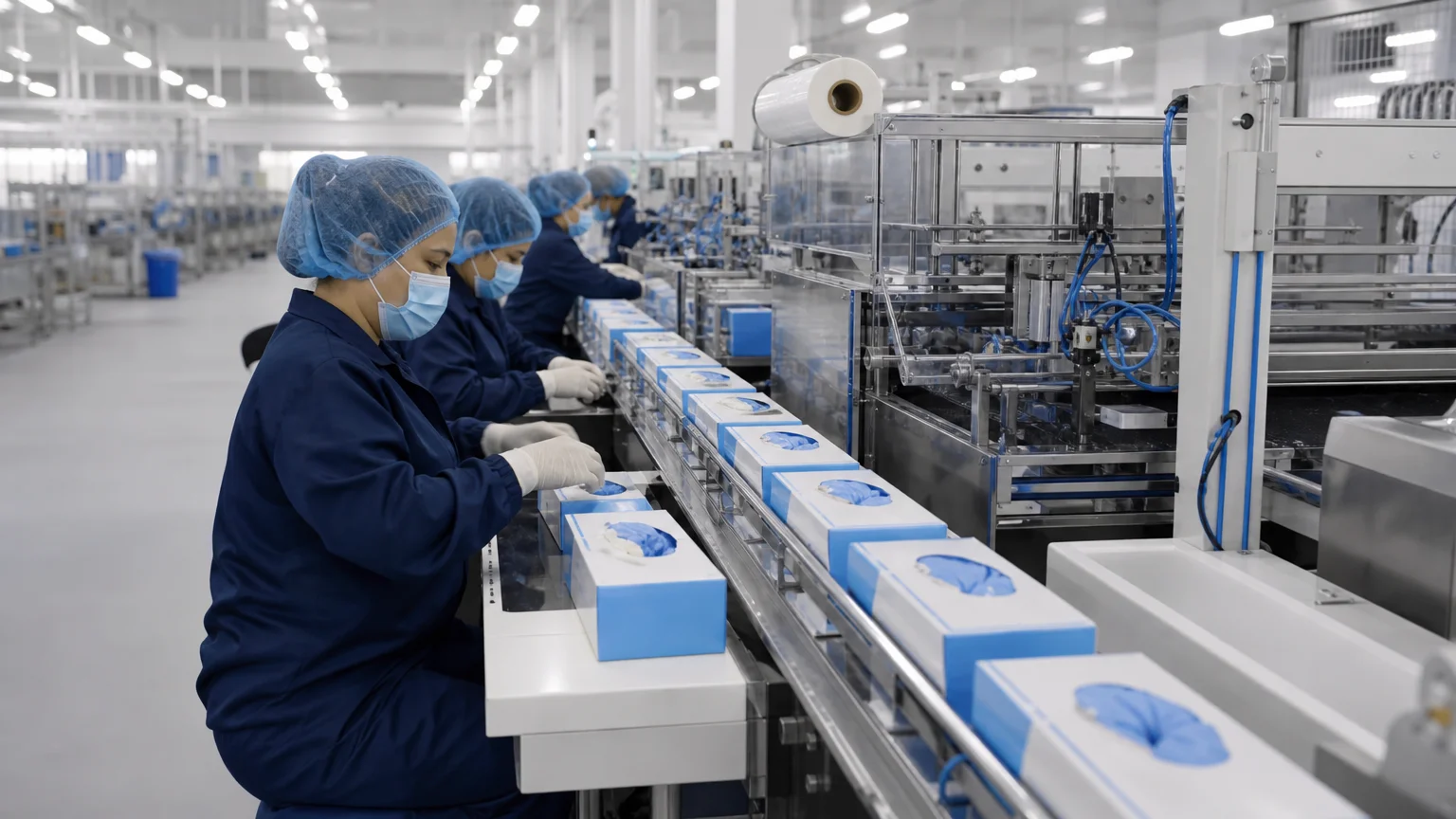
Monthly output reaches 350 tonnes across PE, CPE, TPE, and POE gloves, plus protective wear and compostable bag lines. The defect rate is below 0.1% (published reference; scope to be confirmed), with batch traceability retained throughout. Products export to 100+ countries, including the US, EU, Japan, and Middle East markets.
What the OEM Route Covers at Worldchamp
- Full spec review and feasibility confirmation before production
- Pre-production sample dispatch in approximately 7 days after spec confirmation
- Material selection across HDPE, LDPE, CPE, TPE, POE, and certified compostable biocompounds
- Custom color, size, thickness, cuff length, and packaging format
- Artwork review and carton marking for destination-market compliance
What the ODM Route Covers at Worldchamp
- Access to validated glove formats (HDPE, LDPE, CPE, TPE, POE) and protective wear formats (aprons, gowns, sleeve covers, boot covers)
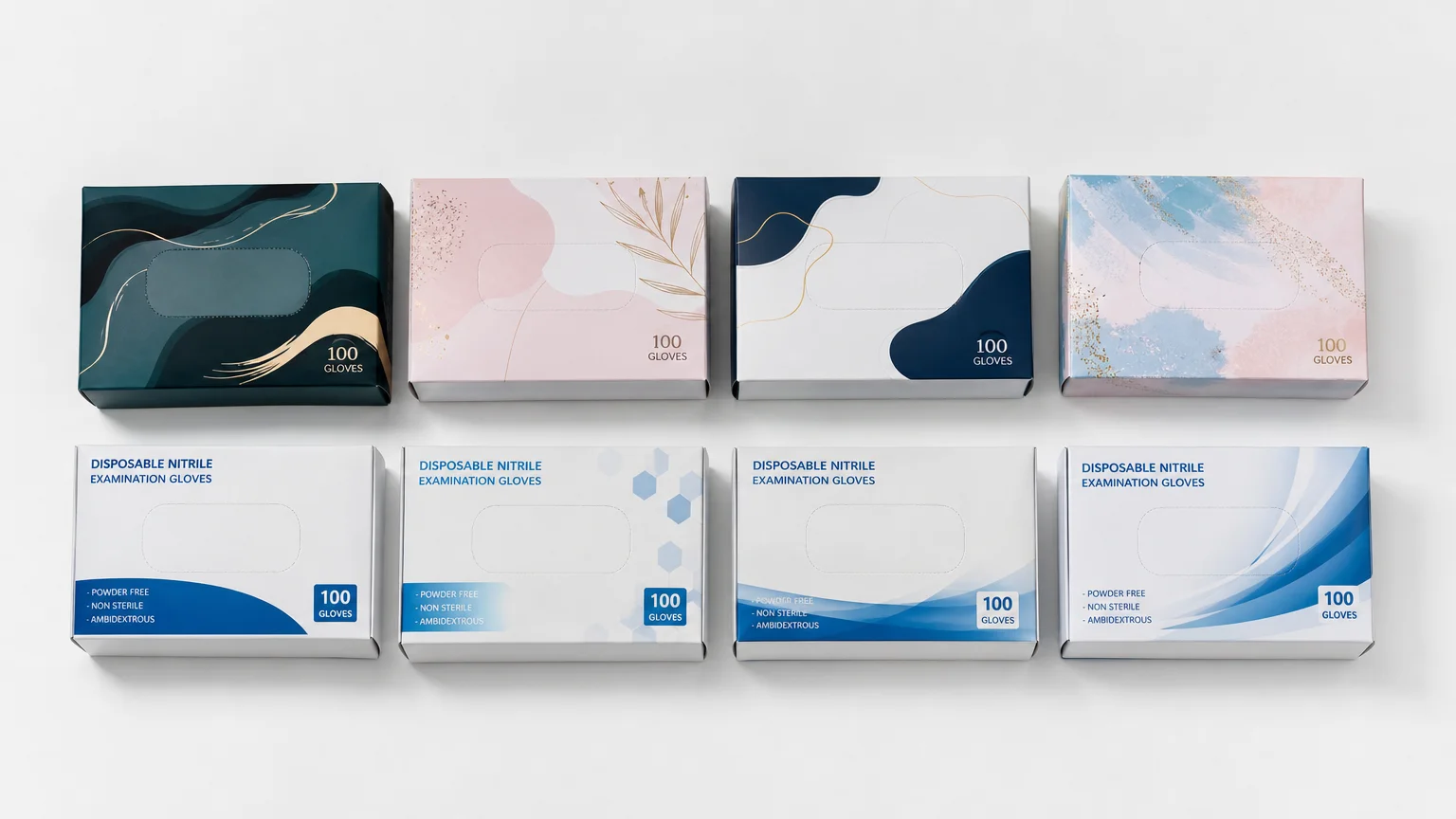
- Private label: logo and artwork on dispenser boxes, bulk poly bags, and export cartons
- Compostable bag line with third-party biodegradable test report (Report No. WT20103211073930WT1, CNAS-accredited lab)
- Existing compliance documentation — no new product qualification required
For buyers who are not sure which route fits their program, Worldchamp can provide ODM samples from existing formats alongside a specification sheet for OEM comparison. See the full OEM/ODM capability page for product categories, workflow steps, and documentation. You can also explore private label disposable gloves or low MOQ disposable gloves for smaller-volume entry points.
Procurement Action Checklist
- Define your spec ownership goal. Decide whether you need a unique product design (OEM) or a branded version of an existing validated format (ODM). Write down the answer before contacting any factory.
- Match the route to your launch timeline. If you have a hard date, ODM reduces sample lead time. If you need a custom spec, build 3–4 extra weeks into your project plan for engineering and approval rounds.
- Request a compliance document package early. Ask the factory for the specific certificates and test reports that cover your destination-market requirements. Do not assume a factory certificate covers your product's compliance claims.
- Start with a sample order before committing to bulk. Both OEM and ODM routes at Worldchamp begin with a pre-production sample. Approve the sample before placing the bulk deposit. This step is non-negotiable for first-time orders.
Frequently Asked Questions
What is the difference between OEM and ODM for disposable products?
OEM means you provide the full product specification — material, thickness, size, color, and packaging artwork — and the factory manufactures to your exact brief. ODM means the factory provides the base product design from its existing validated catalog; you apply your brand and packaging. OEM gives you proprietary product design. ODM gives you a faster launch from a proven format.
Which route is faster: OEM or ODM for disposable gloves?
ODM is faster. Pre-production samples from an existing format are typically ready in approximately 7 days after artwork confirmation. OEM samples take longer because new specs require feasibility review, material trials, and sample approval rounds — often 7 to 21 days or more depending on spec complexity.
Can I switch from ODM to OEM once my volume grows?
Yes. Many buyers start on the ODM route to validate market demand with lower upfront investment, then transition to OEM once volume justifies a custom spec. At that stage, the compliance documents and supplier relationship are already established, which simplifies the OEM qualification process.
What MOQ applies to both OEM and ODM orders at Worldchamp?
The published starting threshold is USD 3,000 per SKU. The actual MOQ can change with material, dimensions, packaging, printed artwork, order mix, and current factory capacity, so obtain written sales confirmation before ordering.
Does Worldchamp hold compliance certificates for both OEM and ODM disposable products?
Yes. Worldchamp holds BRCGS Consumer Products Certificate No. CN-BRCCP-251634 and ISO 9001 Certificate No. 77067/A/0001/UK/En, which apply to manufacturing across gloves, protective wear, and bag lines. For market-specific food contact compliance (FDA 21 CFR, EU No. 10/2011), contact us with your target market and we will confirm which product-level documentation applies to your order.
What is the difference between OEM/ODM and private label for disposable products?
Private label is typically a subset of the ODM route — you take the factory's standard format and apply your brand. OEM goes further: you own the product specification, not just the branding. For most distributors launching a house brand of disposable gloves or protective wear, the ODM (private label) route is the practical starting point. See the private label disposable products guide for a deeper breakdown.
Put this guide into a procurement workflow
When the product direction is clear, plan a custom compostable bag program, and discuss the specification with Worldchamp. Share the task, destination, quantity, packaging and evidence requirements so the next review is specific.
Turn the comparison into a sample and document brief
Share the application, market, quantity, pack format and scope of supporting documents. Worldchamp can then respond against a defined product rather than a generic material request.