Material is not yet approved
HDPE, CPE, TPE, POE and alternative routes feel and perform differently in the target task.
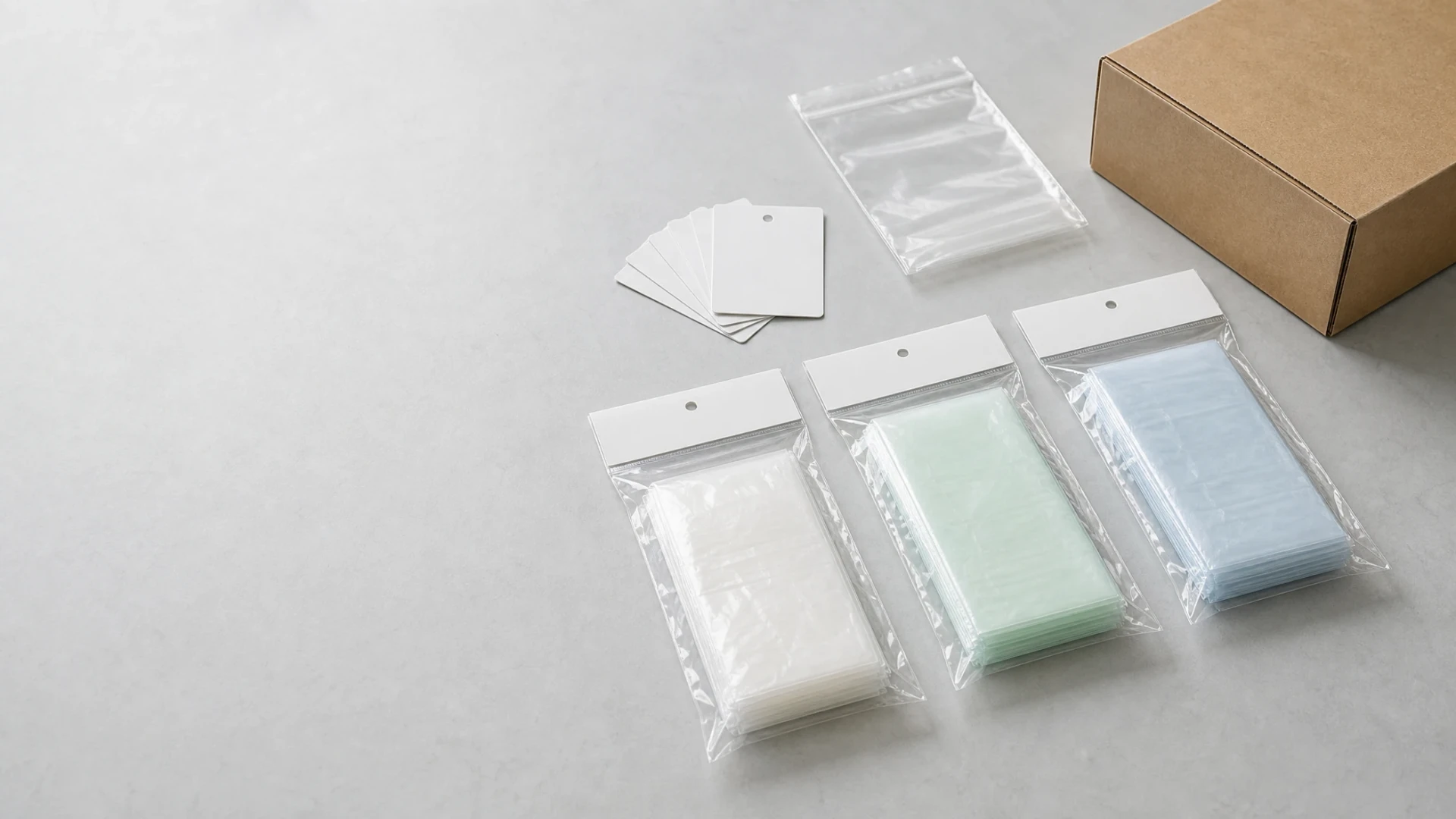
A controlled first-order pathway
Use a multi-material sample comparison and one bounded commercial brief to validate fit, feel, dispensing, documents and supplier response before scaling.
The published MOQ starts from USD 3,000 per SKU and remains subject to material, packaging, printing and production confirmation. It is a program entry point—not a universal promise.
Buyer risk
Small buyers often know the task but have not yet proven the material, pack format or sell-through. A good trial isolates those decisions.
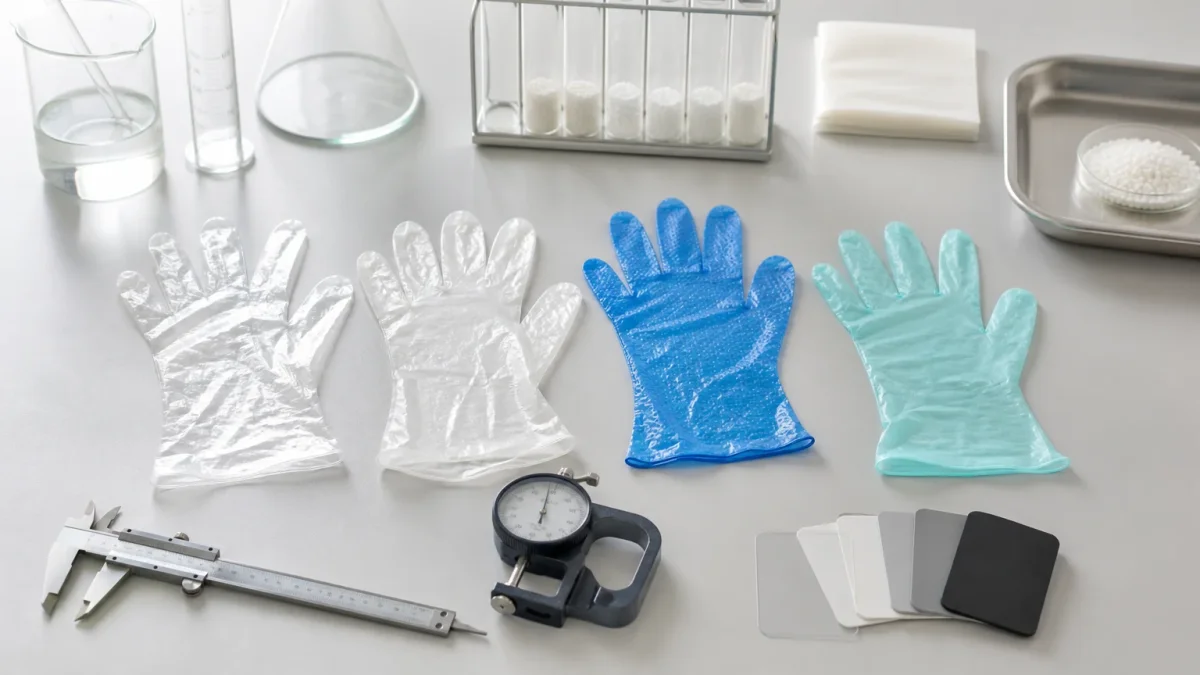
HDPE, CPE, TPE, POE and alternative routes feel and perform differently in the target task.
A low unit price can be offset by poor dispensing, weak cartons or the wrong count for the channel.
A first order should still include relevant factory and product-document review.
First-order risk ladder
The program turns an uncertain sourcing search into four small approval gates.
Handle multiple materials under the same use and acceptance method
Choose one lead SKU and finalize dimensions, color, count and pack
Review applicable documents, sample records and production feasibility
Use the approved SKU as the repeat-order and assortment baseline
Recommended routes
Each product page defines the physical decisions that must be sampled before branding or commercial approval.

Lightweight, high-count and cost-focused starting point for frequent-change tasks.
Review product details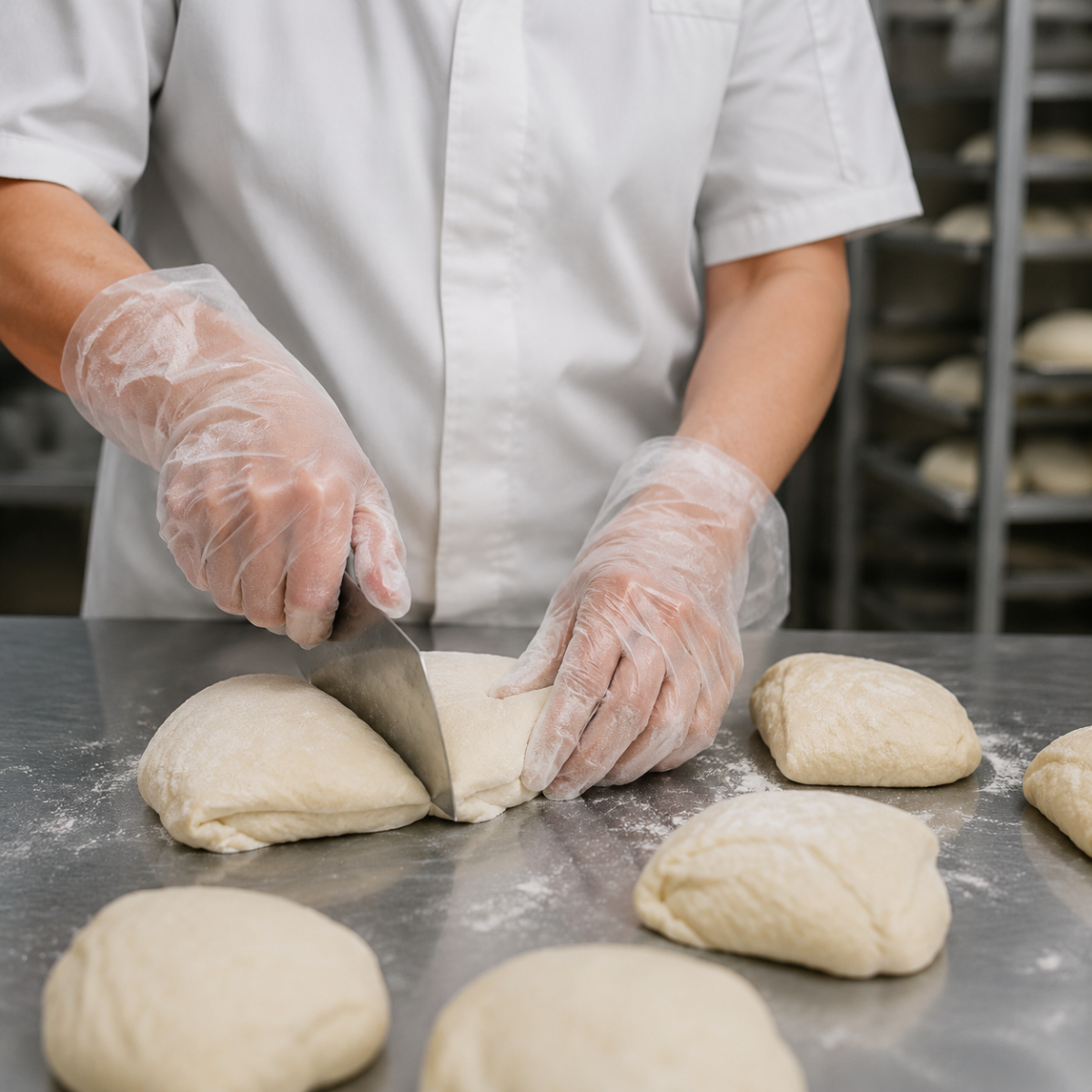
Embossed film option for easier donning and a more structured hand feel.
Review product details
Softer film option to compare fit, touch and user preference.
Review product details
Flexible film route that should be compared with the same task and pack basis.
Review product details
Claim-sensitive option requiring material and evidence review before branded positioning.
Review product detailsSelection table
Use one written basis for samples, quotations and internal review.
| Trial question | What to hold constant | What to compare |
|---|---|---|
| Material | Task, glove size and test duration | Donning, feel, grip, tear and change frequency |
| Format | Glove material and dimensions | Loose, booked, paired or dispenser behavior |
| Pack | Count and channel | Opening, withdrawal, shelf footprint and carton strength |
| Supporting documents | Exact SKU and destination | Applicable certificates, declarations and test files |
| Commercial | Specification and pack basis | MOQ, unit basis, sample route and scale-up cost |
Approval workflow
A controlled sequence reduces artwork rework, evidence gaps and repeat-order drift.
Request candidate materials against one written task.
Record donning, feel, failure points and consumption with the same method.
Finalize one material, dimension and packaging format for quotation.
Confirm the USD 3,000-per-SKU baseline against actual feasibility.
Use inspection and user feedback to decide whether to scale or add a second SKU.
Buyer questions
The exact answer still depends on the SKU, destination and approved commercial brief.
It is a published starting commercial value per SKU, not a fixed quantity. The resulting units depend on material, dimensions, pack, print and other approved requirements.
Yes. A multi-material sample request is the recommended way to compare glove routes under the same task before fixing a bulk SKU.
Document access should be discussed from the first order. Availability and relevance depend on the exact product, destination and requested file.
The published reference is approximately 7 days, subject to specification readiness, packaging complexity and material availability.
Decision library
Continue with the guide or program that matches the next unresolved question.
We use necessary cookies to operate this site and optional cookies to improve your experience.