Private Label Disposable Products: The Short Answer for Buyers
Private label disposable products are factory-made gloves, aprons, and bags that carry your brand instead of the manufacturer's. You pick the product, the spec, the packaging artwork, and the label. The manufacturer handles the materials, the production line, and the compliance documents. You sell a finished, branded SKU under your own name.
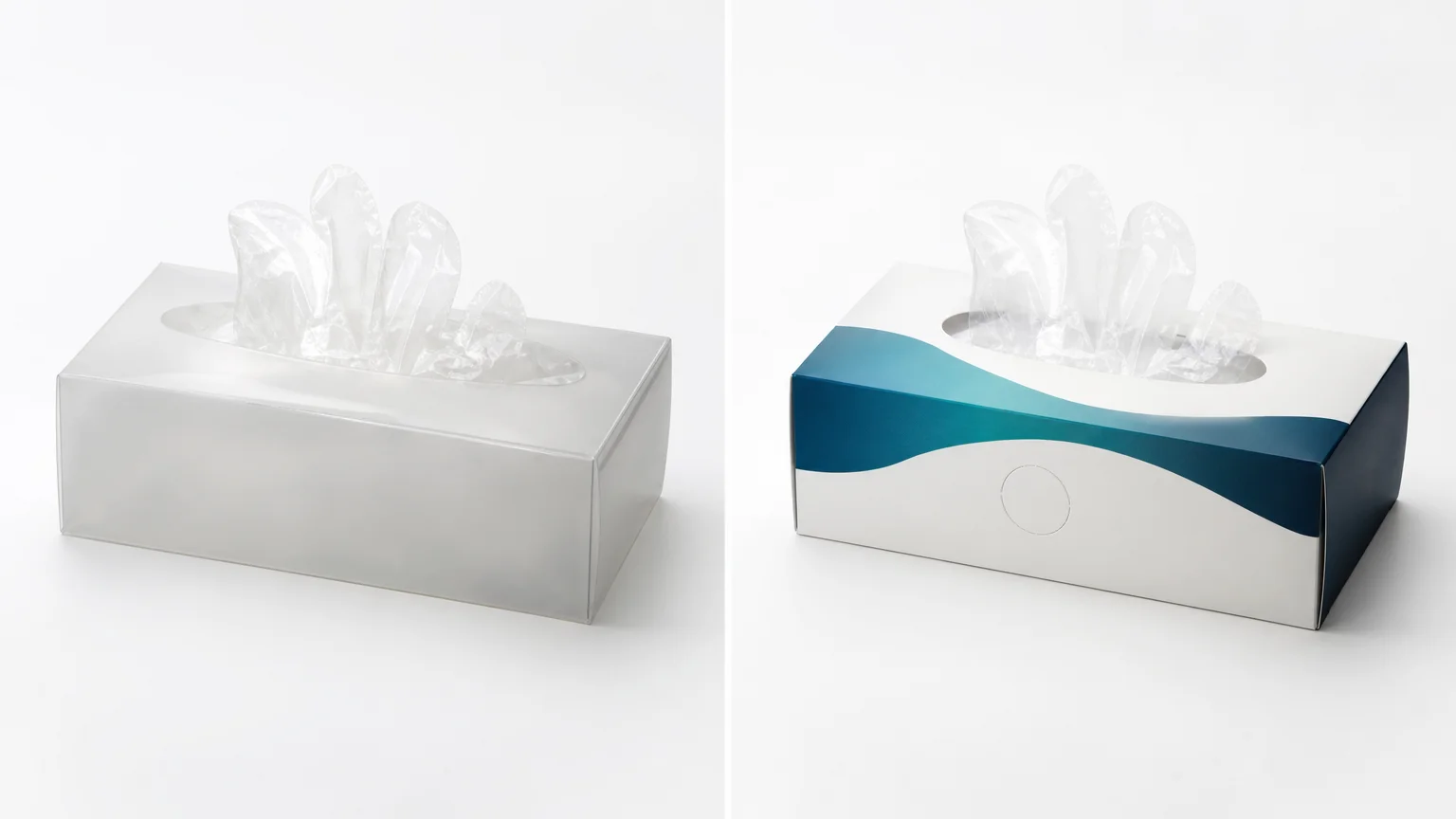
The model fits importers, distributors, and retail buyers who want margin and shelf control without building a factory. The trade-off is shared: you own the brand and the customer, but you rely on the maker for quality, lead time, and certification paperwork. This guide walks through what to compare before you commit.
What Private Label Means for Disposable Products
Private label sits between two other sourcing models. With white label, you buy a generic product off the shelf and just add your logo. The spec is fixed. With contract manufacturing (ODM), you design the product from scratch and the factory builds it to your drawings. Private label is the middle ground: you start from the maker's proven product, then change what matters to your market — material, size, color, thickness, emboss, and packaging.
For disposable products, that middle ground is usually the smart starting point. Disposable gloves, aprons, and bags are mature, standardized items. Reinventing the compound or the film-blowing process rarely pays off. What does pay off is owning a recognizable box, a clean label, and a spec that matches your buyer's task. For the full contrast on the two factory models, see our OEM vs ODM disposable products guide.
Where Private Label Wins
- Brand ownership — the SKU, the barcode, and the repeat customer belong to you, not the factory.
- Margin over distribution — branded product sells at a higher price than a generic re-sold line.
- Shelf and channel control — retailers prefer exclusive private label lines they cannot lose to a competitor.
- Spec flexibility — you tune color, thickness, count, and packaging to your market without a full R&D project.
Where it does not win is ultra-low volume or one-off buys. Private label needs a minimum order to justify the artwork, the printing plate, and the line setup. That is where MOQ becomes the first number to negotiate.
The Six Factors to Compare Before You Commit
Most buyers fixate on unit price and miss the factors that actually decide whether a private label program holds up. The table below is the shortlist we walk every new buyer through. Use it as a checklist when you evaluate any disposable products manufacturer.
| Factor | What to confirm with the manufacturer | What a capable answer looks like |
|---|---|---|
| MOQ and reorder | What is the first order minimum, and the reorder minimum? | A low entry MOQ with a lower reorder, so you can test then restock. |
| Material options | Which materials and grades can you private label? | Several films (PE, CPE, TPE, POE) plus compostable lines under one roof. |
| Customization depth | Can you change color, thickness, size, emboss, count? | Tooling and film changes done in-house, not outsourced. |
| Packaging artwork | Who designs the box, sleeve, and label? Who prints? | Factory accepts print-ready files or offers design support. |
| Compliance documents | Which certificates and test reports come with the order? | Named certs with numbers, plus per-market food contact docs on request. |
| Lead time and samples | How long to sample, and how long to bulk after deposit? | A sample cycle under two weeks and a bulk lead time in weeks, not months. |
MOQ and Reorder: The First Number to Settle
Set the minimum order quantity for the first SKU and the expected reorder quantity before approving artwork. MOQ can change with material, dimensions, color, printing, packaging, and production planning. A low entry order is useful only when the reorder terms remain workable for your channel.
Material and Customization Depth
A real private label partner gives you more than one film. Worldchamp private labels PE (HDPE/LDPE), CPE, TPE, and the proprietary POE glove launched in 2024, plus compostable bags on a separate biodegradable line. That breadth matters: if your food-service buyer later wants a tougher glove, you switch material without switching factories. Customization covers color, thickness, length, emboss pattern, and piece count, all handled on in-house tooling and film-blowing lines rather than subcontracted out.
Packaging Artwork and Label Control
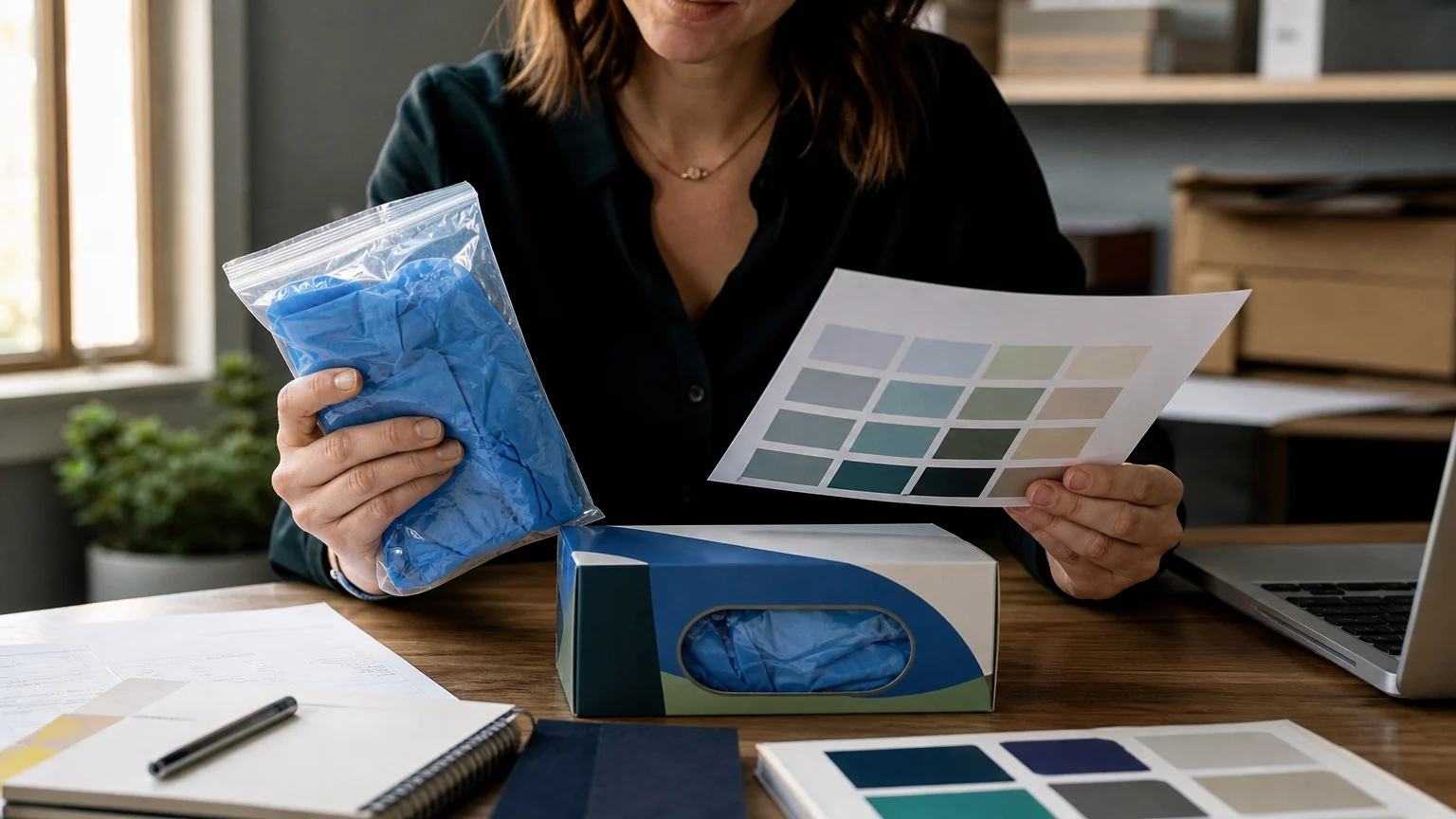
Private label is, in the end, a packaging decision. You own the box, the sleeve, and the label — including the barcode, the language, and the country-of-origin marking. A capable manufacturer takes print-ready artwork files and manages the carton printing in-house, or offers light design support if your team does not have a designer. Confirm early who controls the printing plate cost and how artwork revisions are billed, so there are no surprise charges on the first reorder.
Compliance Documents: The Deal-Breaker Most Buyers Miss
One distinction catches buyers off guard. A factory quality certificate is not the same as product food-contact compliance. Worldchamp's facility holds BRCGS Consumer Products and ISO 9001, which validate the production system — not that every glove is food-contact certified. For market-specific food contact documentation under frameworks like FDA 21 CFR or EU No. 10/2011, the buyer names the target market and the factory coordinates the right migration test reports. State that requirement up front so it is built into the order, not negotiated after the goods ship.
Lead Time, Samples, and Reorder Rhythm
Sample timing and bulk production should be tied to clear approval points. For a private label order, confirm when the clock starts: specification approval, artwork approval, sample approval, or deposit. Ask for a written sample schedule, bulk-production window, packaging handoff date, and reorder plan. A sample is not complete until the material, dimensions, color, count, packaging, and label artwork match the approved SKU.
For repeat orders, keep the approved sample and artwork revision as the reference set. Confirm whether the same material and packaging are available, how forecast quantities affect production planning, and which changes require a new sample. This protects the consistency of your private label across the first shipment and later reorders.
Product and Material Recommendations by Buyer Type
Private label programs succeed when the product matches the buyer's end use. Below is how the main Worldchamp lines map to the buyers who private label them. Use it to pick your first SKU.
| Buyer type | Recommended private label line | Why it fits |
|---|---|---|
| Food distributor / retail grocery | PE and TPE food gloves | Low cost, food-handling use, multi-color for task coding. |
| Beauty and hair salon chain | PE cape, CPE gloves | Salon-grade wear, brand-visible at the chair. |
| Pet brand / supermarket | Compostable pet waste bags | Eco positioning, third-party biodegradable report on file. |
| Medical and PPE distributor | POE gloves, PE isolation gowns | Class I device production record, latex-free. |
| Industrial / cleaning buyer | CPE long gloves, PE aprons | Arm protection and reusable-feel durability for tough tasks. |
Two Lines Worth Calling Out
For distributors building a glove private label, the private label disposable gloves line is the fastest path to a branded SKU. It covers PE through POE under one program. For buyers entering the eco shelf, the custom compostable bags OEM line pairs a biodegradable film with a third-party biodegradable test report (Report No. WT20103211073930WT1, Shenzhen Academy of Metrology & Quality Inspection, CNAS-accredited). That gives the private label a real compliance story, not just a green claim.
Worldchamp Manufacturing Context for Private Label Buyers
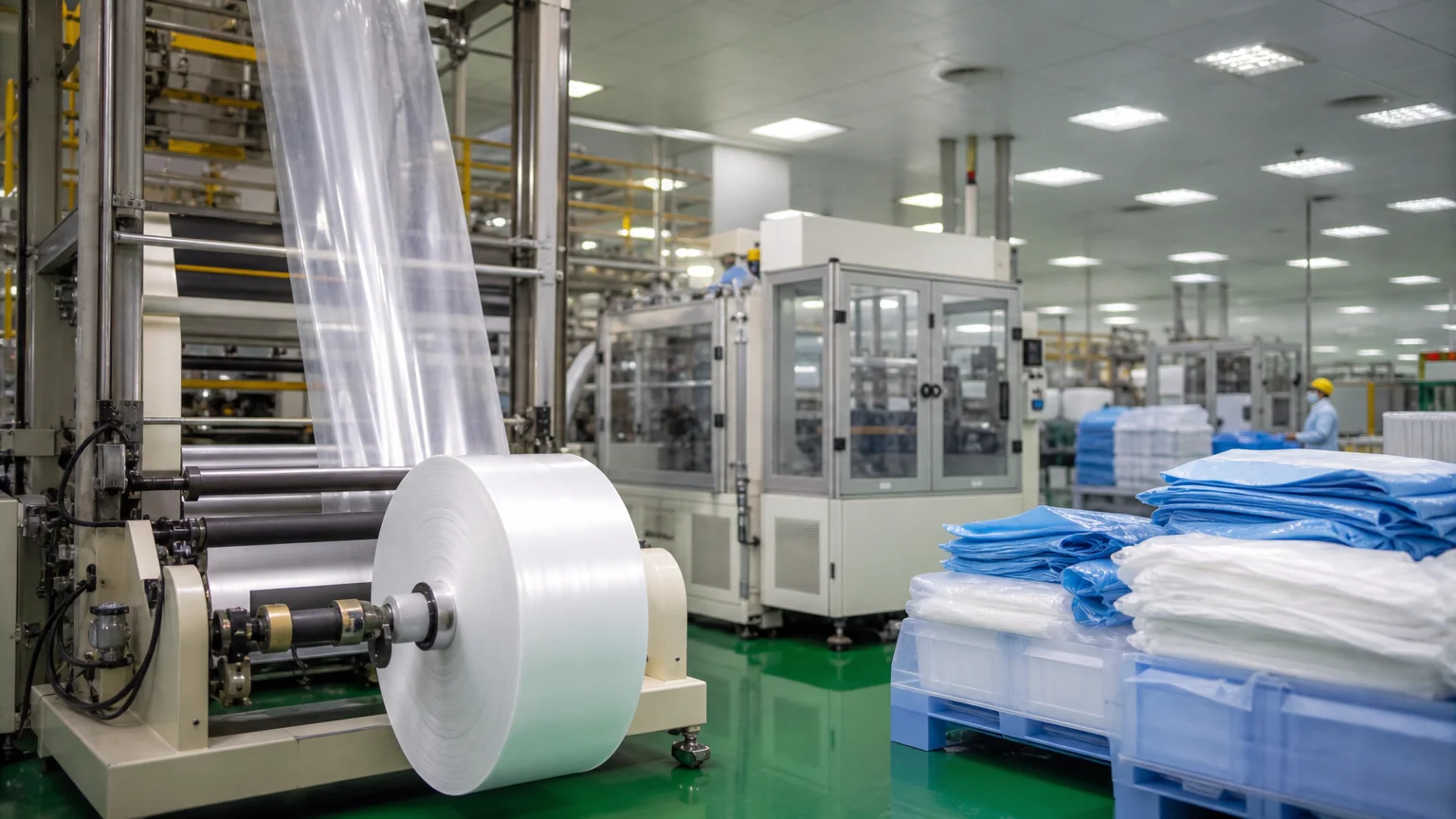
Quality is held to a below-0.1% defect rate (published reference; scope to be confirmed), with sample retention on every batch and full traceability. For private label, that matters twice: once because the box carries your name, and again because the retailer's vendor scorecard will penalize defects against your brand, not the factory's. The OEM/ODM service entry point — covering the full custom build path — is on the OEM/ODM page.
Procurement Action Checklist
Use this four-step checklist to move a private label disposable products program from idea to first bulk shipment without the usual surprises.
- Define the product and market — name the exact item, the material, the target country, and the compliance framework (FDA 21 CFR, EU No. 10/2011) before you ask for a quote.
- Request samples and confirm specs — get a physical sample on the target material, sign off on color, thickness, and count, and lock the artwork files.
- Lock the compliance document set — confirm which certificates and test reports ship with the order, and that food contact docs match your target market.
Frequently Asked Questions
What are private label disposable products?
Private label disposable products are factory-made gloves, aprons, and bags produced to a manufacturer's proven spec but sold under your own brand and packaging. You control the label, the box artwork, and the SKU, while the factory owns the materials, the production line, and the compliance documents. It sits between white label (logo only) and full contract manufacturing (your design from scratch).
What MOQ do I need for a private label disposable order?
The published starting threshold is USD 3,000 per SKU. The actual MOQ can change with material, dimensions, packaging, printed artwork, order mix, and current factory capacity, so obtain written sales confirmation before ordering.
What compliance documents come with a private label order?
Request the current ISO 9001 and BRCGS factory-system certificates, then request product- and market-specific evidence for the proposed SKU, such as the applicable food-contact migration or material test report. Verify the holder, scope, validity, product identity, and target market instead of treating a factory certificate as product approval.
How long do samples and bulk orders take?
Pre-production sample timing is approximately seven days as a reference. Confirm the current sample and bulk-production schedule after the specification, packaging, artwork, and sample are approved, and state in writing whether the schedule starts from deposit, sample approval, or final artwork approval.
Can I private label compostable bags and gloves in the same program?
Yes. Worldchamp runs disposable gloves (PE, CPE, TPE, POE) and a separate biodegradable bag line under the same OEM/ODM and private label service. Compostable bags carry a third-party biodegradable test report (Report No. WT20103211073930WT1, Shenzhen Academy of Metrology & Quality Inspection), so the eco SKU carries a real compliance story alongside the brand.
Put this guide into a procurement workflow
When the product direction is clear, review the low-MOQ sourcing route, and discuss the specification with Worldchamp. Share the task, destination, quantity, packaging and evidence requirements so the next review is specific.
Turn the comparison into a sample and document brief
Share the application, market, quantity, pack format and scope of supporting documents. Worldchamp can then respond against a defined product rather than a generic material request.