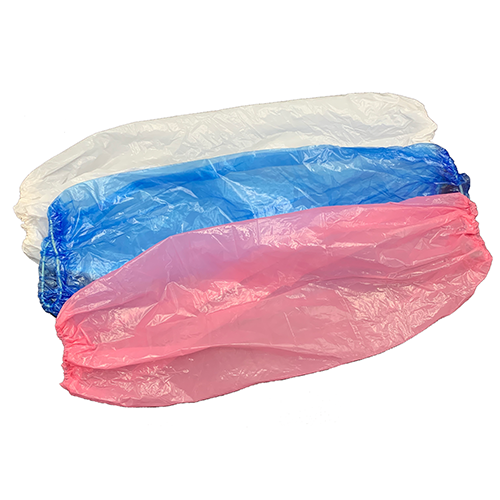
Map the exposed zone
Identify wrist, forearm and upper-arm areas needing disposable coverage.

Forearm coverage workflow
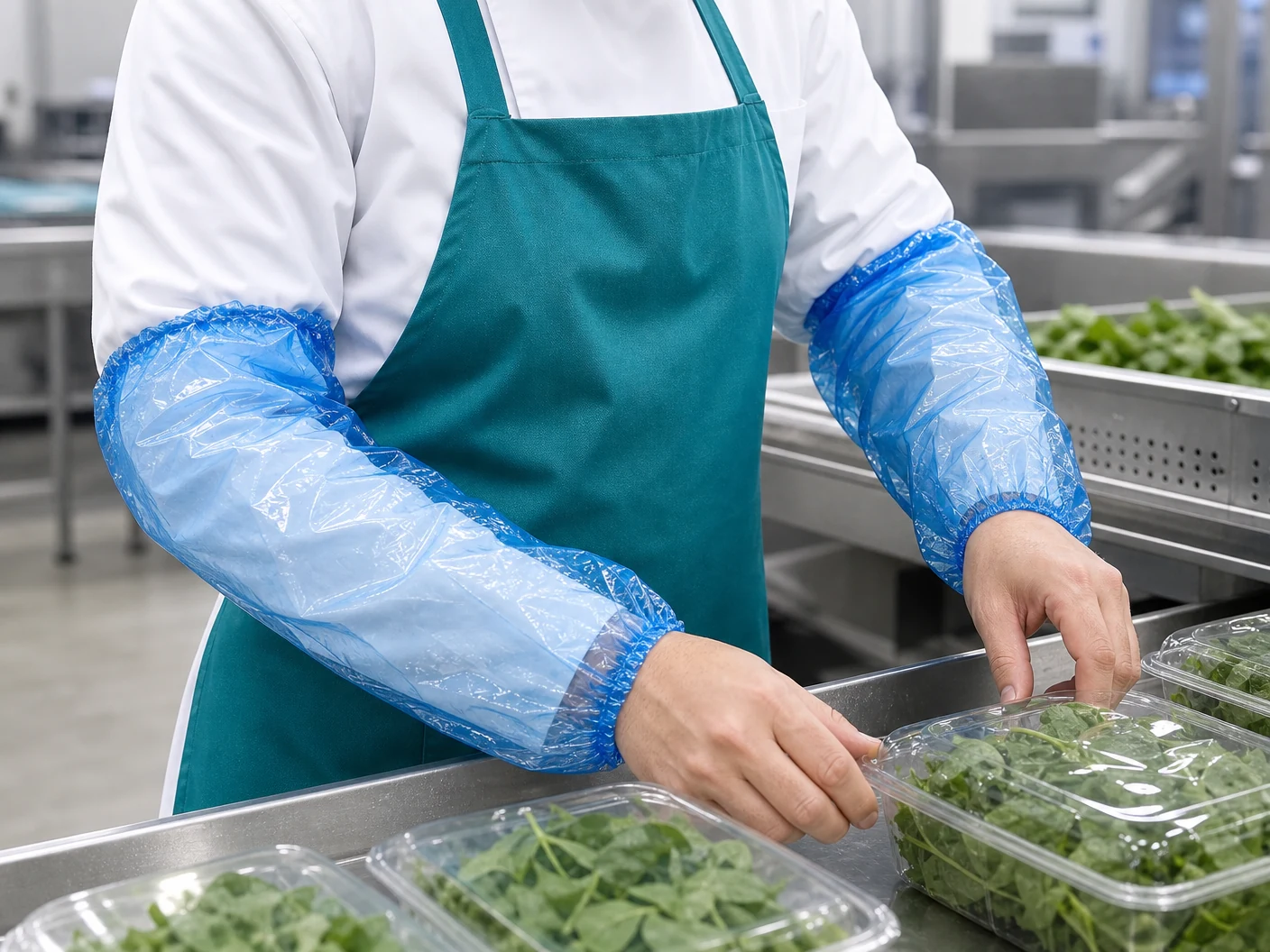
Choose food processing sleeve covers by forearm coverage, garment and glove overlap, wet contact, reaching motion, change workflow and exact product evidence.
Sleeve covers can extend disposable forearm coverage in selected food-line tasks, but they do not establish cut, heat, puncture or chemical protection. Trial the finished PE sleeve with the actual glove and garment during full reach.
Decision sequence
Sleeve covers can extend disposable forearm coverage in selected food-line tasks, but they do not establish cut, heat, puncture or chemical protection. Trial the finished PE sleeve with the actual glove and garment during full reach.
Identify wrist, forearm and upper-arm areas needing disposable coverage.
Trial glove cuff, sleeve cover and work garment during full reach.
Record upper opening slip, elbow bunching and wrist gaps.
Connect removal and replacement to task transitions and contamination events.
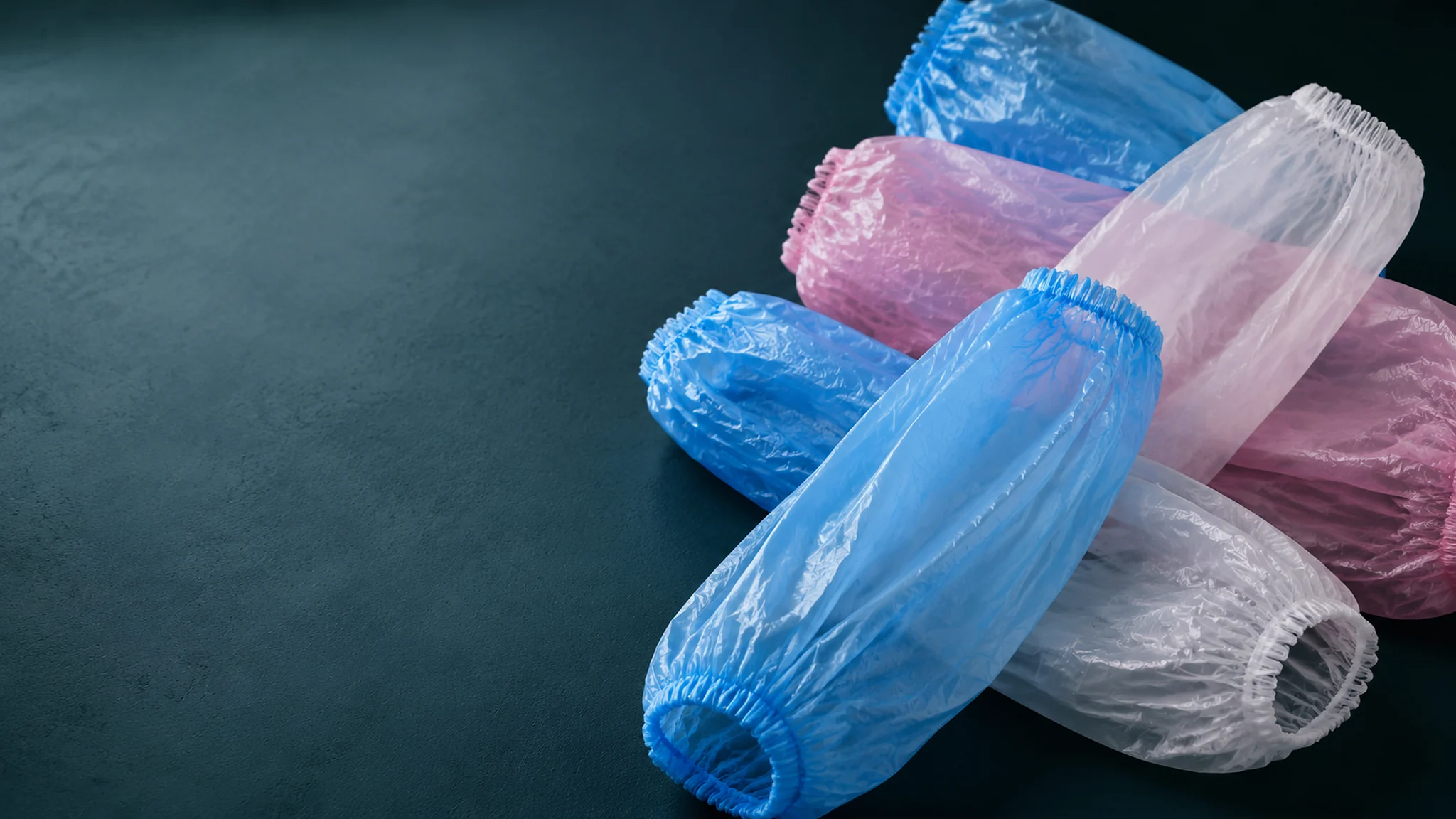
Claim and task boundaries
Do not imply cut, heat, puncture, chemical, medical or waterproof protection from PE film or added length.
Workstation comparison
Hold the operating conditions constant. Record observations separately from compliance or protection claims, and approve only the exact finished product and pack that were reviewed.
| Work area or decision | What to record | What to test | Boundary |
|---|---|---|---|
| Map the exposed zone | Identify wrist, forearm and upper-arm areas needing disposable coverage. | Use the exact product and pack at the real station | Do not imply cut, heat, puncture, chemical, medical or waterproof protection from PE film or added length. |
| Check overlap | Trial glove cuff, sleeve cover and work garment during full reach. | Use the exact product and pack at the real station | Do not imply cut, heat, puncture, chemical, medical or waterproof protection from PE film or added length. |
| Observe retention | Record upper opening slip, elbow bunching and wrist gaps. | Use the exact product and pack at the real station | Do not imply cut, heat, puncture, chemical, medical or waterproof protection from PE film or added length. |
| Define changes | Connect removal and replacement to task transitions and contamination events. | Use the exact product and pack at the real station | Do not imply cut, heat, puncture, chemical, medical or waterproof protection from PE film or added length. |
Buyer questions
There is no universal best product. Define the station, contact, movement, change frequency, pack and destination evidence, then compare finished samples under those conditions.
Usually not. Separate tasks and hazards first, then assign products only where the sample and evidence support the intended use.
Review the written specification, finished sample, pack hierarchy, current product-specific test or certificate scope, artwork and change-control reference.
Send workstation conditions, dimensions, size mix, pack, expected quantity, destination, required records and any incumbent sample or specification.
Prepare a comparable inquiry
A complete brief helps the factory identify realistic product candidates without turning requested features into unsupported capability claims.
We use necessary cookies to operate this site and optional cookies to improve your experience.