Confirm destination
Ask the local collection or composting program what liners it accepts.
Food-scrap liner selection
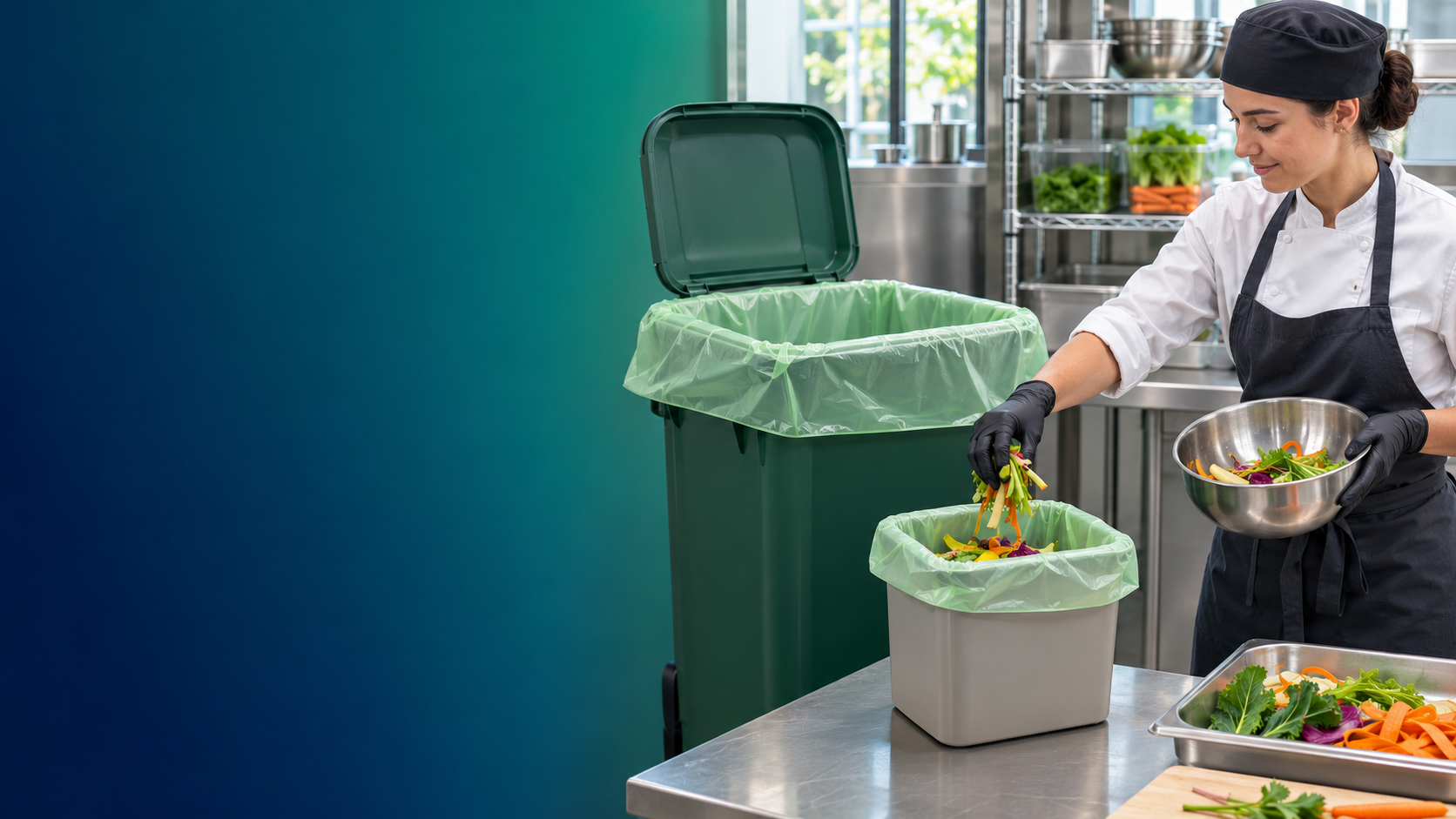
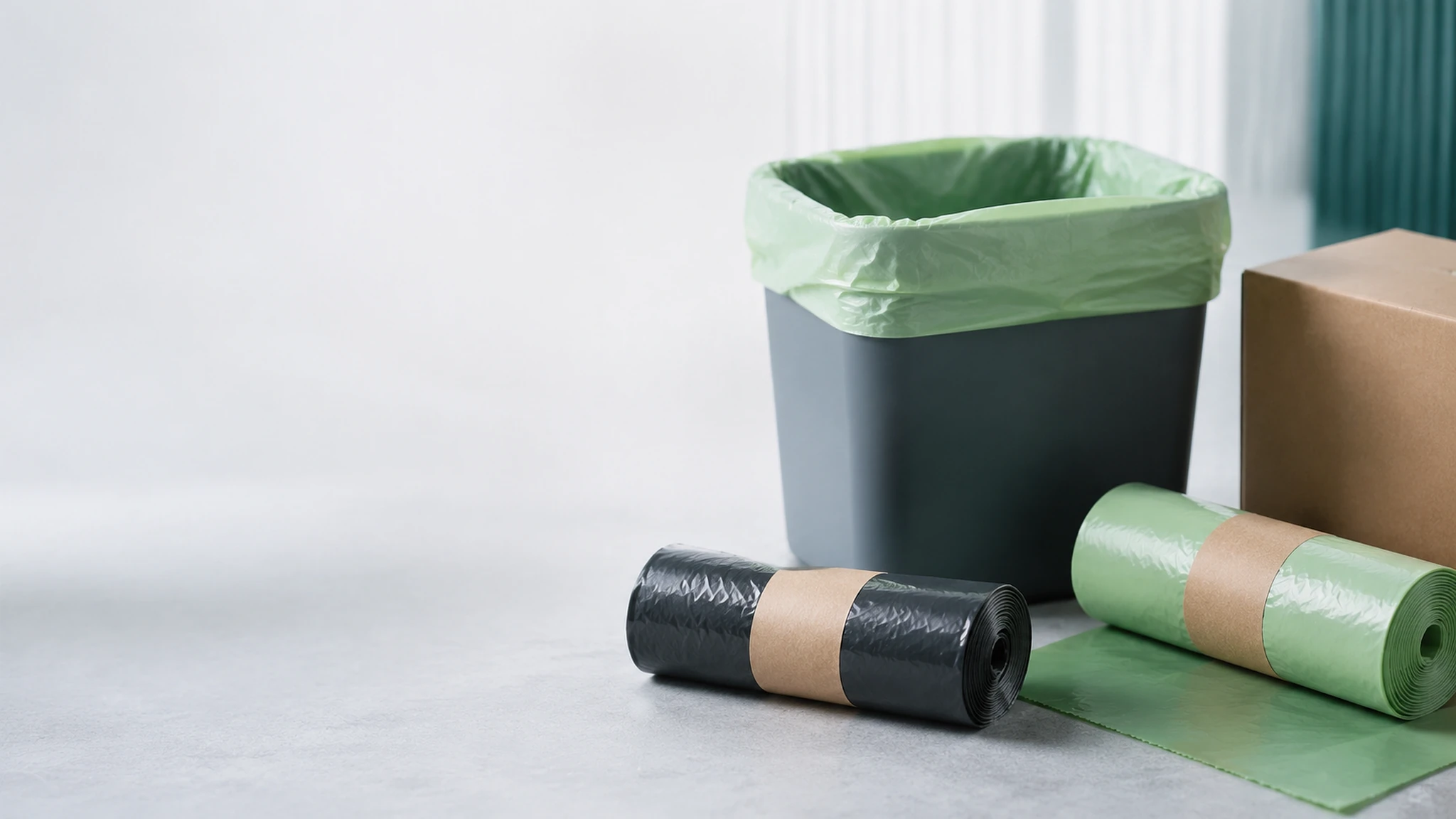
Choose compostable bags for food waste by caddy or bin fit, wet-load trial, collection route, local acceptance and finished-bag evidence.
A compostable liner must fit the container and the actual food-scrap collection method, but collection acceptance remains local. Confirm what the receiving program accepts, then approve the finished bag, claims and documents at SKU level.
Decision sequence
A compostable liner must fit the container and the actual food-scrap collection method, but collection acceptance remains local. Confirm what the receiving program accepts, then approve the finished bag, claims and documents at SKU level.
Ask the local collection or composting program what liners it accepts.
Record rim, depth, circumference, overhang and closure method.
Use representative scraps, dwell time and lifting sequence without inventing a load rating.
Match every compostability statement and mark to the finished bag and market.
Claim and task boundaries
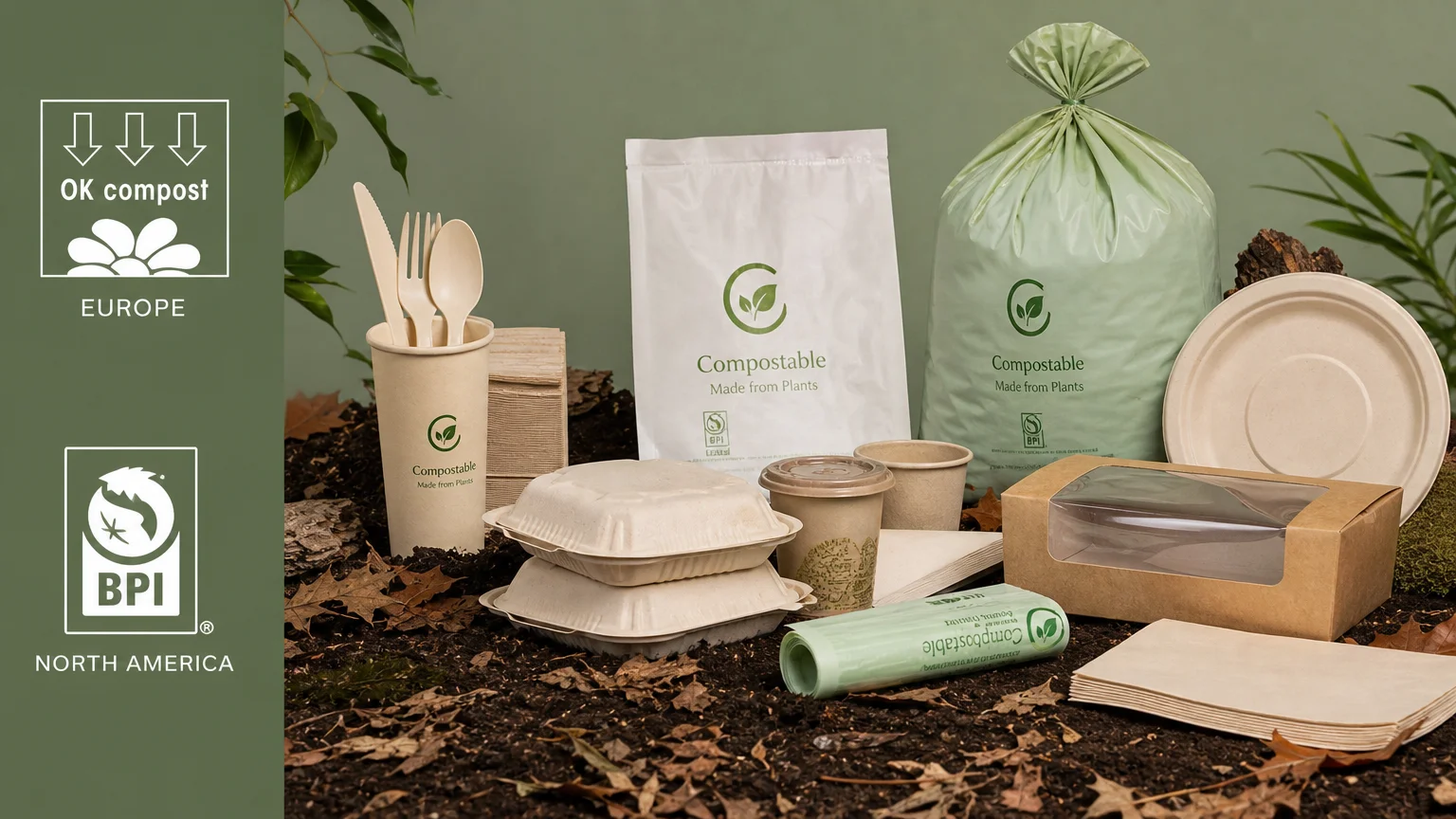
Do not claim universal municipal acceptance or apply glove-only BPI evidence to bags.
Workstation comparison
Hold the operating conditions constant. Record observations separately from compliance or protection claims, and approve only the exact finished product and pack that were reviewed.
| Work area or decision | What to record | What to test | Boundary |
|---|---|---|---|
| Confirm destination | Ask the local collection or composting program what liners it accepts. | Use the exact product and pack at the real station | Do not claim universal municipal acceptance or apply glove-only BPI evidence to bags. |
| Measure the bin | Record rim, depth, circumference, overhang and closure method. | Use the exact product and pack at the real station | Do not claim universal municipal acceptance or apply glove-only BPI evidence to bags. |
| Run a wet-load trial | Use representative scraps, dwell time and lifting sequence without inventing a load rating. | Use the exact product and pack at the real station | Do not claim universal municipal acceptance or apply glove-only BPI evidence to bags. |
| Check claim scope | Match every compostability statement and mark to the finished bag and market. | Use the exact product and pack at the real station | Do not claim universal municipal acceptance or apply glove-only BPI evidence to bags. |
Buyer questions
There is no universal best product. Define the station, contact, movement, change frequency, pack and destination evidence, then compare finished samples under those conditions.
Usually not. Separate tasks and hazards first, then assign products only where the sample and evidence support the intended use.
Review the written specification, finished sample, pack hierarchy, current product-specific test or certificate scope, artwork and change-control reference.
Send workstation conditions, dimensions, size mix, pack, expected quantity, destination, required records and any incumbent sample or specification.
Prepare a comparable inquiry
A complete brief helps the factory identify realistic product candidates without turning requested features into unsupported capability claims.
We use necessary cookies to operate this site and optional cookies to improve your experience.