The Short Answer on BPI Certified Compostable Bags
BPI certified means the Biodegradable Products Institute has listed that specific product as meeting ASTM D6400, the US standard for industrial composting. The named item is tested to break down in a managed composting facility within a defined time, without leaving toxic residue. The mark applies to the product on the certificate, not to every bag a supplier makes.
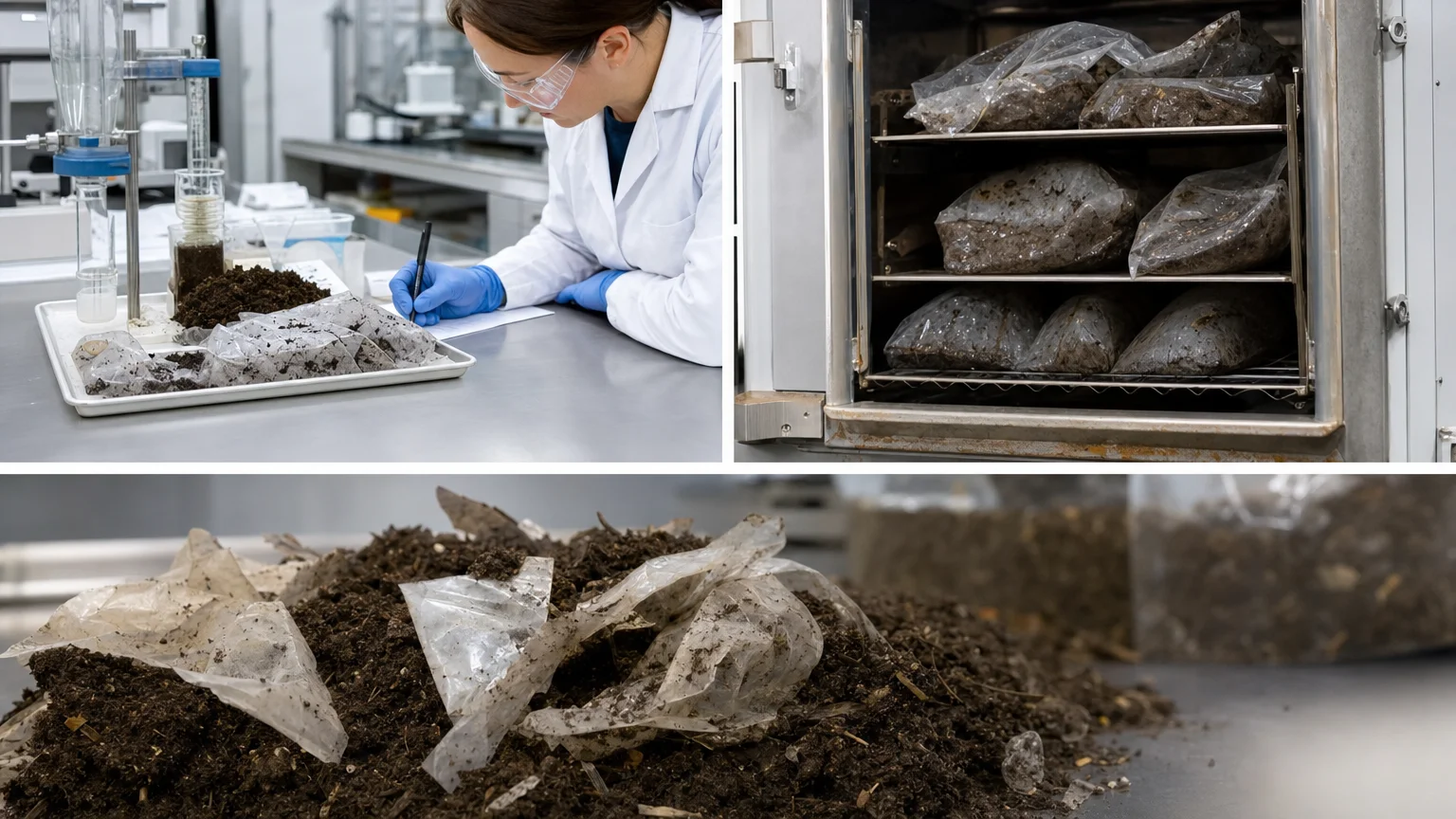
The label does not mean the bag will break down in your backyard. It does not mean every US composting program will accept it. And it does not mean other components — inks, adhesives, zipper closures — are also certified unless the assembled product was tested as a unit.
This guide covers what BPI certification actually tests, how to verify a supplier certificate is real, the critical gap between "BPI certified" and "accepted by your local MRF," and the document checklist B2B buyers should use before placing a bulk order.
What BPI Certification Actually Tests
BPI certification is issued by the Biodegradable Products Institute, a nonprofit organization founded in 1999. It uses ASTM D6400 (or ASTM D6868 for coated paper products) as its core testing standard. These tests confirm three things:
- Biodegradation rate — the material must biodegrade at a rate comparable to known compostable materials under controlled conditions (typically 58°C, aerobic environment).
- Disintegration — less than 10% of the original dry weight can remain as particles larger than 2 mm after 12 weeks in a test compost environment.
- Ecotoxicity — the resulting compost must not harm plant growth, verified by germination and plant growth tests.
What ASTM D6400 Does Not Test
ASTM D6400 tests the base film or resin. It does not automatically extend to add-ons. If your bag has a zip lock, a tie handle, an adhesive label, or a printed ink layer, each of those components needs to be tested and listed in the certificate scope — or your end product is not covered.
This is a common sourcing trap. A supplier shows you a BPI certificate for their base film. But the assembled drawstring bag — with handles and printing — was never certified as a unit. The correct question to ask is: what product model numbers are listed on the certificate?
The MRF Acceptance Gap: Why BPI Certified Does Not Mean Compost-Ready
BPI certification tells you the material can break down under industrial compost conditions. It does not tell you whether the composting facilities in your buyers' cities will actually accept it.
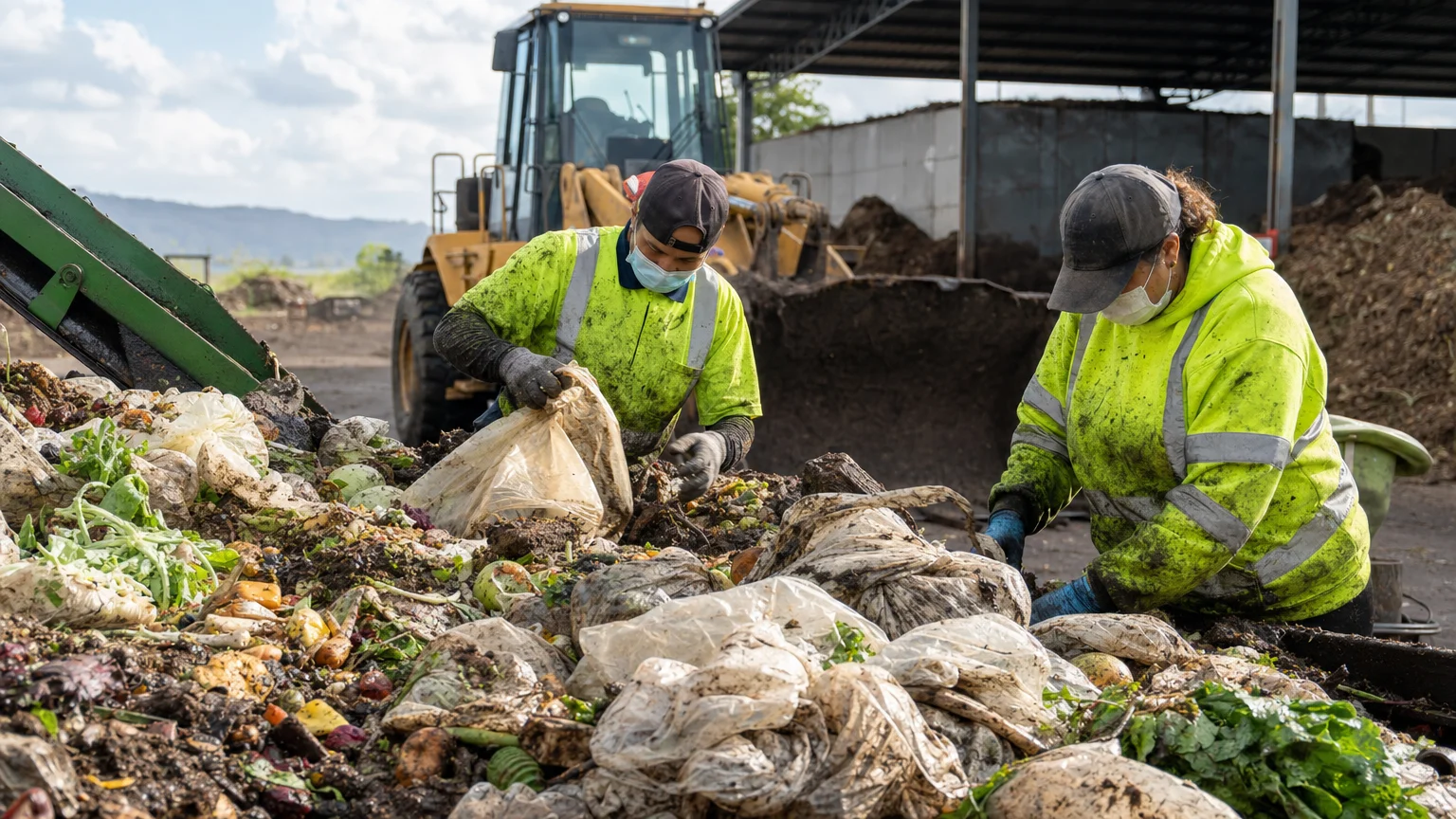
This is the most misunderstood part of BPI certification. The US composting infrastructure is fragmented. Each facility sets its own acceptance policy. Many facilities reject compostable plastics — including BPI-certified bags — because:
- Their equipment cannot reliably sort compostable plastics from conventional plastics by appearance.
- Their composting cycle may be too short (under 90 days) or too cold to meet ASTM D6400 conditions.
- They face contamination liability if a non-compostable bag enters the batch.
Before you source BPI certified compostable bags for a US retail or foodservice buyer, confirm whether the bags will actually reach a compost stream. If your buyer operates in a city with a robust municipal composting program (San Francisco, Seattle, New York), BPI certification is meaningful. If the bags are destined for general household waste with no composting infrastructure, the BPI label has limited practical value — and you should consider whether it justifies the price premium.
How to Verify a BPI Certificate Is Real
Certificate fraud is a real risk in the compostable packaging supply chain. Suppliers sometimes copy another company's certificate, alter the product name, or present an unverified certificate as current. Here is how to verify a BPI certificate before placing an order:
Step 1: Check the BPI Product Catalog
BPI maintains a public, searchable database of all currently certified products at the BPI Product Catalog. Search by company name or product name. If the exact product model number your supplier listed is not in the catalog, the certificate is not valid for that product — regardless of what the PDF says.
Step 2: Match the Product Model Number
Every BPI certificate has a scope that lists specific product model numbers. Ask your supplier to share the certificate document. Cross-reference the model numbers on the certificate with the specific SKU you are ordering. Do not accept "our company is BPI certified" as a substitute for model-level certificate confirmation.
Step 3: Verify the Current Certificate Status
BPI certification requires ongoing renewal and updated test data. Verify the certificate status, issue date, product scope and renewal details before making a current compliance claim. If the supplier cannot provide a current-cycle original, treat the certification claim as unverified.
Step 4: Request the Underlying Test Report
A BPI certificate is based on third-party lab test reports. A credible supplier should be able to share the ASTM D6400 test report from the accredited lab (not just the BPI certificate cover page). The report will show the lab name, test date, product sample description, and results for biodegradation, disintegration, and ecotoxicity.
BPI vs Other Compostable Certifications: Quick Reference
BPI is one of several compostable certification bodies. The right mark depends on your destination market. Use this table as a quick reference:
| Mark | Body | Standard | Market | Composting environment |
|---|---|---|---|---|
| BPI | Biodegradable Products Institute (US) | ASTM D6400 / D6868 | US & Canada | Industrial only |
| DIN CERTCO | DIN CERTCO (Germany) | EN 13432 | Europe | Industrial only |
| SEEDLING | European Bioplastics | EN 13432 / EN 14995 | Europe | Industrial + home |
| TUV Austria | TUV Austria | EN 13432 + proprietary | Europe / Global | Industrial and/or home |
If you are sourcing for a US buyer, BPI is the primary mark to require. For European buyers, DIN CERTCO or SEEDLING is standard. For buyers serving both markets, ask your supplier whether they hold both BPI and a European certification. A dual-certified supplier removes the need to qualify two separate sources. For a deeper comparison of DIN CERTCO versus BPI, see the DIN CERTCO vs BPI compostable certification guide.
What the Published Worldchamp File Shows—and What to Verify
Worldchamp's compostable bag line is supported by a Biodegradable Plastic Bag Inspection Report No. WT20103211073930WT1, issued by the Shenzhen Academy of Metrology & Quality Inspection — a CNAS-accredited, CMA-certified laboratory. This is a third-party test report, not a certification scheme. It verifies the biodegradable performance of the bag material under the test conditions specified in the report.
Do not use the current BPI file as evidence for bags. It is sublicense No. 2486563-4, valid through April 30, 2028, under manufacturer Certificate No. 10529018-3. Its appendix lists only WPP-GL001 gloves sold as three Planetgards SKUs. Review the current document and full scope before approving any BPI claim.
Worldchamp can supply the full compostable bag range including compostable garbage bags, compostable shopping bags, and specialty service bags. Production is in Huizhou, China. The public evidence collection contains ISO 9001 and BRCGS references, but buyers should request the current originals and scope for the proposed SKU before relying on them. The published profile states capacity of 350 tons per month; confirm current availability and any product-specific test evidence for the proposed order.
Supplier Document Checklist for BPI Certified Compostable Bags
When qualifying a supplier for compostable bags, request these documents before placing a production order:
- BPI certificate — confirm the product model numbers match your SKU and the certificate is current status and scope. Cross-check the model number in the BPI Product Catalog.
- Underlying ASTM D6400 test report — issued by an accredited third-party lab, covering biodegradation, disintegration, and ecotoxicity results.
- Certificate scope addendum — if the bag has a closure, handle, or printed layer, ask whether those components are included in the certificate scope or tested separately.
- Factory quality certificate — ISO 9001 or BRCGS Consumer Products certificate confirms production quality management. This is separate from the product compostability test.
- Batch traceability record — each production lot should have a traceable batch ID. This matters if a product recall or customer complaint arises.
- Sample confirmation — request a pre-production sample of the exact bag SKU (size, thickness, print, closure type) and confirm it matches the certified product description.
Frequently Asked Questions
What does BPI certified compostable mean for bags?
BPI certified compostable means the bag has been independently tested to meet ASTM D6400, the US standard for industrial compostability. It confirms the bag will biodegrade, disintegrate, and leave non-toxic residue in a managed compost facility under controlled conditions. It does not confirm home compostability or acceptance by any specific composting program.
Does BPI certification cover all products from a certified company?
No. BPI certification is product-specific, not company-wide. Each product model number must be individually tested and listed on the certificate. A company can hold BPI certification for one bag SKU while its other products remain uncertified. Always verify the specific model number in the current BPI Product Catalog before placing an order.
Can I use BPI certified compostable bags in Europe?
BPI certification is recognized primarily in the US and Canada. European composting programs and retailers typically require DIN CERTCO (against EN 13432) or the SEEDLING mark. If you are sourcing for both US and EU markets, look for a supplier that holds both BPI and a European certification. See the DIN CERTCO vs BPI compostable certification guide for a detailed regional breakdown.
What is the difference between ASTM D6400 and EN 13432?
Both standards test biodegradation, disintegration, and ecotoxicity for industrial composting. ASTM D6400 is used in North America (BPI uses it). EN 13432 is the European standard (DIN CERTCO and SEEDLING use it). The core requirements are similar, but test parameters and pass thresholds differ slightly. Products that pass one standard often pass the other, but each certification body requires its own application and testing cycle.
How do I verify a BPI certificate is current or authentic?
Search the BPI product catalog at bpiworld.org using the company or product name. Confirm the exact product model number appears in the current catalog. Ask the supplier for the latest original certificate and renewal details. Request the underlying ASTM D6400 test report from an accredited lab. A supplier that cannot provide the current certificate and test report should be treated as unverified for your order.
What MOQ and lead time should I plan for compostable bags from Worldchamp?
Pre-production sample timing is approximately seven days as a reference. Confirm the current sample and bulk-production schedule after the specification, packaging, artwork, and sample are approved, and state in writing whether the schedule starts from deposit, sample approval, or final artwork approval.
Put this guide into a procurement workflow
Use the decision criteria above to narrow the product scope, then Compostable Bags Manufacturing Partner. Compare the exact construction and pack instead of approving a material name alone.
When the product direction is clear, discuss the specification with Worldchamp. Share the task, destination, quantity, packaging and evidence requirements so the next review is specific.
Request current compostability documents
Share the application, market, quantity, pack format and scope of supporting documents. Worldchamp can then respond against a defined product rather than a generic material request.