What Is Donning and Doffing PPE?
Donning means putting on personal protective equipment (PPE) before entering a risk area. Doffing means taking it off safely after. Both terms come from standard infection control protocol.
The sequence matters as much as the equipment itself. Putting gloves on before a gown, or removing a gown before gloves, can transfer contamination from the outer surface to your hands or clothing. That defeats the purpose of wearing PPE at all.
Why the Order of PPE Matters
The OSHA Personal Protective Equipment standard requires that PPE be used correctly — not just worn. Order is part of correct use.
When you put PPE on, you move from the cleanest items to those most exposed to contamination. When you take it off, you do the reverse. You remove the most contaminated items first, while keeping your hands protected until the end.
A wrong step in either direction creates a contamination pathway. If you remove your gown after your gloves, your bare hands touch the outside of the gown — the most contaminated surface. That risk is avoidable with a clear, practiced sequence.
Who Needs to Know This?
Donning and doffing protocol applies in healthcare, food processing, laboratory, and cleanroom settings. B2B buyers sourcing PPE for hospitals, medical distributors, food plants, or institutional supply need to understand the protocol. It helps them specify the right products and train their end users correctly.
The Correct Donning Sequence (Step by Step)
The standard donning order puts low-risk items on first, then builds toward the highest-contact surfaces. Follow these steps in order.
- Boot covers — Put on PE boot covers first. Feet contact the floor, which is a low-risk surface. Getting boot covers on before the gown prevents the gown from dragging on the floor during donning.
- Isolation gown — Put on the PE or CPE isolation gown over your clothing. Tie or secure at the back. Ensure full torso coverage before moving to the next step.
- Sleeve covers (if used) — Slide PE sleeve covers over the gown sleeves if the task involves extended arm exposure. Tuck the cuff end under the glove to prevent gaps at the wrist.
- Gloves — Put on disposable gloves last. Pull the cuff over the gown or sleeve cover cuff. Gloves are the final barrier and go on last so they seal over everything else.
Some protocols also include a face mask or eye protection. If required, those typically go on between the gown and gloves. This guide focuses on the disposable body PPE most relevant to Worldchamp's product range.
The Correct Doffing Sequence (Step by Step)
Doffing reverses the logic of donning. The most contaminated items come off first, while your hands stay protected as long as possible.

- Gloves first — Pinch the outside of one glove near the wrist and peel it off inside-out. Hold it in your gloved hand. Slide two fingers under the second glove cuff and peel it off inside-out over the first glove. Dispose of both. This technique prevents your bare skin from touching the contaminated outer glove surface.
- Gown — Untie or unseal the gown. Pull it away from your body by grasping the inside surfaces only. Roll it inside-out as you remove it. Dispose immediately. Avoid letting the outside of the gown touch your clothing or skin.
- Sleeve covers (if used) — Remove sleeve covers along with or immediately after the gown, gripping from the inside only.
- Boot covers — Remove boot covers last. Grip from the inside or use a foot-pedal bin if available. Boot covers contact the floor and should not be handled by bare hands after gloves are removed.
- Hand hygiene — Wash or sanitize hands immediately after removing all PPE, even if gloves were worn throughout.
The Inside-Out Rule
Every item removed during doffing should come off inside-out where possible. This traps the contaminated outer surface inside the item before disposal. It is the single most important technique in doffing — and the one most often skipped under time pressure.
Which PPE Items Make Up a Full Set?
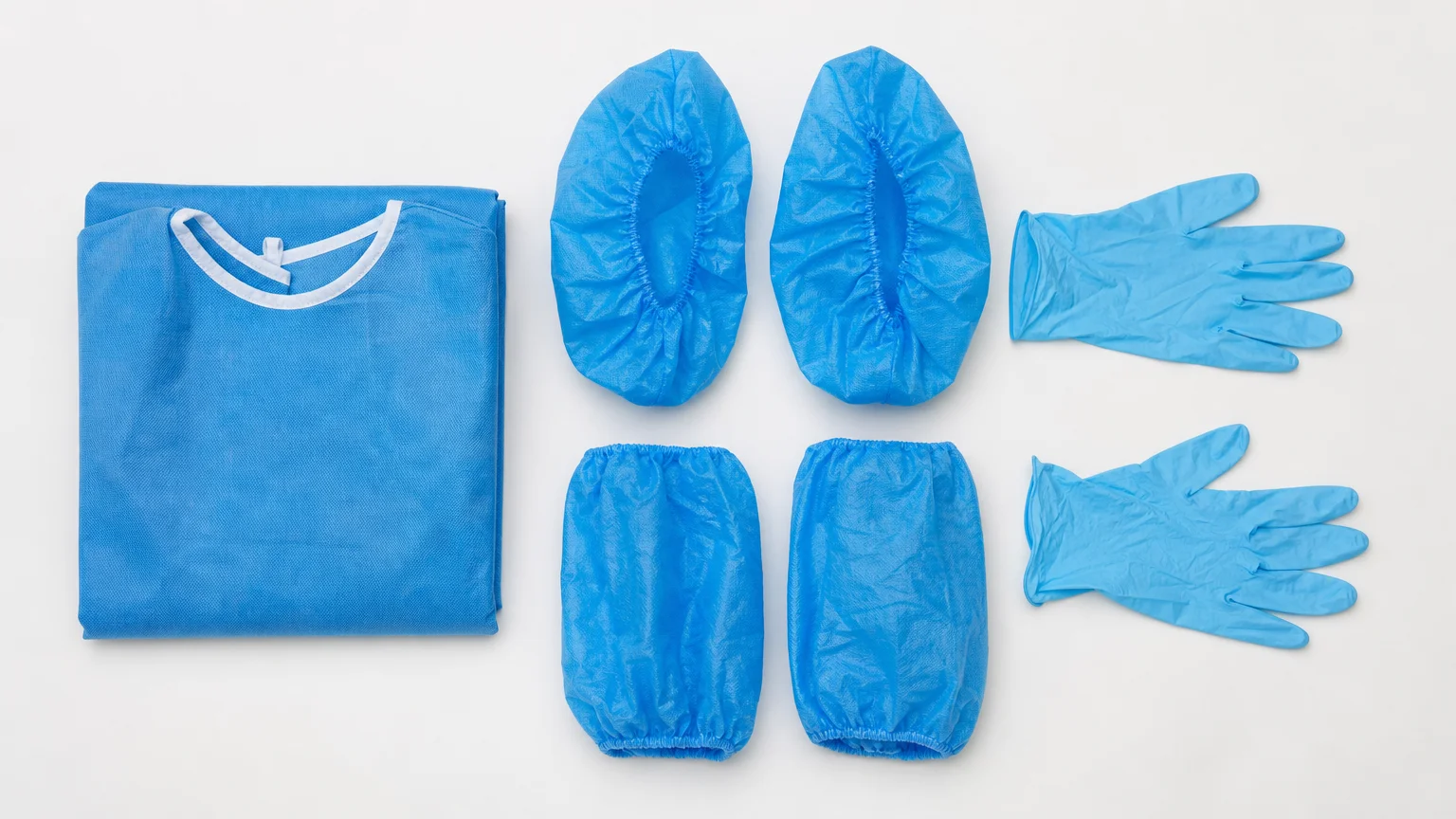
A full disposable PPE set for standard infection-control or controlled-environment tasks includes four item types. Each one covers a distinct body zone and barrier function.
| PPE Item | Material | Barrier Function | Donning Order |
|---|---|---|---|
| Boot covers | PE film | Foot and sole protection from floor contaminants | 1st (first on) |
| Isolation gown | PE or CPE | Full torso barrier, fluid splash resistance | 2nd |
| Sleeve covers | PE | Extended arm and wrist protection | 3rd (optional) |
| Disposable gloves | PE, CPE, or POE | Hand barrier, final seal over gown cuffs | 4th (last on) |
For most standard protocols, PE gowns and PE gloves cover the core requirement. CPE gowns offer heavier fluid resistance for higher-exposure tasks. POE or CPE gloves suit tasks requiring better elasticity or longer wear time than standard PE gloves allow.
When Are Sleeve Covers Needed?
Sleeve covers are optional in many settings. They are typically added when the task involves reaching into containers, working below shoulder height in fluid-risk environments, or when the gown sleeve length does not reach the glove cuff. If your end users work in food processing or lab environments, sleeve covers close the wrist gap between gown cuff and glove.
Common Mistakes in Donning and Doffing
Most contamination incidents during PPE removal come from a small set of repeatable errors. These are worth including in buyer training documentation and product specification sheets.
- Touching the outside of removed gloves with bare hands — The most common doffing error. The inside-out glove removal technique eliminates this risk entirely.
- Removing the gown after the gloves — Bare hands then touch the contaminated gown exterior. Gloves must always come off first.
- Skipping hand hygiene after doffing — Even correct doffing technique does not eliminate all transfer risk. Hand hygiene is mandatory at the end of every removal sequence.
- Glove cuffs not sealed over gown cuffs at donning — Leaves a wrist gap. Pull glove cuff over the gown cuff during donning to close this gap before work begins.
- Reusing single-use PPE — Disposable gowns, gloves, and boot covers are designed for one use. Physical integrity degrades on re-wear, and contamination risk increases significantly.
Worldchamp: Single-Source PPE Supplier for Distributors
Medical supply distributors and procurement teams sourcing non-sterile disposable PPE often need a single manufacturer who can supply the full donning and doffing kit — gown, gloves, boot covers, and sleeve covers — from one certified facility.
Key sourcing parameters for distributors:
- Sample lead time: approximately 7 days
- Monthly output: 350 tonnes across all product lines
- Defect rate: below 0.1% per batch with full traceability ((published reference; scope to be confirmed))
Single-source procurement from one certified facility simplifies your supplier qualification, audit documentation, and compliance package requests. Browse our protective wear product range or aprons and capes to see the full offering.
Procurement Action Checklist
- Confirm the full PPE set your end users need — Identify whether the task requires all four items or a subset (e.g., gown plus gloves only, no sleeve covers).
- Match material to exposure level — PE gowns for light-splash tasks; CPE gowns for higher fluid-resistance requirements; CPE or POE gloves for tasks needing more elasticity than standard PE gloves.
- Request facility certificates upfront — Ask for ISO 9001, BRCGS Consumer Products, and the Class I Medical Device Production Certificate before placing a first order.
For the gown line specifically, confirm how the chosen barrier level is verified before you commit to a bulk order — the gown wholesale programme lists the sizes, cuffs and private-label options available, and the isolation gown levels guide explains how to match AAMI PB70 grading to each task your end users perform.
Frequently Asked Questions
What does "donning" mean in PPE?
Donning means putting on personal protective equipment in the correct order before entering a risk area. The standard donning sequence for disposable PPE is: boot covers first, then isolation gown, then sleeve covers (if used), then gloves last.
What does "doffing" mean in PPE?
Doffing means removing PPE safely after a task or before leaving a controlled area. The doffing sequence reverses donning order — gloves come off first using the inside-out technique, followed by the gown, sleeve covers, and boot covers last. Hand hygiene is mandatory after all items are removed.
What is the correct order of doffing PPE?
The correct doffing order is: gloves first (inside-out), then isolation gown (inside-out), then sleeve covers, then boot covers. Hand hygiene immediately follows. Removing gloves last after the gown is the most common error and risks contaminating bare hands.
Why is proper donning and doffing of PPE important?
Proper donning and doffing prevents contamination transfer from the outer surface of PPE to the wearer's hands, clothing, and skin. A wrong step — such as touching the outside of a contaminated glove during removal — creates the exact exposure risk the PPE was designed to prevent. Correct sequence is as important as wearing PPE at all.
Can Worldchamp supply the full PPE set for donning and doffing protocols?
The verified product range includes disposable gloves, PE aprons, CPE gowns, boot covers, and sleeves. Confirm that each selected item matches the intended use, construction, packaging, and destination-market evidence; one factory credential does not establish the same protection level for every item.
Put this guide into a procurement workflow
When the product direction is clear, discuss the specification with Worldchamp. Share the task, destination, quantity, packaging and evidence requirements so the next review is specific.
Turn the comparison into a sample and document brief
Share the application, market, quantity, pack format and scope of supporting documents. Worldchamp can then respond against a defined product rather than a generic material request.