The Short Answer on Isolation Gown Levels
Under AAMI PB70, a Level 3 isolation gown resists fluid under pressure, while a Level 4 isolation gown also passes a viral-barrier test. Levels 1 and 2 cover lighter splash. The level comes from product-specific test evidence, not from calling the film PE or CPE. Factory construction, private label and sampling sit on the isolation gown supplier page.
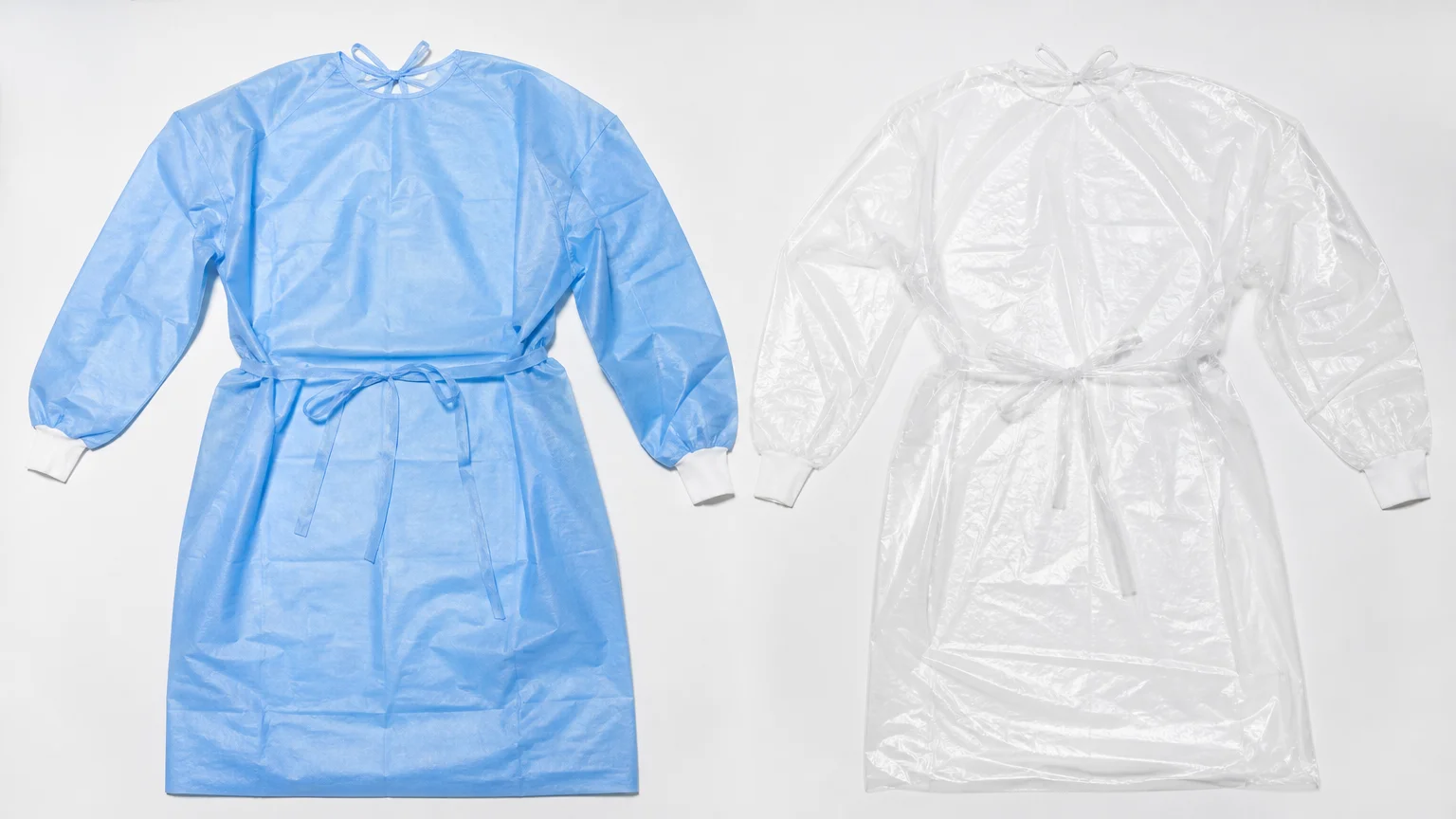
For most disposable PE and CPE gown sourcing, the real choice sits between low fluid resistance (basic patient care, food handling, light cleaning) and moderate fluid resistance (procedures with splashes). Few B2B buyers actually need Level 4 viral-barrier gowns. This guide breaks down the levels, maps them to materials, and shows you how to match a gown level to your buyer's task without overpaying.
Isolation Gown Levels Guide: Buyer Guide
Buyers often confuse "isolation gown" with one single product. In practice, the term covers a range of garments graded by fluid resistance. Two naming systems dominate the market.
The AAMI PB70 standard, set by the Association for the Advancement of Medical Instrumentation, grades liquid barrier performance into Levels 1 through 4. This is the reference framework used across North America and many export markets. The U.S. CDC PPE-Info standards index links to the documents that define and test these classes.
In Europe, the EN 13795 standard governs surgical gowns and drapes and uses a different set of test parameters. A gown built to AAMI PB70 Level 3 will not automatically carry an EN 13795 mark. If your buyer targets the EU, ask the supplier which standard the gown is tested against before ordering.
How AAMI PB70 Levels Actually Differ
Each level is defined by a specific lab test for fluid resistance. The jump from Level 1 to Level 2 is about impact penetration. The jump from Level 3 to Level 4 adds a viral barrier test. Here is what each level means in plain terms. A material name does not equal an AAMI level: PE or CPE only describe the film, while the level claim must be supported by product-specific test evidence.
| AAMI level | Fluid resistance test | Typical use | Disposable material fit |
|---|---|---|---|
| Level 1 | Minimal fluid, light spray | Visitor cover, basic care, food handling | Light PE gown |
| Level 2 | Low fluid, splash risk | Standard patient care, blood draw | Standard PE or CPE gown |
| Level 3 | Moderate fluid, pressure spray | Procedures with arterial spray | Thicker CPE gown |
| Level 4 | Heavy fluid, viral barrier | Surgery, pathogen exposure | Reinforced or SMS gown |
Isolation gown specification checklist
Before approving a quotation, record the specification that sits behind the level claim:
| Specification | What to record | Why procurement needs it |
|---|---|---|
| Material and thickness | PE or CPE, nominal microns and finished weight | Controls tear resistance, coverage and cost |
| Barrier evidence | Test method, level, laboratory and report date | Separates a tested product claim from a factory certificate |
| Construction | Cuff, neck closure, waist ties and seam details | Prevents leakage through gaps during the task |
| Pack and traceability | Size range, units per pack, lot code and retained sample | Supports line fit checks, replenishment and recalls |
Most disposable polyolefin gowns sold to food plants, beauty chains, and light medical auxiliary use fall at Level 1 or Level 2. Level 3 CPE gowns handle splashier tasks. Level 4 usually calls for SMS or reinforced fabric, which sits outside the thin-film PE/CPE range.
Key Factors to Compare
1. Material: PE vs CPE Gown
Material is the single biggest driver of gown level and cost. PE (polyethylene) gowns are cast from a thin, single-layer film. They are the most economical option and suit low-fluid tasks like food processing, visitor cover, and light cleaning. They tear more easily under stress.
CPE (cast polyethylene) gowns use a denser, embossed film. The added thickness and textured surface give better fluid holdout and puncture resistance than plain PE. CPE is the natural fit when a buyer needs Level 2 to Level 3 performance in a disposable. See the CPE gown detail page for the standard spec.
2. Thickness and Weight
Gown thickness is usually quoted in grams per square meter (gsm) or mils. A basic PE gown runs around 30 to 40 gsm. A standard CPE gown sits higher, often 40 to 60 gsm. Thicker gowns cost more per unit but survive longer wear cycles and resist snags. Buyers should match thickness to wear time, not just to a level label.
3. Cuff and Closure Type
The cuff decides whether fluid runs down the sleeve into the gown. Elastic or knitted cuffs grip the wrist and seal the gap. Open cuffs are cheaper but let fluid in during splash tasks. Back ties and neck closures should be long enough to overlap without gaping. A Level 2 gown with open cuffs can perform worse than a well-sealed Level 1 in real use.
4. Compliance and Standard Claim
A gown sold with an "AAMI Level" claim should carry test data for that level. Ask the supplier for the test report, not just the label. Public files reference BRCGS Consumer Products and ISO 9001 certificates; request the current originals, validity and scope before relying on either claim. For market-specific medical or fluid-barrier compliance documents, request them by target market and regulatory framework, since a factory quality certificate is not the same as a product barrier test.
5. Latex-Free and Allergen Status
PE and CPE gowns are latex-free by nature. This matters for buyers supplying hospitals or salons with latex-allergy policies. Confirm the elastic cuffs too, since some cuffs use latex rubber. A latex-free gown with latex cuffs still triggers allergies.
Product and Material Recommendations
The right gown level depends on the task, not the buyer's budget ceiling. Specifying more gown than the task needs inflates cost. Specifying less risks contamination. Here is how to match level to task.

When to Choose a PE Gown
PE gowns fit Level 1 and light Level 2 tasks. Use them for food processing lines, beauty salon cover, visitor traffic, and basic cleaning. They are cheap, light, and easy to dispense in bulk. They are wrong for any task with sustained spray or sharp instrument handling.
When to Choose a CPE Gown
CPE gowns fit Level 2 and Level 3 tasks. Use them for patient care with splash risk, lab work, and food tasks with heavy liquid contact. The embossed film resists tears better than PE. The trade-off is a higher per-unit cost and a slightly stiffer feel. For the gown line, browse the gowns and isolation wear collection.
When a Disposable Gown Is the Wrong Choice
Level 4 viral-barrier protection is rarely met by a thin PE or CPE film. Surgical settings, pathogen handling, and long arterial procedures call for reinforced SMS gowns or reusable surgical gowns sterilized between uses. Pushing a disposable film gown into a Level 4 task is a safety failure, not a cost saving. Know where the disposable range ends.
Layering Gowns With the Rest of the Protective Wear Set
An isolation gown rarely works alone. The buyer's task usually needs a full set: gown, sleeve covers, boot covers, and sometimes an apron over the gown for extra splash zones. Sourcing the set from one supplier keeps material, color, and compliance consistent.
For a complete body-protection program, layer the disposable protective wear hub with sub-collections for aprons and capes and covers and sleeves. One supplier across the set also simplifies compliance documents and batch traceability.
Worldchamp Manufacturing Context
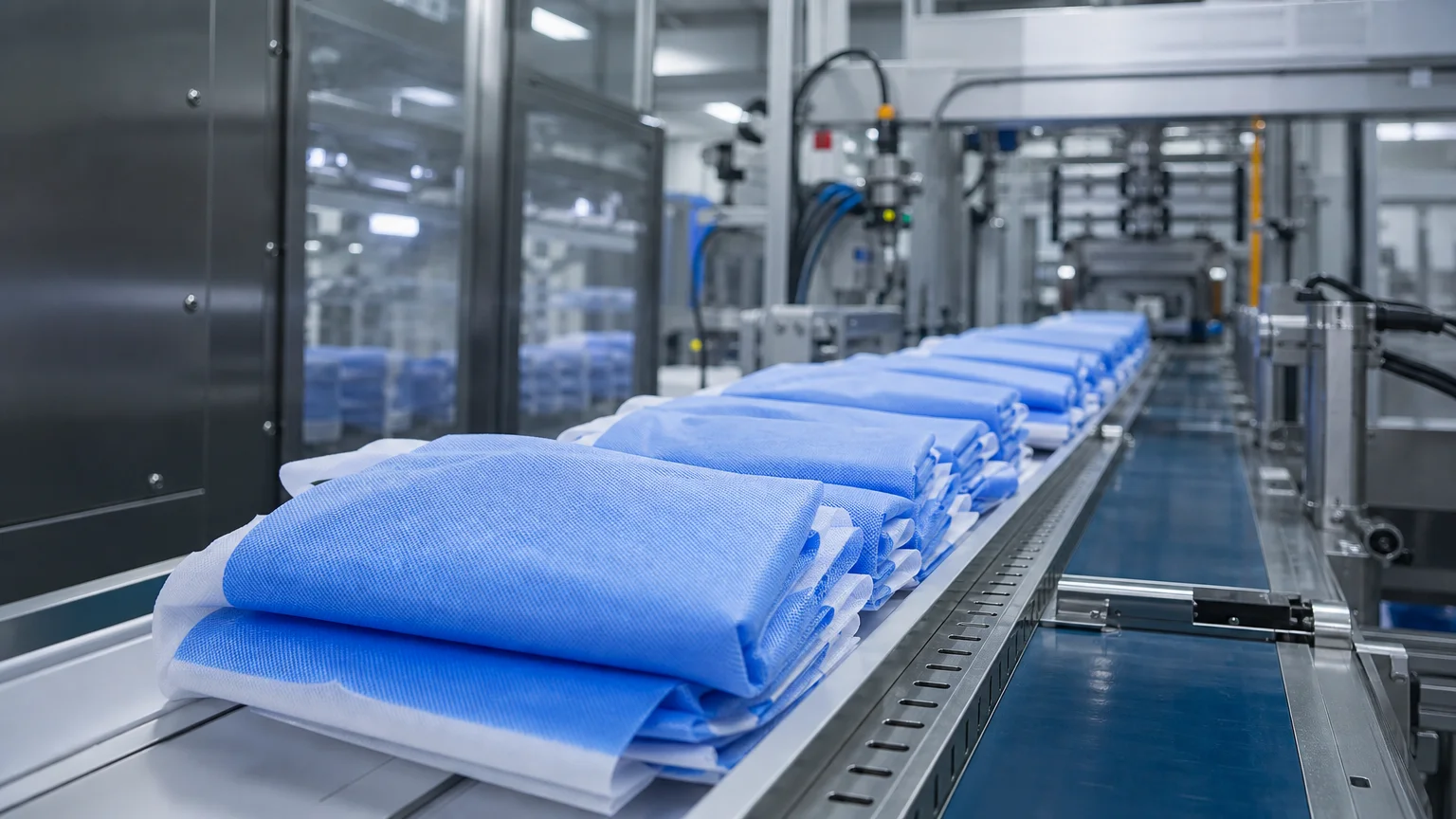
Worldchamp produces disposable PE and CPE protective wear in Huizhou, China, alongside aprons, sleeves, and boot covers. The published company profile describes a 12,000 m² full-process factory, a Class 100,000 clean workshop, automated production lines, and stated capacity of 350 tons per month.
These factory facts describe manufacturing capability, not an AAMI level or product certification. For a gown quotation, request the current product specification, batch traceability details, and any barrier test report for the exact SKU and target market. Do not treat a factory certificate as a substitute for product-level test evidence.
Public evidence references BRCGS Consumer Products Certificate No. CN-BRCCP-251634 and ISO 9001 Certificate No. 77067/A/0001/UK/En. Request the current originals, validity and scope for the proposed gown SKU. Barrier-level test reports for specific gown levels are provided against the buyer's target market and standard on request.
Next Steps for Procurement
- Map the task to a level — list each buyer use case and assign AAMI PB70 Level 1 to 4 before you spec material.
- Request the test report — ask the supplier for fluid resistance data backing any level claim, not just the label.
- Sample two materials — order PE and CPE samples to test tear, cuff seal, and comfort against the real task.
- Confirm compliance documents — match factory certificates and any barrier test to your target market's standard.
Once the level and material are fixed, move to volume, packaging and lead-time terms. Our isolation gown wholesale programme sets out carton counts, cuff and tie options, private-label artwork and the samples available before a bulk order. Buyers sourcing the wider protective-wear set can compare gowns and isolation wear alongside CPE gown specifications, or review healthcare procurement requirements where barrier levels are audited.
Frequently Asked Questions
What are the AAMI PB70 isolation gown levels?
AAMI PB70 grades fluid barrier performance into four levels. Level 1 handles minimal fluid, Level 2 low splash, Level 3 moderate pressure spray, and Level 4 heavy fluid with a viral barrier. Each level is set by a specific lab test for impact penetration and, at Level 4, viral resistance.
What level of isolation gown do I need for food handling?
Most food handling needs a Level 1 PE gown. Food tasks with heavy liquid splash, like washing and butchering, suit a Level 2 CPE gown. The goal is splash protection and easy changeover, not viral barrier performance, so a thin disposable is usually enough.
What is the difference between a PE gown and a CPE gown?
A PE gown is a thin single-layer polyethylene film, cheaper and suited to low-fluid tasks. A CPE gown uses a denser, embossed cast polyethylene film that resists tears and fluid better, fitting higher splash tasks. CPE costs more per unit but performs at a higher gown level.
Is a factory BRCGS certificate the same as a gown barrier test?
No. A BRCGS Consumer Products certificate verifies the factory quality system, not the fluid barrier of a specific gown. For a level claim, request the product-level fluid resistance test report. Factory certificates and product barrier tests are separate documents.
What MOQ and lead time should I plan for disposable isolation gowns?
Pre-production sample timing is approximately seven days as a reference. Confirm the current sample and bulk-production schedule after the specification, packaging, artwork, and sample are approved, and state in writing whether the schedule starts from deposit, sample approval, or final artwork approval.
Put this guide into a procurement workflow
When the product direction is clear, discuss the specification with Worldchamp. Share the task, destination, quantity, packaging and evidence requirements so the next review is specific.
Turn the comparison into a sample and document brief
Share the application, market, quantity, pack format and scope of supporting documents. Worldchamp can then respond against a defined product rather than a generic material request.