The Short Answer on POE vs Nitrile Gloves
POE (polyolefin elastomer) gloves are a newer, latex-free thermoplastic elastomer built for food handling, light lab work, and medical auxiliary tasks. Nitrile gloves use acrylonitrile-butadiene rubber, a mature material with decades of chemical resistance data in medical and lab use. The core difference is documentation depth, not just feel.
Worldchamp operates a 12,000 m² facility with a Class 100,000 clean workshop and holds BRCGS Consumer Products Certificate No. CN-BRCCP-251634 and ISO 9001 Certificate No. 77067/A/0001/UK/En. This guide reflects first-hand POE compound development, not a re-sold catalog claim.
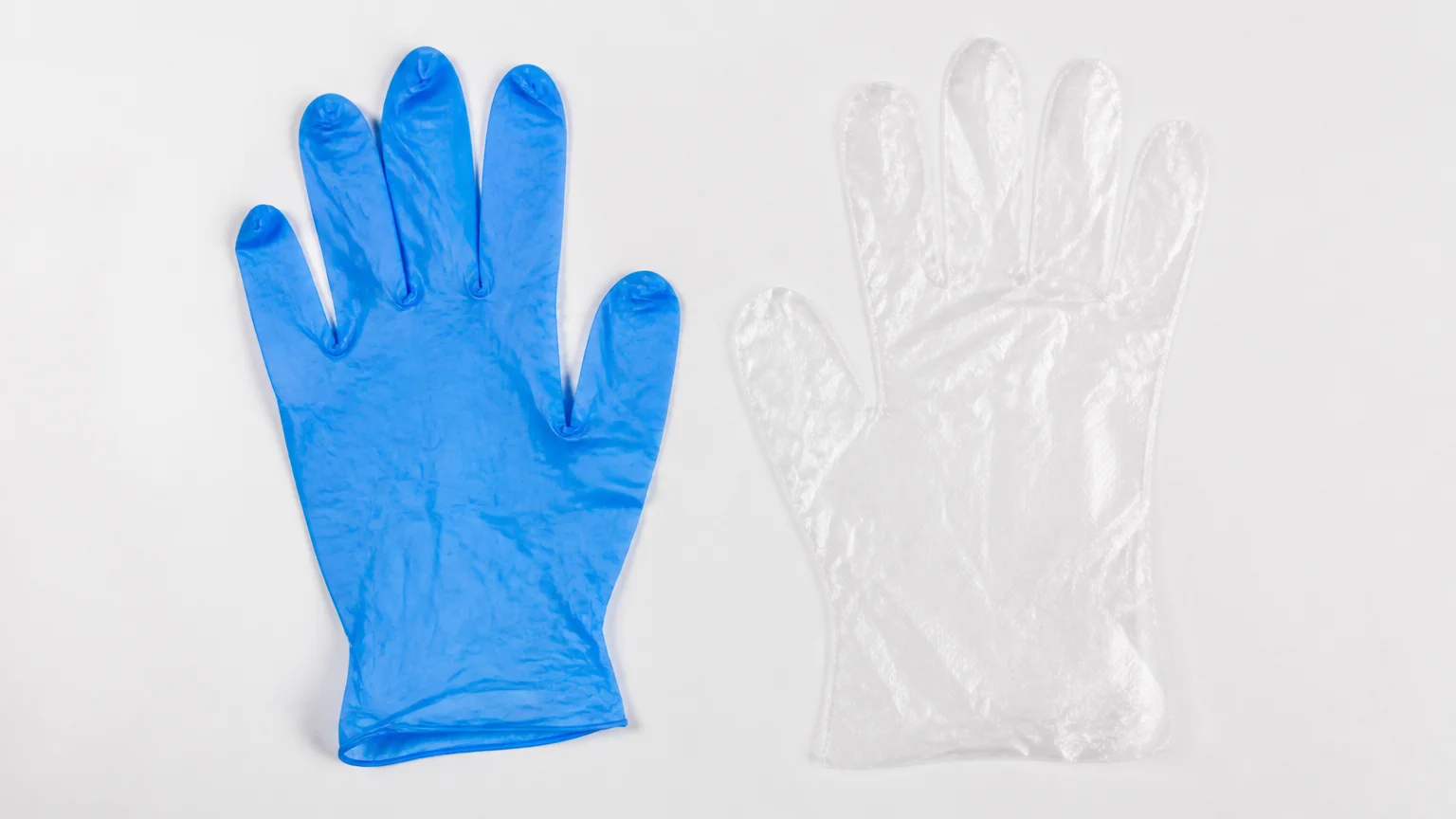
Choose POE when cost stability and a latex-free, stretch-rich general glove matter most. Stay with nitrile when your task needs proven chemical resistance or your buyer demands a long regulatory track record. Worldchamp pioneered the industry-first POE glove in 2024, so this guide comes from the team that formulated the material.
POE vs Nitrile: The Core Material Difference
POE belongs to the thermoplastic elastomer family. It is a polyolefin-based polymer, so it melts and reshapes under heat and carries no natural rubber latex protein. The result is a soft, stretchy glove that fits closer than flat polyethylene but costs less than nitrile. Learn more in Wikipedia, Thermoplastic elastomer and Wikipedia, Polyolefin.
Nitrile is a synthetic rubber made from acrylonitrile and butadiene. It built its reputation in medical and chemical handling because it resists oils, solvents, and many drugs. Its compliance and performance data stack is decades deep. See Wikipedia, Nitrile for the base chemistry.
The buyer-level gap is this: nitrile is the safe default when a spec sheet or tender asks for "proven chemical resistance." POE is the smarter buy when the task is light to medium, the buyer wants stable pricing, and latex-free comfort matters. Worldchamp's POE material innovation page details how we position the compound.
Key Factors to Compare
Most comparison guides stop at "POE is cheaper." That misses what actually drives a sourcing decision. Below are the five dimensions that change a purchase order.
| Factor | POE Gloves | Nitrile Gloves |
|---|---|---|
| Elasticity & fit | High stretch, soft, latex-like feel | High stretch, snug, firm |
| Allergen status | Latex-free, no natural rubber protein | Latex-free, synthetic rubber |
| Cost stability | Polyolefin feedstock, low volatility | Subject to nitrile latex price swings |
| Compliance documentation | Newer, growing market acceptance | Decades of regulatory track record |
| Chemical resistance | Light to medium tasks | Strong against oils, solvents, drugs |
1. Elasticity and Fit
POE stretches like natural latex without the allergy risk. That gives workers a closer, more comfortable fit than flat PE gloves, which helps during longer light-duty tasks. Nitrile also stretches well, but its feel is firmer and more rubber-like.
For tasks where tactile feel matters most — food prep, light assembly, beauty — POE's softness is a real edge. For heavy pulling or sharp-tool work, nitrile's firmness resists snagging better.
2. Allergen and Latex-Free Status
Both POE and nitrile are latex-free, so neither carries natural rubber protein Type I allergy risk. This is why both materials displaced latex in food and medical auxiliary use. The difference is consumer perception: nitrile is already trusted in many tender documents, while POE still needs a one-line allergen clarification for some buyers.
If your buyer policy requires an explicit latex-free statement, both qualify. If the policy demands a long safety track record, nitrile wins the paperwork round today.
3. Cost Stability Across an Order Cycle
Nitrile pricing rides the acrylonitrile-butadiene rubber market, which swings with oil and regional supply. POE sits on the polyolefin feedstock chain, which tends to be steadier. For buyers locking annual contracts, that stability protects margin.
This is the strongest POE argument for distributors: a more predictable landed cost across repeat orders. Our POE cost reduction vs nitrile breakdown walks through the math.
4. Compliance Documentation Depth
Nitrile has the deepest compliance paper trail in the disposable glove world — medical device filings, ASTM/EN test data, and decades of buyer acceptance. POE is newer, so its documentation is growing but not yet universal in every market.
For food contact, our facility holds BRCGS Consumer Products Certificate No. CN-BRCCP-251634 and ISO 9001 Certificate No. 77067/A/0001/UK/En. These are factory quality system certificates, not product food-contact safety certifications. For market-specific food contact compliance under frameworks like eCFR, 21 CFR Part 177, request the matching third-party migration test report for your target market.
5. Chemical Resistance
This is where the materials diverge sharply. Nitrile resists oils, greases, fuels, solvents, and many chemotherapy drugs — that is why labs and medical settings trust it. POE handles light to medium contact well but is not the right pick for aggressive chemical exposure.
Worldchamp's CPE long gloves passed 60+ chemical tests and chemotherapy drug approval for lab and industrial use. For pure chemical defense, that line — not standard POE — is the nitrile alternative to compare. See sub-nitrile POE technology for the closest nitrile-like feel in a POE compound.
When Should You Choose POE Gloves?
POE fits buyers who need a comfortable, latex-free general glove at a steadier price than nitrile. It is not a drop-in replacement for nitrile in chemical-heavy work, but it wins on cost predictability and feel for light to medium tasks.
- Cost stability matters — you want to avoid nitrile latex price swings across an annual contract.
- Food handling and service — POE gloves suit prep, packaging, and counter tasks where latex-free is required.
- Medical auxiliary use — non-sterile ambidextrous POE gloves cover exam-adjacent and patient-care support tasks.
- Light lab and assembly — POE's stretch and soft fit help precision handling without nitrile's firmer rubber feel.
For the closest nitrile-like feel in a POE compound, see our sub-nitrile elastic POE gloves, built for longer-wear precision tasks. Note that POE is not a compostable material — if your sourcing program requires certified compostability (ASTM D6400 or EN 13432), that is a different material category entirely. Our compostable glove materials guide explains the PLA, PLA+PBAT, and additive-modified routes and where each fits a sustainability program.

When Should You Stay With Nitrile Gloves?
Nitrile remains the right call when a spec, tender, or safety policy demands proven chemical resistance. Its decades of test data and buyer acceptance are hard to match with a newer material.
- Chemical and solvent exposure — nitrile resists oils, greases, fuels, and many drugs that POE is not rated for.
- Chemotherapy and hazardous drug handling — nitrile (and our tested CPE long gloves) carry the needed drug-resistance data.
- Tender documentation depth — some buyers and markets still require nitrile's long regulatory track record on paper.
- Heavy or sharp-tool tasks — nitrile's firmness resists snagging better than soft POE.
Not sure which fits your line? Our how to choose disposable gloves for business guide breaks the decision down by application and wear time.
POE vs Nitrile at a Glance
Buyers often ask for a one-line summary. The table below distills the decision into the moments that change a purchase order.
| Buyer moment | Pick | Why |
|---|---|---|
| Locking an annual food-handling contract | POE | Steadier polyolefin feedstock pricing |
| Tender demands proven chemical resistance | Nitrile | Decades of solvent and drug data |
| Latex-free comfort for long light-duty shifts | POE | Soft, stretchy, no latex protein |
| Handling oils, fuels, or chemo drugs | Nitrile | Built for aggressive chemical contact |
| Cost-sensitive distributor repeat orders | POE | Predictable landed cost protects margin |
Common Mistakes Buyers Make
Two errors show up often in POE sourcing. Both are avoidable with a short check before the order.
- Treating POE as a universal nitrile replacement — POE is great for light to medium tasks, but it is not rated for strong solvents or chemotherapy drugs. Match the material to the chemical, not the price. Separately, POE is also not a compostable material: if your buyer specifically needs a certified compostable glove, that requires a different compound entirely. See our compostable glove materials guide for how PLA and PLA+PBAT compare.
- Confusing a factory certificate with product food-contact certification — BRCGS Consumer Products and ISO 9001 certify the factory quality system, not the product's food-contact safety. For market-specific food contact compliance, request the matching third-party migration test report.
For high-chemical lab use, our CPE long gloves passed 60+ chemical tests and chemotherapy drug approval. That line — not standard POE — is the right nitrile companion for aggressive exposure.
Worldchamp Manufacturing Context
Worldchamp pioneered the industry-first POE glove in 2024, developed in-house by our R&D team. We make POE gloves in a 12,000 m² facility with a Class 100,000 clean workshop, running at a monthly capacity of 350 tons and holding a product defect rate below 0.1% (published reference; scope to be confirmed).
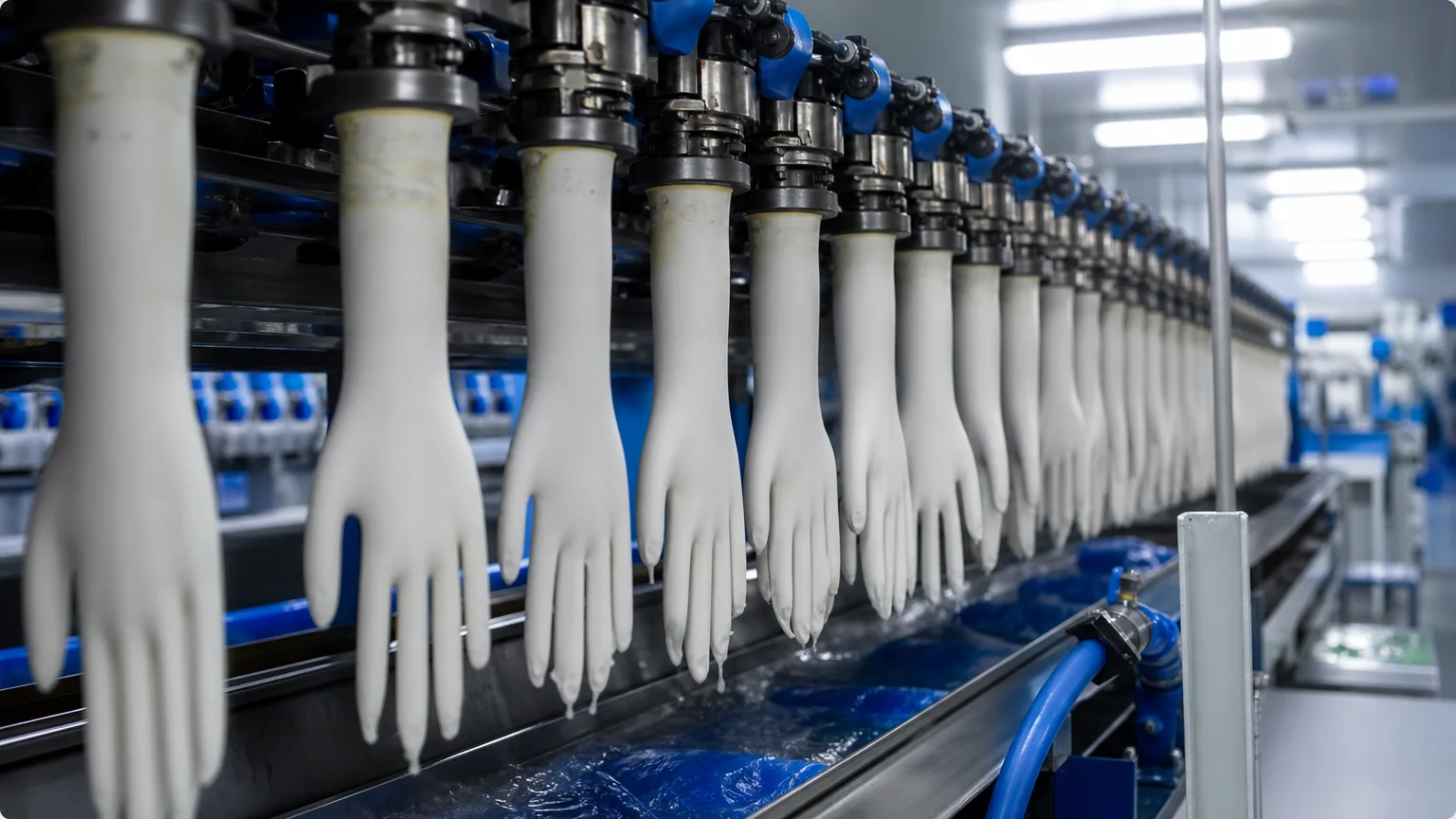
Our factory holds BRCGS Consumer Products Certificate No. CN-BRCCP-251634 and ISO 9001 Certificate No. 77067/A/0001/UK/En. These are quality management system certificates for the facility — the right proof for buyers qualifying a supplier, distinct from product-level food-contact migration testing.
For market-specific food contact compliance under frameworks like FDA 21 CFR or EU No. 10/2011, request the matching third-party migration test report with your target market before bulk order. We coordinate SGS and equivalent lab submissions as part of the qualification process.
Procurement Action Checklist
- Confirm the task and chemical exposure — list what the glove will touch, then pick POE for light to medium or nitrile for chemical-heavy work.
- Request samples of both materials — test fit, stretch, and feel on your actual line before committing volume.
- Collect compliance documents — factory certificates plus the market-specific food contact migration report your buyer needs.
Frequently Asked Questions
Is POE a good substitute for nitrile gloves?
POE is a strong substitute for nitrile in light to medium tasks such as food handling, medical auxiliary use, and light lab work, especially where cost stability and latex-free comfort matter. It is not a substitute for nitrile in chemical-heavy work involving oils, solvents, or chemotherapy drugs, where nitrile's proven chemical resistance is required.
Are POE gloves latex-free?
Yes. POE (polyolefin elastomer) is a thermoplastic elastomer built on a polyolefin base, so it contains no natural rubber latex protein. Both POE and nitrile are latex-free, which is why both displaced latex in food and medical auxiliary use.
Which is cheaper, POE or nitrile gloves?
POE generally lands at a lower and steadier cost than nitrile because it sits on the polyolefin feedstock chain rather than the acrylonitrile-butadiene rubber market. For distributors locking annual contracts, POE's price stability protects margin across repeat orders better than nitrile's volatile pricing.
Do POE gloves resist chemicals like nitrile?
No. POE handles light to medium contact well but is not rated for aggressive chemical exposure. Nitrile resists oils, greases, fuels, solvents, and many chemotherapy drugs. For high-chemical lab use, Worldchamp's CPE long gloves passed 60+ chemical tests and chemotherapy drug approval, making that line the right nitrile companion rather than standard POE.
What compliance documents should I ask for when sourcing POE gloves?
Ask for the factory quality system certificates — BRCGS Consumer Products Certificate No. CN-BRCCP-251634 and ISO 9001 Certificate No. 77067/A/0001/UK/En — plus the market-specific food contact migration test report under your target framework, such as FDA 21 CFR or EU No. 10/2011. The factory certificates prove supplier quality; the migration report proves product food-contact compliance for your market.
What MOQ and lead time should I plan for POE gloves?
Pre-production sample timing is approximately seven days as a reference. Confirm the current sample and bulk-production schedule after the specification, packaging, artwork, and sample are approved, and state in writing whether the schedule starts from deposit, sample approval, or final artwork approval.
Put this guide into a procurement workflow
When the product direction is clear, discuss the specification with Worldchamp, and return to the buyer guide library. Share the task, destination, quantity, packaging and evidence requirements so the next review is specific.
Turn the comparison into a sample and document brief
Share the application, market, quantity, pack format and scope of supporting documents. Worldchamp can then respond against a defined product rather than a generic material request.