The Core Difference Between TPE and PE Gloves
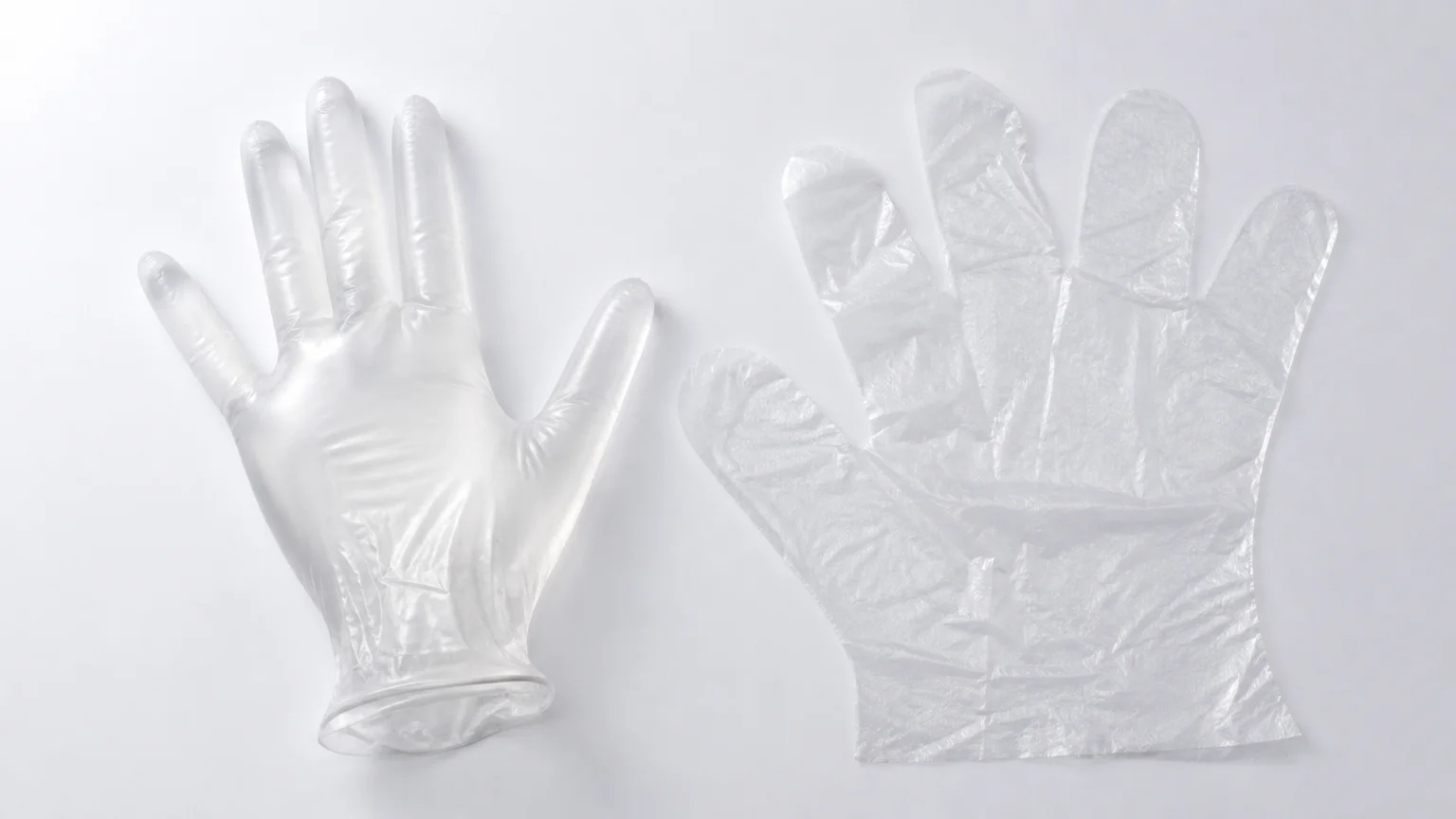
TPE gloves are disposable gloves made from a thermoplastic elastomer. The film stretches and recovers, so it sits closer to the hand than plain polyethylene. PE gloves are disposable gloves made from polyethylene film, usually HDPE or LDPE, and they stay loose and flat. That material difference drives fit, strength, cost and how often the glove is changed. If the current glove is nitrile rather than PE, use the POE vs nitrile guide instead of forcing the comparison onto this page.
TPE vs PE at a Glance
| Factor | TPE Gloves | PE Gloves |
|---|---|---|
| Fit | Snug, stretchy, close to nitrile | Loose, flat, easy to swap |
| Strength | Better puncture and tear resistance | Thinner, tears under stress |
| Cost | Higher per piece | Lowest cost disposable material |
| Food contact report | Request the current report for the exact SKU and market | Request product-specific evidence; factory certificates are not product approval |
| Best wear time | Minutes to an hour | Seconds to a few minutes |
| Latex-free | Yes, synthetic | Yes, synthetic |
TPE gloves and PE gloves are both clear, food-handling disposable gloves, but they are built for different jobs. TPE (thermoplastic elastomer) gloves are soft, stretchy, and fit more like a nitrile glove. PE (polyethylene) gloves are loose, thin, and made for quick changes at the lowest cost. For most buyers, the right pick comes down to how long each glove is worn and how much stretch you need.
TPE is a class of copolymers that combine thermoplastic and elastomeric properties — in plain terms, it stretches to moderate elongations and returns to its near-original shape, which is what gives the glove its snug fit (Wikipedia, Thermoplastic elastomer). PE is the most commonly produced plastic in the world, a polymer used heavily in films, bags, and containers (Wikipedia, Polyethylene). That single material difference drives almost every choice in this comparison.
Because TPE stretches, it hugs the hand and stays put during tasks. PE stays loose and slides, which is fine for a 30-second task but poor for fine work. TPE also feels softer and resists small tears better than thin PE.
PE wins on price and speed. It is the cheapest glove material to make, and the loose fit lets workers swap gloves in seconds. That is why you see PE gloves in food service lines and bulk dispensing boxes.
Key Factors to Compare
When buyers ask us for a TPE gloves vs PE gloves comparison, we walk them through eight factors. Each one changes which glove fits the job.

1. Fit and Comfort
TPE gloves fit close to the hand because the material stretches. Workers can grip small items and keep dexterity. The fit feels closer to a nitrile or latex glove.
PE gloves are loose and flat by design. They are easy to pull on and off, but the slack makes fine grip harder. If your task needs precision, PE is the wrong choice.
2. Strength and Puncture Resistance
TPE holds up better against small snags and punctures thanks to its elasticity. It is less likely to split when stretched over a hand or caught on an edge.
Thin PE tears more easily under stress. It works well for light, clean tasks but fails fast when it meets a sharp corner or repeated friction.
3. Cost per Glove
PE is the lowest-cost disposable glove material. For high-volume, single-use jobs where workers change gloves often, the price gap adds up fast.
TPE costs more per piece than PE. You pay for the stretch, fit, and strength. If a worker wears one glove for an hour, TPE is often cheaper overall than burning through several PE gloves.
4. Food Safety and Compliance
Both TPE and PE can be used in food handling, but the paperwork must match the exact product and destination market. Ask for the applicable food-contact test or migration report for the SKU you plan to buy; a factory quality certificate alone does not prove product food-contact approval.
Before approval, confirm the material, finished glove, target market, and current documents. Request evidence mapped to the relevant food-contact framework instead of relying on a generic “food-safe” label.
5. Use Time and Swap Frequency
Think in wear time, not just material. PE suits short, repeat tasks where the glove is swapped every few minutes. TPE suits longer tasks where a snug fit and tear resistance matter.
This is the single factor that most often flips a buyer's choice. A food prep line may use PE, while a cleaner working an hour-long task may need TPE.
6. Color, Look, and Shelf Appeal
TPE gloves usually come out clear and soft, with a slight shine that reads as premium on a retail shelf. Some buyers order TPE for private label packs because the look justifies a higher price point.
PE gloves come in clear, blue, and other tints. Blue PE is common in food plants because blue is easy to spot if a glove piece falls into food — a color-coding practice widely used in HACCP (eCFR, 21 CFR Part 120 — HACCP) programs to prevent foreign-body contamination.
7. Allergen and Latex-Free Status
Both TPE and PE are synthetic and free of natural rubber latex. That makes both safe for latex-sensitive workers and end users, and a natural fit where a latex-free policy is required to reduce allergy risk (OSHA, Latex Allergy — Possible Solutions).
The wording matters in tenders. State "latex-free" or "natural rubber latex-free" rather than "hypoallergenic," since hypoallergenic has no single agreed test standard. Both materials meet the common latex-free procurement requirement.
8. Storage and Shelf Life
PE gloves store well for long periods because the film is stable and low cost. Many buyers keep large PE safety stock without worry. TPE also stores well, but its elastomer additives mean you should keep it cool and out of direct sun to protect the stretch over time.
For both materials, ask the supplier for a production date and store cartons dry and flat. Fresh stock stretches and fits better than old stock, which can turn brittle.
When Should You Choose TPE Gloves?
- Longer wear time — tasks lasting more than a few minutes where a loose glove slips.
- Need for grip and dexterity — handling small, wet, or slippery items.
- Stronger, stretchy material — jobs where thin PE tears too often.
For these buyers, see our TPE gloves detail page for specs, sizes, and packaging options.
When Should You Choose PE Gloves?
- Very high volume — food service or deli lines where workers change gloves constantly.
- Lowest unit cost — budget-driven bulk buying where each glove is used once.
- Quick, light tasks — sandwich making, salad handling, or short prep steps.
- Dispensing formats — pop-up boxes and flat-packed dispensers built for speed.
For PE buyers, the fit depends on the grade. See HDPE gloves for thin, crisp feel, or LDPE gloves for a softer, more flexible film. Our CPE gloves add a textured, embossed surface when grip matters more than cost.

Common Mistakes Buyers Make
One common mistake is picking on unit price alone. A buyer saves a fraction of a cent per PE glove, then loses money to torn gloves and frequent changes. Total cost, not piece price, is what matters.
Another mistake is overbuying TPE for a fast swap line. If workers change gloves every minute, the stretch and fit of TPE are wasted. PE does that job better and cheaper.
Worldchamp Manufacturing Context
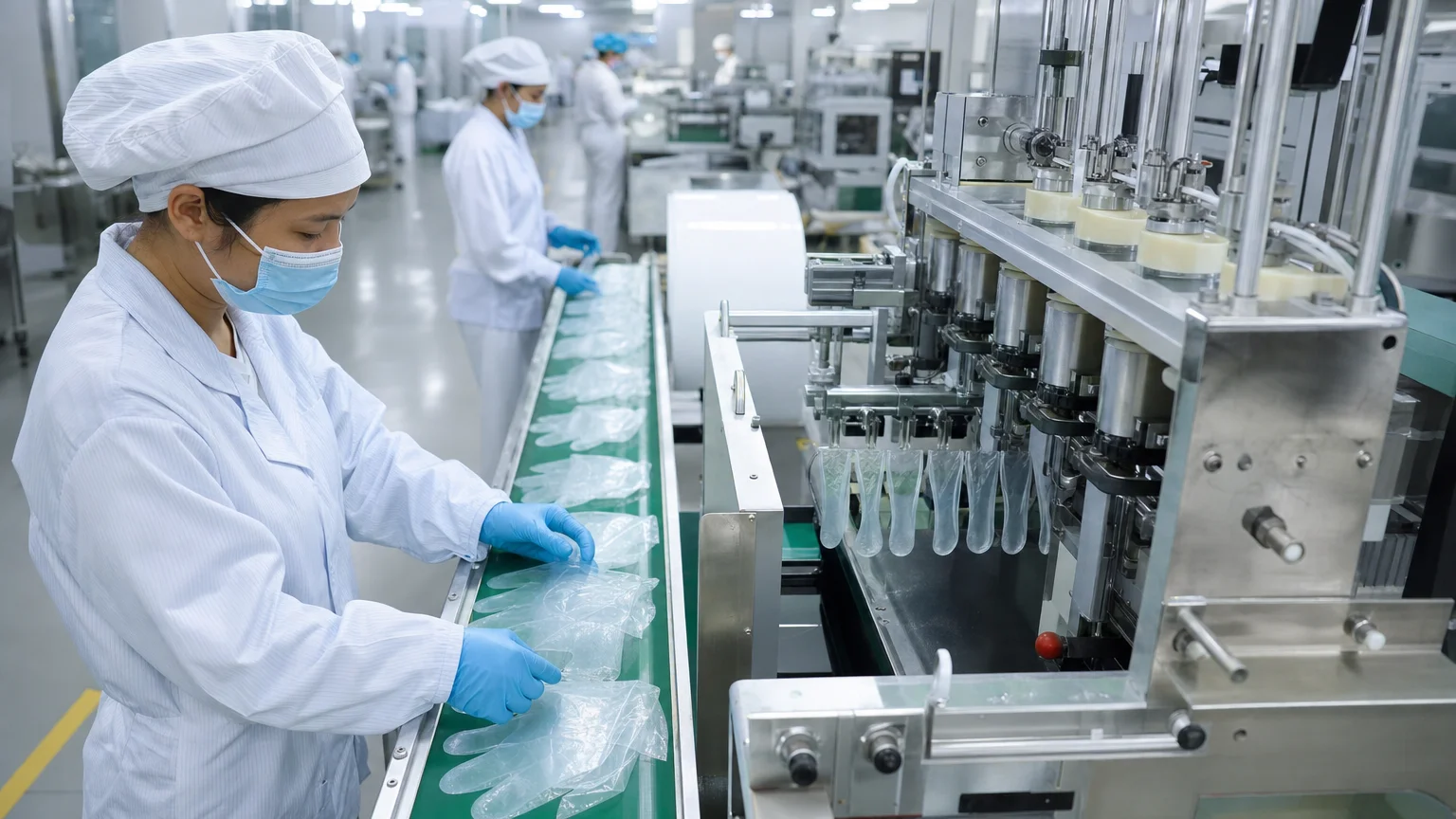
Worldchamp supplies PE-family disposable gloves for importers, distributors, and food-handling buyers. The range includes TPE, HDPE, LDPE, CPE, and POE options, so the material decision can be tested against the actual task rather than made from a generic glove label.
The published company profile describes a 12,000 m² full-process factory, automated production lines, and a Class 100,000 clean workshop. These are manufacturing-capability facts. They do not replace product-specific food-contact or market compliance documents. Request the exact SKU, target market, current test report, and packaging specification before approval.
If you want to see the broader glove range, start at our disposable gloves hub. For food handling buyers, our disposable gloves for food handling page maps each material to the right task.
Next Steps for Procurement
- Define the task and wear time — list how long each glove is worn and how often it is swapped.
- Pick the material — choose TPE for fit and strength, PE for cost and speed.
- Confirm compliance needs — tell us your target market so we match the right food contact paperwork.
- Request samples — ask for a TPE and PE sample pack to test feel and fit before bulk.
Ready to compare samples in person? Contact Worldchamp with your volume, target market, and material preference, and we will send a sample pack and quote.
Frequently Asked Questions
What does TPE stand for in gloves?
TPE stands for thermoplastic elastomer, a class of copolymers that combine thermoplastic and elastomeric properties — they stretch and recover their shape, similar to rubber, but can be processed like plastic (Wikipedia, Thermoplastic elastomer). In gloves, that gives a snug, stretchy fit closer to nitrile.
What does PE stand for in gloves?
PE stands for polyethylene, the most commonly produced plastic in the world, widely used in films, bags, and containers (Wikipedia, Polyethylene). PE gloves are loose, thin, and made for quick, low-cost changes.
Are TPE and PE gloves latex-free?
Yes. Both TPE and PE are synthetic materials and contain no natural rubber latex, so they are safe for latex-sensitive workers and end users. They are a standard latex-free choice where reducing latex allergy risk matters (OSHA, Latex Allergy — Possible Solutions).
Which is better for food handling, TPE or PE?
Choose the glove by task, wear time, fit, change frequency, and the food-contact evidence required in the destination market. PE suits frequent short tasks, while TPE or CPE may offer more stretch or strength; approve the final choice against a matched sample and product-specific documentation.
Which is cheaper, TPE or PE gloves?
PE is usually the lower-cost disposable glove material for single-use, high-volume lines. TPE costs more per piece; any reduction in glove changes should be confirmed through a task-specific sample trial.
Are TPE gloves stronger than PE gloves?
Generally yes. TPE's elasticity gives it better puncture and tear resistance than thin PE film, which tears more easily when caught on an edge or under repeated friction. For light, clean tasks PE is fine; for jobs with snags, TPE holds up better.
Are PE gloves FDA compliant for food contact?
FDA food contact for disposable gloves is governed by 21 CFR Part 177, which covers indirect food additives such as olefin polymers. Our PE gloves do not carry a food contact migration test report; we state they are manufactured in a BRCGS Consumer Products and ISO 9001 certified facility. For FDA 21 CFR or EU No. 10/2011 paperwork, ask us with your target market.
Can I get an SGS food contact test report for both TPE and PE?
Request the current ISO 9001 and BRCGS factory-system certificates, then request product- and market-specific evidence for the proposed SKU, such as the applicable food-contact migration or material test report. Verify the holder, scope, validity, product identity, and target market instead of treating a factory certificate as product approval.
Why are food gloves often blue?
Blue is used as a color-coding tool in HACCP and food safety programs because blue is rare in food and easy to spot if a glove piece contaminates a product (eCFR, 21 CFR Part 120 — HACCP). Blue PE is common in food plants for exactly this reason.
How should I store TPE and PE gloves?
Store both materials dry, flat, and out of direct sun. PE film is very stable for long-term safety stock. TPE stores well too, but keep it cool so the elastomer additives keep their stretch over time. Always ask the supplier for a production date, since fresh stock fits better than old, brittle stock.
Keep adjacent comparisons separate. Use the CPE glove specification page when cast-film strength or embossing is the real question, and the POE vs nitrile guide when the incumbent is nitrile. This page stays focused on TPE versus conventional PE film gloves.
Turn the comparison into a sample and document brief
Share the application, market, quantity, pack format and scope of supporting documents. Worldchamp can then respond against a defined product rather than a generic material request.