Client Background
The Canadian food-service buyer operates in the restaurant and food service industry, supplying disposable consumables to multi-location dining establishments across Canada. Before this project, their teams were experiencing a recurring issue: disposable PE gloves tearing too easily during prep work, service support, and sanitation routines.
Premature tears can interrupt work and increase replacement use. For a comparable trial, record tear-related replacements separately from routine hygiene changes and compare similar tasks and workloads.
The project goal was to source a PE glove solution tailored for food contact and food service environments, while improving product consistency, supporting on-time delivery, and making consumable management easier across multiple restaurant locations.
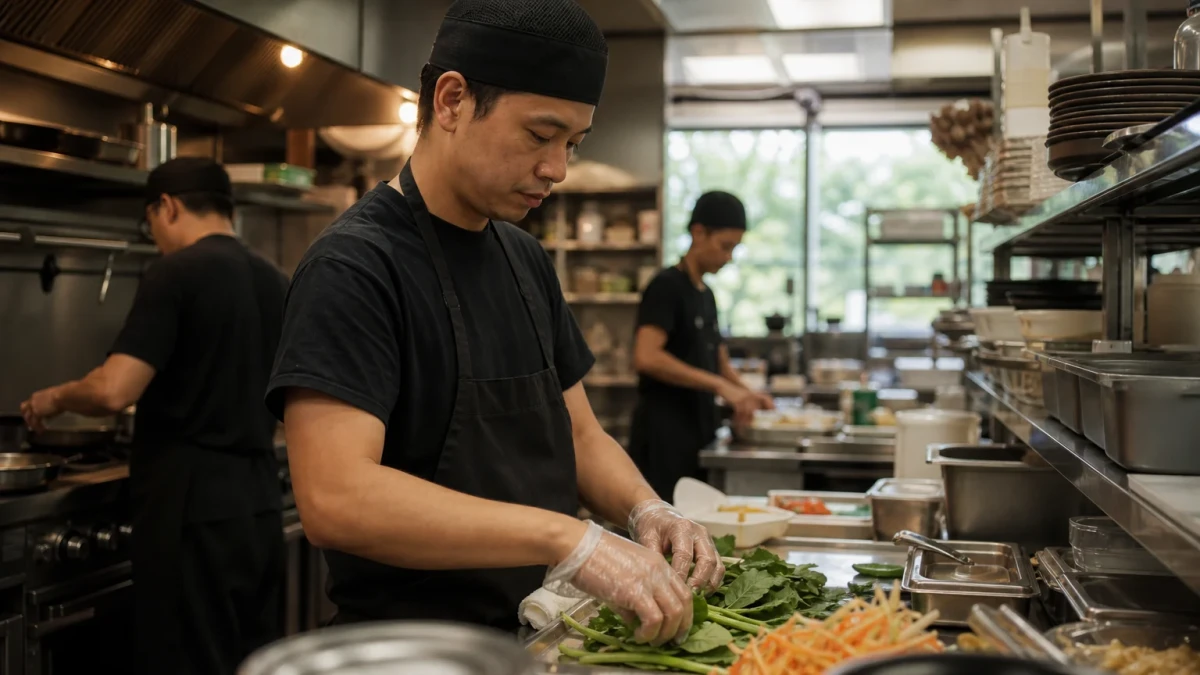
The Challenge: Tear Risk Amplifies Consumable Costs Across Locations
For restaurant buyers, PE gloves must balance hygiene compliance, cost control, ease of donning, and durability. When gloves tear too easily, staff consume more pairs within the same shift window — and the more locations running the same consumable, the larger the problem becomes.
The buyer faced three compounding procurement pain points:
- Higher per-shift consumption: Glove tears forced staff to change gloves more frequently within the same service window, directly inflating consumable spend.
- Operational disruption: Frequent glove changes broke service flow and required more staff attention on restocking rather than food preparation.
- Batch-to-batch quality variability: Inconsistent glove performance across repeat orders made procurement forecasting harder and damaged trust in the supplier relationship.
The buyer needed more than a product that simply ships on time. They needed a supply partner who could manage material performance, inspection standards, and delivery scheduling together — not as separate concerns.
Our Solution: Disposable PE Gloves Configured for Food Service Environments
Worldchamp worked on the PE glove material, production checks and replenishment schedule together for this food-service order.
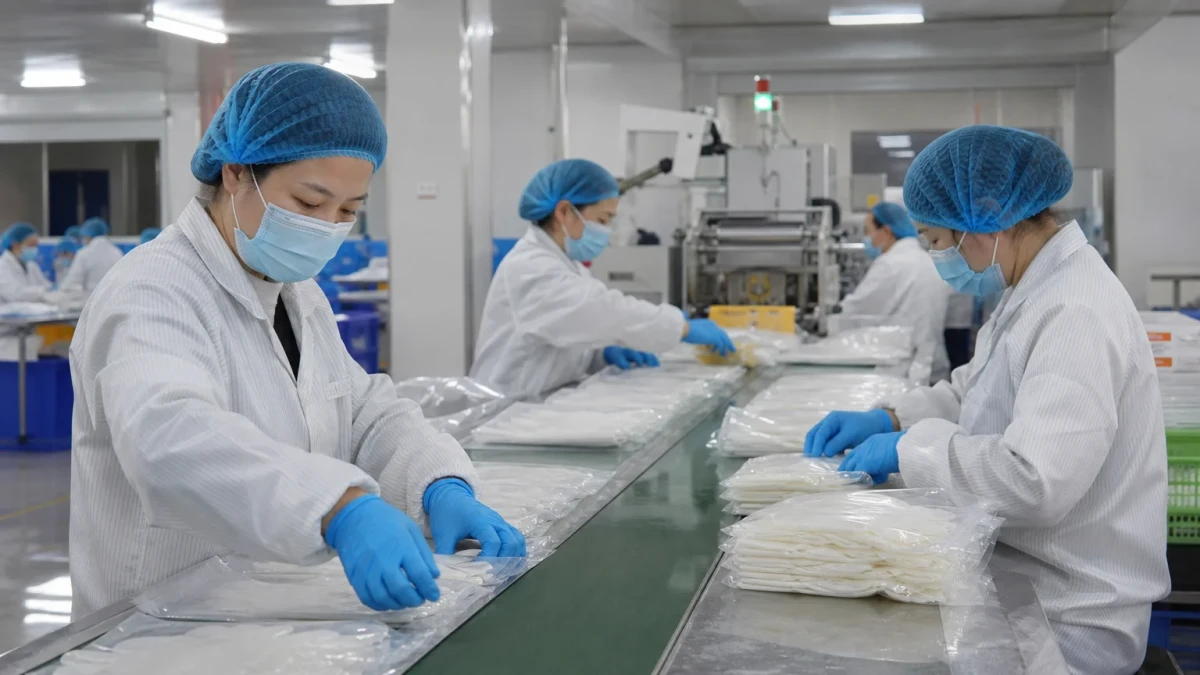
On the material side, the project team refined the raw material compound formula with a focus on improving film toughness and reducing premature tearing during normal restaurant tasks. The account describes resin-blend adjustments aimed at elongation performance. For any new formulation or order, food-contact suitability must still be checked against the actual product and destination-market requirements.
On the production and inspection side, the team strengthened inline QC checkpoints and coordinated production scheduling to support bulk shipments and repeat orders for the Canadian buyer's food-service supply program.
Material changes, inspection checks and delivery dates were reviewed together with the buyer. The published account does not disclose the formulation, inspection thresholds or measured tear-rate reduction.
Implementation & Quality Control: Building Batch Consistency for Multi-Location Use
After confirming the food service use scenario, Worldchamp aligned with the Canadian food-service buyer on product quality requirements, food contact expectations, and delivery timelines. The team reviewed material sourcing, film production, inspection, packaging and production dates together.
For repeat orders across several locations, also review batch consistency, packing, local dispensing and replenishment dates. A sample can help approve the specification, but does not show how every later batch and delivery will compare.
The project described three actions:
- Material adjustments: Adjusted compound formula to reduce tear incidence under real kitchen conditions — repeated donning, stretching during prep tasks, and contact with food surfaces.
- Inspection controls: Added checks during production to review variation between batches before shipment; inspection thresholds and sampling results are not published here.
- Production scheduling: Coordinated production runs to align with the Canadian buyer's replenishment cycles, reducing the risk of stockouts across locations.

Results & Impact
The case account describes improvements in tear-related waste, repeat-order consistency and replenishment coordination. These are qualitative outcomes: the published account does not give a before-and-after tear rate, a measured cost saving or an on-time delivery percentage.
- Tear-related waste: Material adjustments were reported to reduce premature tearing in the food-service program. The size of that reduction is not quantified here.
- Delivery coordination: Production planning supported more predictable replenishment. This should not be read as a guarantee of uninterrupted stock or identical lead times for future orders.
- Repeat-order consistency: Inline quality checks addressed variation between batches, alongside the material changes.
- Supplier communication: Material, inspection and dispatch coordination were brought into one workflow; the account does not provide a measured reduction in administration time.
For a new program, agree the trial, acceptance criteria and delivery milestones against the buyer's own specification. The purchasing checks below are guidance for a comparable order, not additional test results from this project.
Takeaway for Similar Buyers
This case illustrates that disposable glove procurement for restaurant and food service cannot be evaluated on unit price alone. Material compound, film thickness and toughness, edge sealing quality, batch inspection protocols, packaging format, and delivery scheduling all affect the buyer's true cost of use and procurement risk.
For a new order, compare the glove price, tear-related replacements, normal hygiene changes, dispensing and restocking under similar operating conditions. This case does not establish which cost will be greatest for another buyer.
Diagnose the failure before changing the specification
For a similar food-service trial, record where and when a glove fails: during donning, at a fingertip, along a sealed edge, or during the intended task. These observations help separate fit and handling issues from film or sealing issues. Simply requesting a thicker glove does not establish which part of the specification needs attention.
Compare samples using the same size, task and dispensing setup. Check opening and donning as well as the film and sealed edges; a glove that feels acceptable in the hand may behave differently when staff take it from its normal pack. The food-service PE glove selection guidance provides context for matching the format to the task.
Reduce premature failures, not necessary glove changes
The objective is to avoid extra consumption caused by premature tearing, not to extend wear beyond the site's hygiene rules. Task changes, contamination and other required replacement points still apply. A glove should not be reused or kept in service merely to improve a consumption figure.
When measuring waste in a comparable trial, keep tear-related replacements separate from routine hygiene changes. Compare equivalent tasks and workloads, record the number of gloves used and the number of premature failures, and identify the batch. Without that context, a lower daily glove count could reflect quieter service rather than improved durability.
Make the approved sample useful for repeat orders
- Fix the product definition: Agree the material, dimensions, film thickness or unit weight, surface finish and seal acceptance criteria for the proposed glove.
- Check the pack in use: Confirm that staff can take out and open gloves without damaging them, and that pack and carton counts suit local replenishment.
- Keep changes traceable: Link the approved specification and packaging artwork to the reorder, and review proposed material or pack changes before production.
- Separate dispatch from arrival: Build restocking around production, freight and local distribution rather than treating the factory's dispatch date as the date every location receives stock.
For food-contact supply, review documents against the proposed glove and destination market. The current certification and audit documents support supplier assessment, but a factory-level certificate does not by itself establish every product's food-contact suitability.
Related Products
Questions about food-service PE glove orders
What should a food-service buyer check before approving PE gloves?
Match the finished glove and material to the food-contact documents required in the destination market. Then trial the size, film, dispensing and change routine at the intended food-preparation or service station. This case is a supply example, not blanket approval of every PE glove or food-contact condition.
How can food-service operators reduce PE glove tearing?
Compare fit, film thickness, seams and dispensing under the same station conditions, and record where tears occur. This project combined material adjustments and inspection controls; its published results are qualitative, not a guaranteed reduction for other orders. Agree the sample and inspection criteria before production.
What MOQ should I plan for an international PE glove order?
The published starting reference is USD 3,000 per SKU, not a fixed piece count. Confirm the minimum for each size, film specification and printed or neutral pack, together with carton quantities and the replenishment plan. Do not assume multiple SKUs can share one minimum.
How should I plan sample and bulk-order timing?
Approximately seven days is the published sample-preparation reference, subject to specification and packaging readiness. Bulk-production timing must be quoted for the approved order; confirm the production start condition, dispatch date and transit separately. These are planning steps, not lead times recorded for this case.
What packing details are needed for a bulk PE glove shipping quote?
Confirm gloves per inner pack, packs per carton, carton dimensions and weight, labeling and any pallet requirements. Share the destination and transport method so freight is compared against the same packing configuration. Packaging and shipment terms should be agreed before production.
Need reliable PE gloves for a food service program?
Share glove size, thickness preference, packaging requirements, target market and order volume.
Discuss your glove order