Gloves slow the station
Poor opening, sticky film or inconsistent folding turns a low-cost consumable into repeated labor friction.
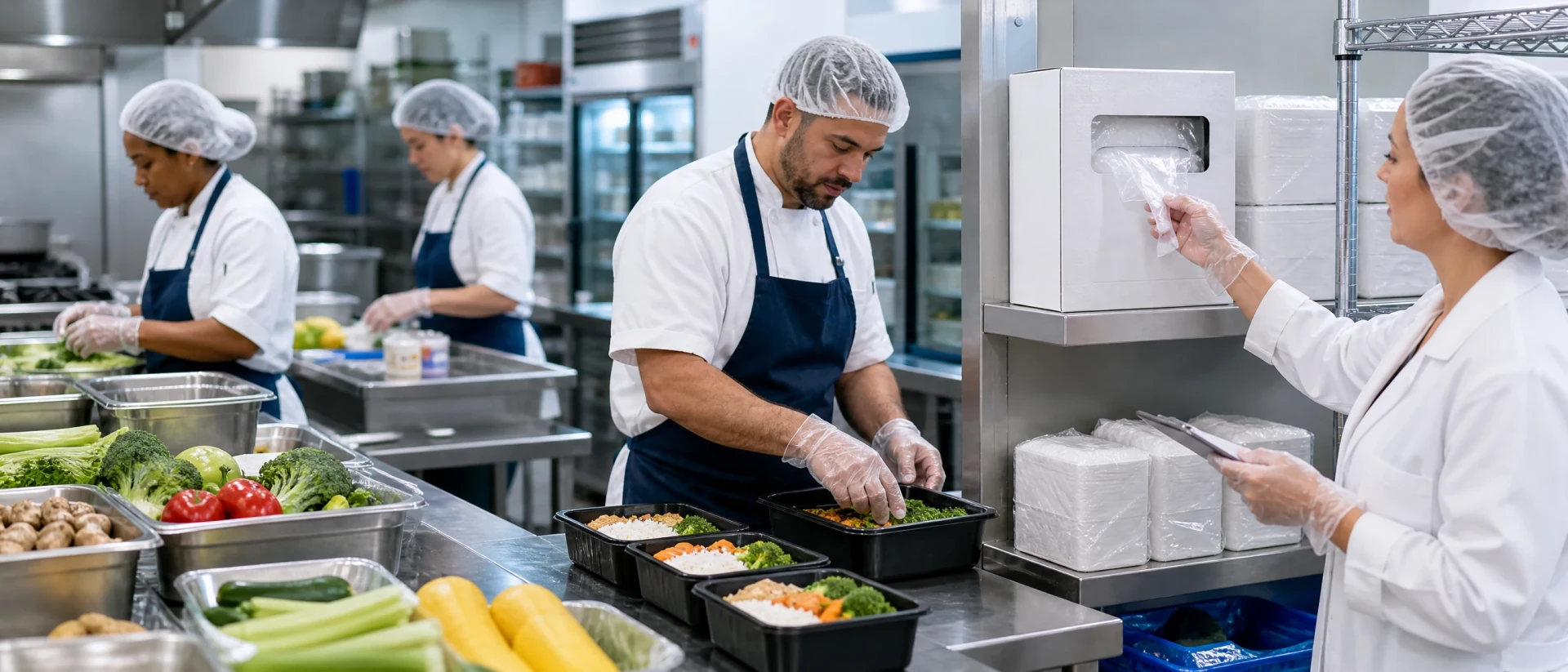
Food-service glove program
Build food service gloves bulk programs around the station: choose the film route, glove dimensions, dispenser action and case replenishment for preparation, assembly and counter workflows.
Food-contact requirements vary by destination and product. Review applicable migration or declaration files for the exact glove SKU; a factory certificate alone is not product food-contact evidence.
Buyer risk
These are the gaps that most often create sample-to-bulk drift, operational waste or unsupported claims.
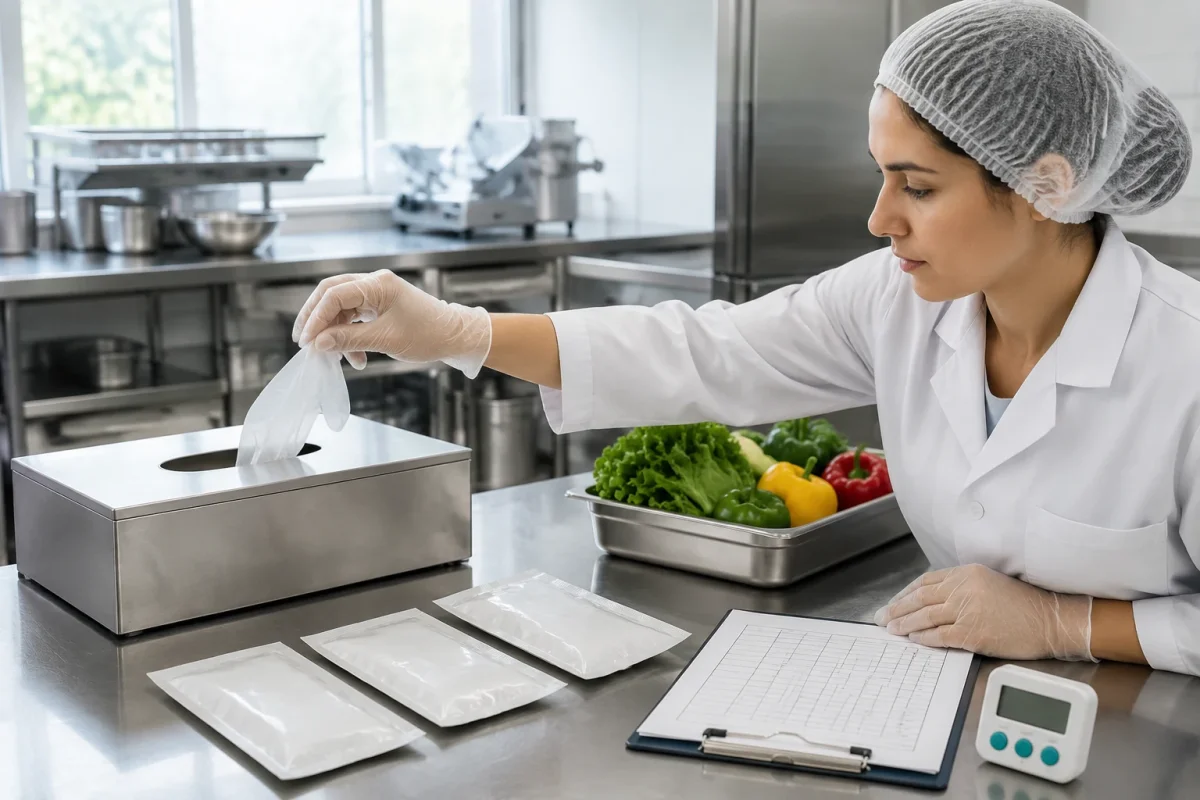
Poor opening, sticky film or inconsistent folding turns a low-cost consumable into repeated labor friction.
Preparation, meal assembly, bakery, counter service and sanitation do not share the same contact, duration or fit needs.
Weak dispenser boxes, inconsistent counts and uncontrolled replenishment increase dropped gloves, double pulls and stock variance.
Approval logic
The product, pack and evidence file should all trace back to the same approved SKU.
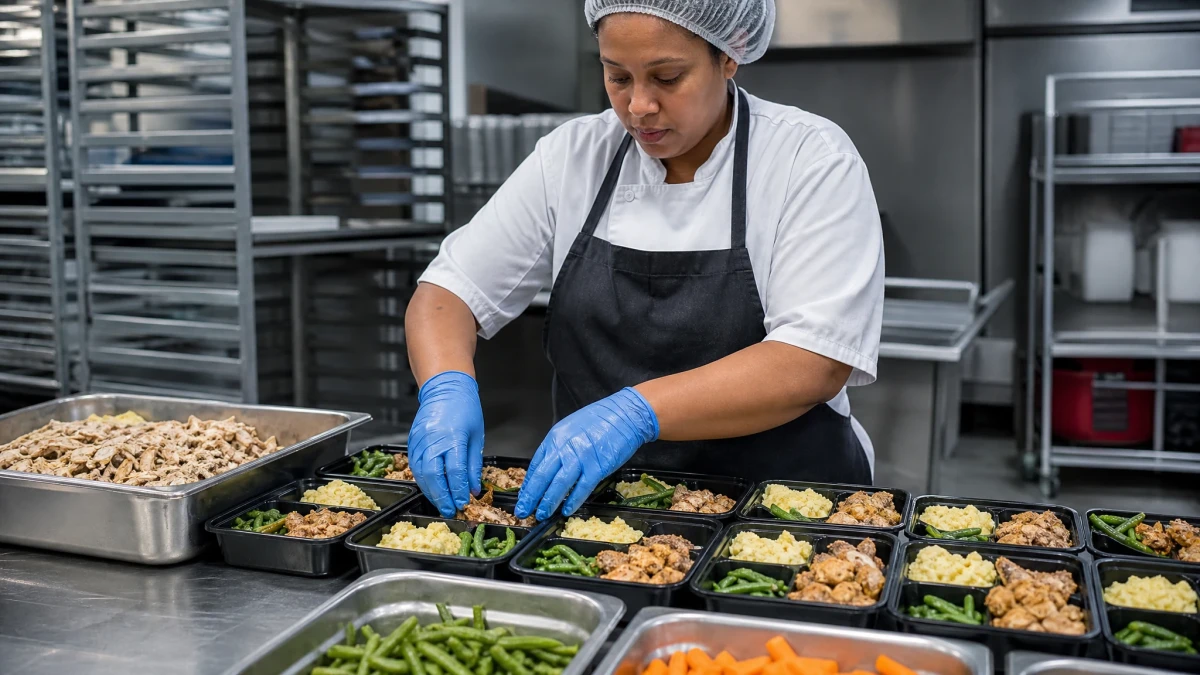
Separate ready-to-eat contact, short preparation, counter service and non-food sanitation steps.
Use HDPE, LDPE or another approved route based on change frequency, feel and task contact.
Approve glove fold, box opening, one-at-a-time pull and station placement.
Set case count, storage footprint and reorder reference for each location or line.
Recommended products
Each link opens the product or family page that defines the next sample and specification decisions.
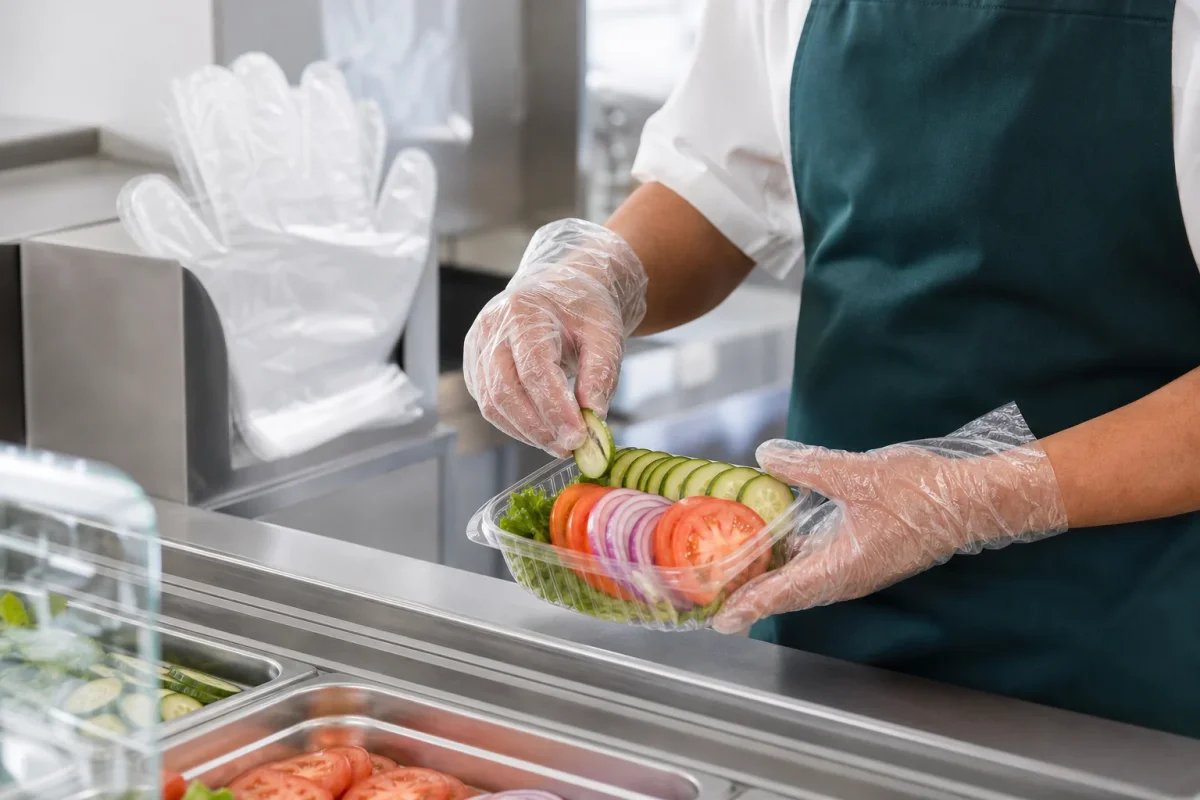
Lightweight economical route for frequent changes and short food-service tasks.
Review product details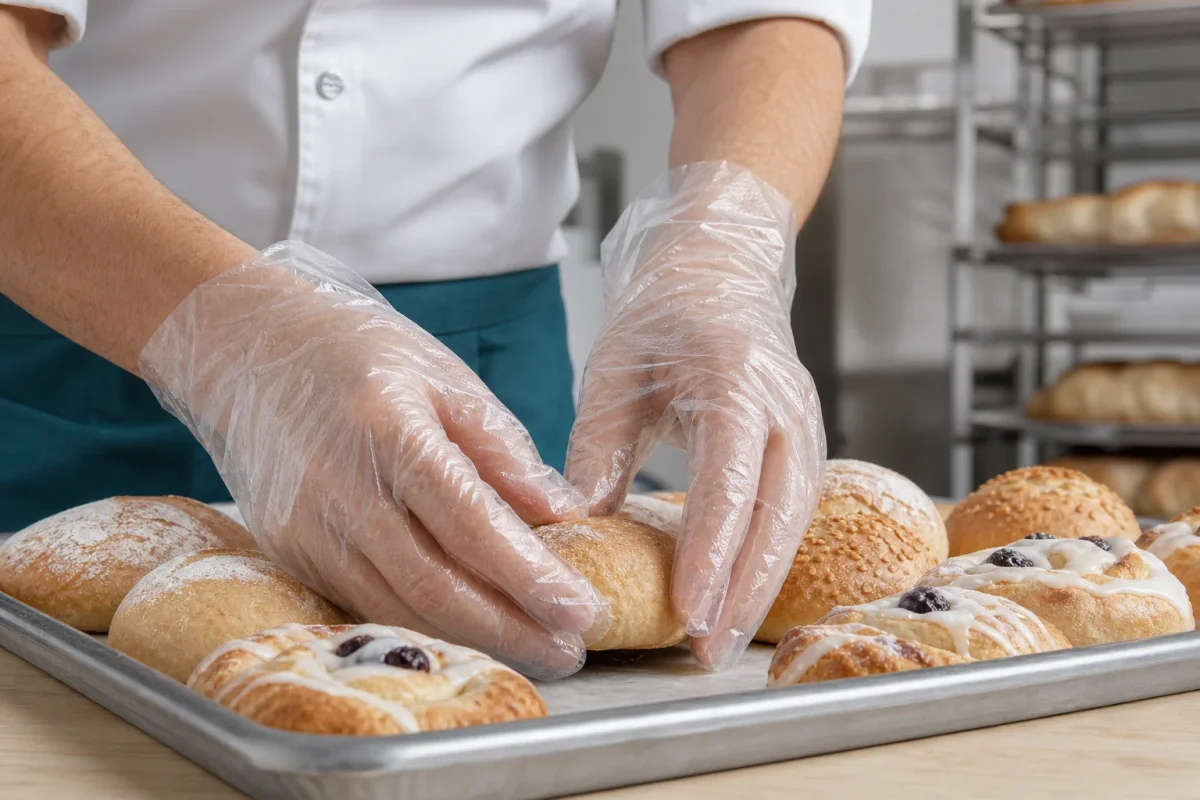
Softer loose-fit PE route where a more flexible film feel is useful.
Review product details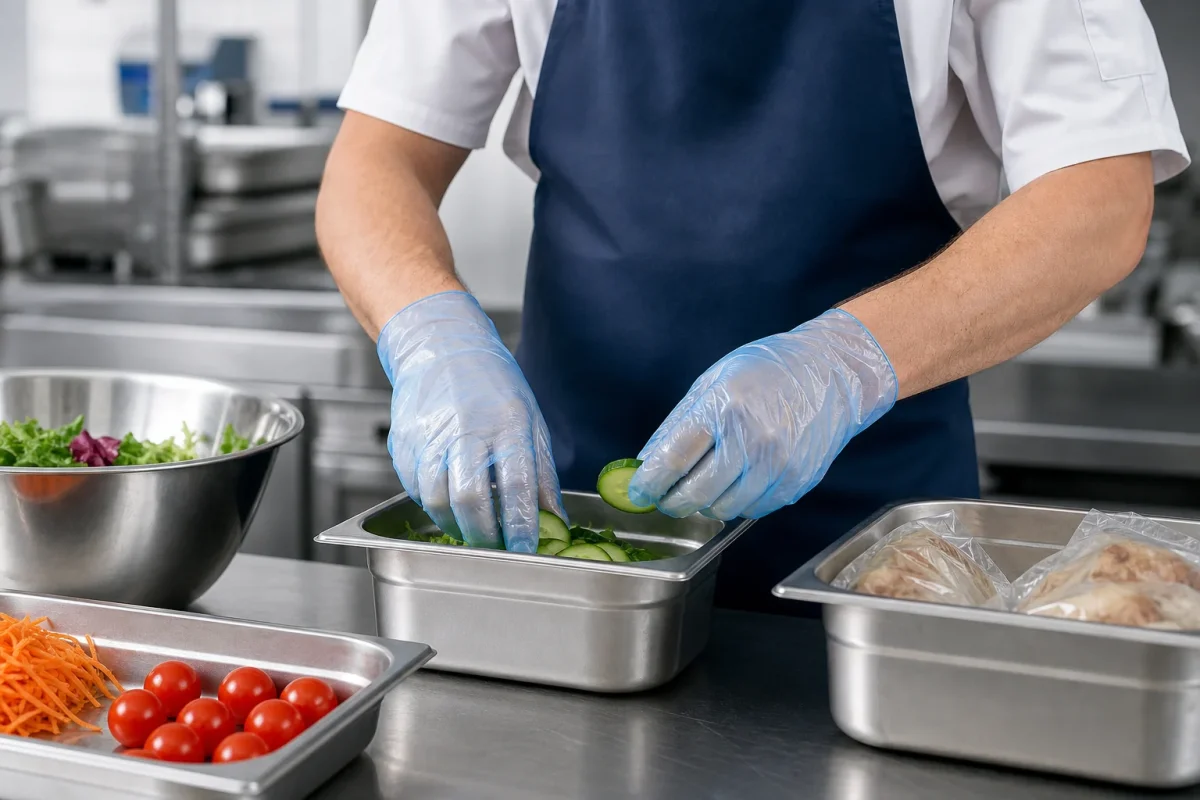
Alternative film route for stations that need a closer feel and longer task window.
Review product detailsSelection table
Use one written basis for supplier comparison, samples and internal sign-off.
| Decision | Food-service input | Trial check |
|---|---|---|
| Task zone | Food type, contact, duration and change trigger | Observe the real station workflow |
| Glove | Material, size, length, texture and color | Test donning and task handling |
| Dispenser | Fold, box opening, count and placement | Measure clean one-at-a-time pulls |
| Case plan | Inner packs, case count, sites and reorder cycle | Check receiving and storage fit |
Sourcing workflow
A controlled sequence reduces quote ambiguity, rework and repeat-order drift.
List food tasks, change points and dispenser locations.
Compare material options and sizes at representative stations.
Match food-contact evidence to the proposed SKU and destination.
Test dispensing, case handling and replenishment.
Approve the glove, box, carton and reorder reference.
Buyer questions
Exact answers depend on the approved SKU, destination and commercial brief.
HDPE is often selected for economical frequent-change tasks, while LDPE can provide a softer film feel. The best route depends on the actual station and destination requirements.
Different fold and box formats can be developed or selected, subject to sampling and packaging feasibility. Test the dispenser opening and one-at-a-time pull before bulk approval.
No. ISO 9001 and BRCGS describe factory systems. Product food-contact evidence must be reviewed for the exact glove, material and destination framework.
Yes, subject to confirmed commercial terms. Keep each size as a clearly controlled SKU with its own count, label and reorder reference.
We use necessary cookies to operate this site and optional cookies to improve your experience.