The cleanroom requirement is underspecified
The room class, process, particle sensitivity, contact and internal validation requirements can change what is acceptable.

Controlled-environment sourcing
Define the cleanroom classification, process sensitivity, contact type and duration, packaging and incoming inspection before comparing disposable film glove materials.
Worldchamp publicly references a Class 100,000 clean workshop for applicable production areas. Buyers should confirm the production scope and request the product-specific evidence required by their own controlled environment.
Buyer risk
These are the gaps that most often create sample-to-bulk drift, operational waste or unsupported claims.

The room class, process, particle sensitivity, contact and internal validation requirements can change what is acceptable.
A suitable glove can still fail qualification if inner packaging, opening or transfer into the controlled area is not defined.
A clean workshop reference does not automatically establish particle, extractable, sterility or application-specific performance.
Approval logic
The product, pack and evidence file should all trace back to the same approved SKU.

State room class, process, contact surface, contamination concern and internal qualification owner.
Compare CPE, HDPE, POE or another route against fit, shedding concern and task handling.
Define inner packaging, case opening, transfer and dispensing inside the controlled workflow.
Agree the sample tests, records and lot references needed for incoming approval.
Recommended products
Each link opens the product or family page that defines the next sample and specification decisions.

Structured embossed film route for controlled short-duration handling trials.
Review product details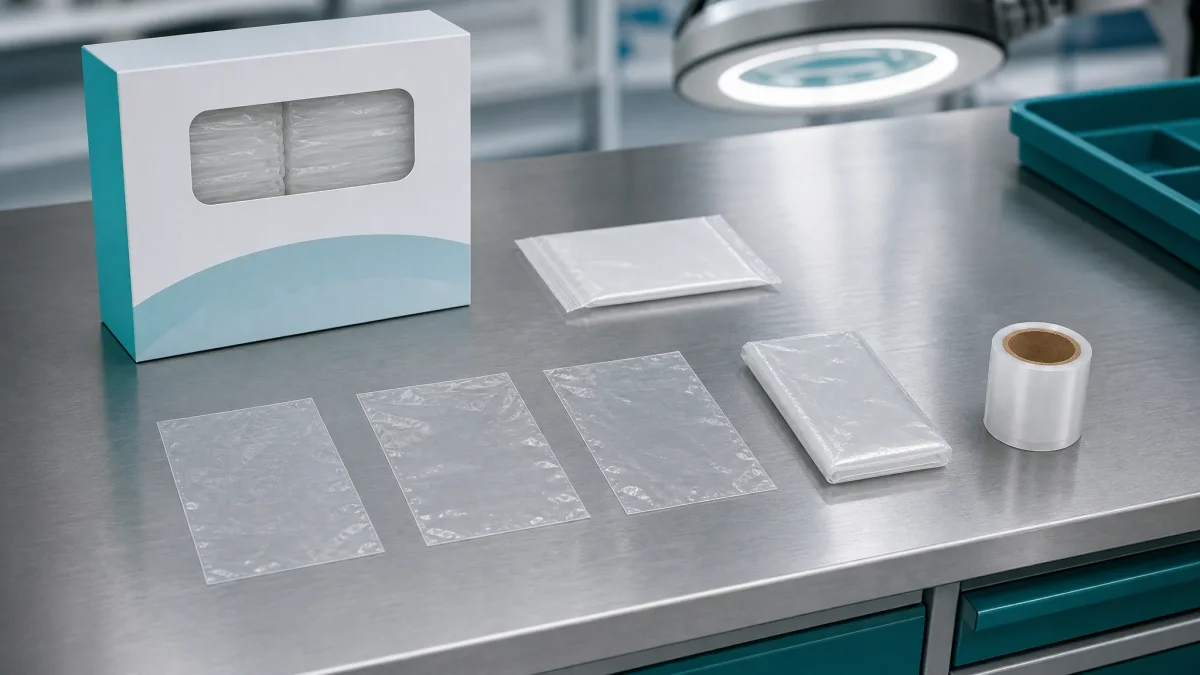
Lightweight route to evaluate for frequent changes and low-complexity tasks.
Review product details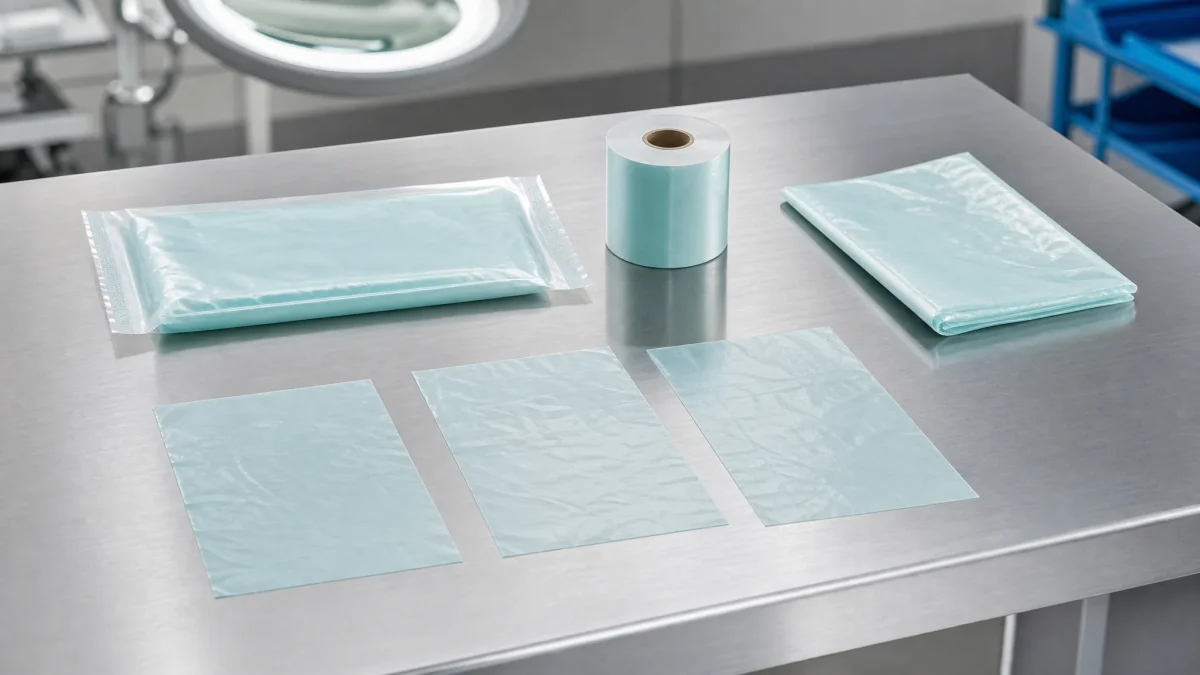
Flexible film route requiring task and contamination-risk qualification.
Review product detailsSelection table
Use one written basis for supplier comparison, samples and internal sign-off.
| Decision | Qualification input | Supporting documents or trial |
|---|---|---|
| Environment | Room class, process and contamination sensitivity | Internal risk assessment |
| Product | Material, dimensions, surface and color | Controlled task sample test |
| Packaging | Inner bag, count, transfer and opening | Entry and dispensing trial |
| Traceability | Lot code, inspection and retained-sample expectation | Incoming and repeat-order reference |
Sourcing workflow
A controlled sequence reduces quote ambiguity, rework and repeat-order drift.
Define the controlled environment and buyer validation protocol.
Compare material and construction routes.
Run task, packaging and incoming-inspection trials.
Record the accepted sample, scope of supporting documents and lot needs.
Approve production and repeat-order references.
Buyer questions
Exact answers depend on the approved SKU, destination and commercial brief.
Do not assume sterility. Sterile status must be explicitly specified, supported and confirmed for the exact product and packaging.
No. The buyer must qualify the exact product, production scope, packaging and performance against its controlled-environment requirements.
Provide the room class, process, contact surfaces, particle or contamination concerns, packaging transfer method, size range and required validation documents.
Batch references and retained samples can support investigation and repeat-order comparison, but the exact records and retention scope should be confirmed during supplier review.
We use necessary cookies to operate this site and optional cookies to improve your experience.