Substitution assessment
A Chinese alternative to Ansell for food-safe disposable gloves
Ansell Limited is an Australian protective-solutions group, legally domiciled in Melbourne and listed on the Australian Securities Exchange (ASX: ANN). Its verified single-use glove materials are nitrile and a polyisoprene and neoprene blend. We found no evidence that it manufactures polyethylene disposable gloves, so this is a comparison across material tiers rather than a like-for-like substitution.
That does not make the comparison useless. It makes it narrower: we overlap on the single-use food-handling conversation and not on protective performance.
The substitution question
Different material tier, overlapping buyer conversation
Ansell's own reporting covers healthcare and industrial channels including food processing, and states that all its manufacturing facilities are externally certified to ISO 9001, with some also certified to ISO 13485 or ISO 14001. That is a substantively different product and quality system from a polyethylene film manufacturer. The two are worth comparing on the task, not on the brand.
Where a PE glove is a genuine substitute
- Single-use food handling where the glove is changed frequently
- Short-wear hygiene tasks: food preparation, serving, cleaning, salon work
- Buyers who need their own brand on the pack rather than a branded glove
- Requirements where low cost per change matters more than tensile strength
- Light-duty splash and contact protection on dry or wet surfaces
Where a nitrile or synthetic glove is the correct product
- Certified chemical protection, where permeation data is required
- Examination and surgical procedures, including sterile fields
- High-dexterity or high-abrasion tasks expected to last hours
- Specifications naming nitrile, polyisoprene or neoprene as the material
- Any requirement where a surgical or exam-grade glove is specified
Decision sequence
Deciding between a PE route and a protective-glove route
Four questions, in order. The first one is usually decisive.
Name the standard or approval your buyer requires
If the requirement references a chemical-protection, examination or surgical standard, a PE glove cannot satisfy it regardless of price. Stop here and source accordingly.
Confirm the wear duration per glove
Polyethylene film is designed for short wear and frequent change. If a single glove must last a long working period, the material is wrong for the task.
Check whether the product contacts food directly
Direct food contact moves the requirement to migration evidence for the exact material and market, and that evidence is what your approval file needs.
Then compare commercial terms
Only after the class and the evidence are settled does comparing cost per glove become meaningful. Comparing price across different protection classes is the most common sourcing error in this category.
Routes that match
Our ranges that sit in the overlapping category
These are the products where a PE manufacturer genuinely competes with branded food-service and hygiene glove suppliers.
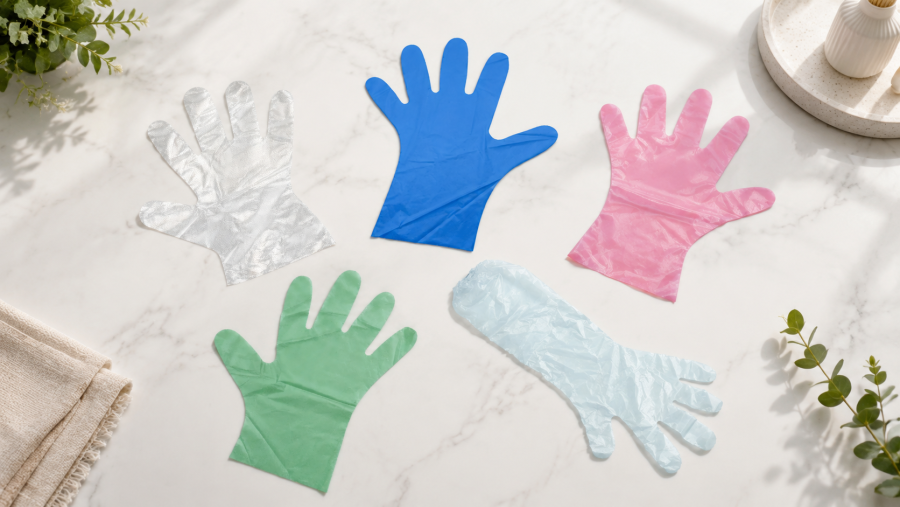
PE and CPE disposable gloves
Short, long and extended-cuff polyethylene gloves for food handling, cleaning and light-duty hygiene tasks.
Compare glove materials →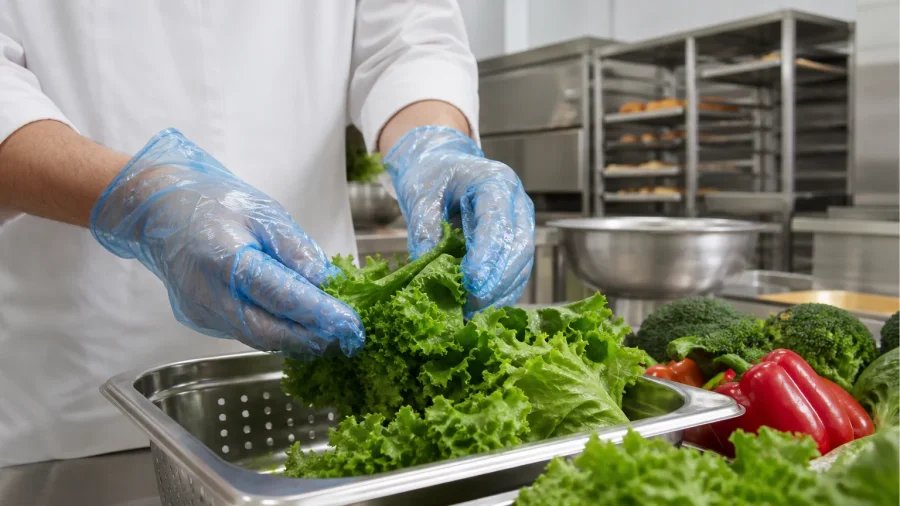
Food-handling applications
How material, task, migration evidence and traceability combine for food-contact glove selection.
Review food handling →Private label and OEM
Custom size, thickness, colour, packaging and artwork so the glove carries your brand, not ours.
See OEM capability →Low MOQ trial route
A published starting commercial value per SKU with samples in approximately 7 days before bulk commitment.
Review the trial route →Documents you can verify
Manufacturing evidence behind the claim
Our own third-party documents with numbers, dates and stated scope. They describe the factory system, which is a different thing from a food-contact approval for a specific SKU.
| Document | Reference | Status |
|---|---|---|
| ISO 9001 quality management | 77067/A/0001/UK/En | Valid to 25 July 2028 |
| BRCGS Consumer Products | CN-BRCCP-251634 (Issue 4, Foundation Level) | Valid to 22 December 2026; scope names PE gloves, aprons, sleeves and bags |
| amfori BSCI social audit | Bureau Veritas, July 2025, overall rating B | Monitoring valid to 16 July 2027 |
| BPI compostability sublicense | 2486563-4 (BPI certificate 10529018-3) | Valid to 30 April 2028; covers only the products named in its file |
The limit that matters here. A BRCGS Consumer Products certificate and an ISO 9001 certificate do not make a glove food-safe, and they are not equivalent to a medical device quality system. Food contact is evidenced by migration testing for the exact material and destination market. We list factory documents so you can verify the manufacturer, and we treat product-level evidence as a separate request.
Approval path
How a food-safe glove requirement is resolved
This is the sequence that produces a decision you can record.
State the task, wear duration and destination market
These three facts determine the material and the evidence set. A requirement that omits them cannot be matched accurately.
Confirm the protection class
We confirm whether a PE or CPE glove suits the task, and tell you plainly if it does not.
Request the migration evidence for the exact SKU
Food-contact reports are matched to the product and the market, and provided for your approval file rather than summarised.
Approve the sample and the documents together
Specification, pack and evidence are approved as one package so the bulk order cannot drift from what was approved.
Buyer questions
Questions buyers ask when comparing a factory against a brand
These are the practical questions behind a food-safe glove search.
Is a polyethylene glove a substitute for an Ansell protective glove?
Only within a narrow task range, and not on material. Ansell Limited is an Australian protective-solutions group (ASX: ANN) whose verified single-use glove materials are nitrile and a polyisoprene and neoprene blend. We could find no evidence that Ansell makes polyethylene disposable gloves. So where a task needs nitrile-grade or surgical protection, a PE glove is not a substitute; where a task needs a low-cost single-use food-handling barrier, the two products serve the same buyer conversation from different material tiers.
Does Ansell compete with you at all?
Yes, partly. Ansell's own reporting covers food-processing end use within its industrial segment, and it sells garments and chemical-protective clothing. That overlaps with the buyer conversation for single-use protection. It does not overlap with our compostable bags, salon capes or shoe covers, where we found no evidence of any Ansell presence.
What makes a glove food-safe?
Food-safe is a material and evidence question, not a brand question. It depends on the material formulation and on migration test evidence for the exact product and destination market, such as FDA 21 CFR or EU No. 10/2011 documents. Ask for the report that names the product, not a general certificate.
Do you compete with Ansell on price?
We publish our own commercial basis rather than competitor pricing. The published reference for a private-label trial is a USD 3,000 starting commercial value per SKU. We make no claim about any other company's prices.
Send the task and the destination market
We will confirm whether a PE or CPE glove fits, name the evidence your market requires, and say so plainly if a different material is the right answer.