The Short Answer on Qualifying a Food Safe Gloves Supplier
Disposable food contact gloves are single-use film gloves worn while food is prepared or packed. For short, high-change tasks, PE film is the usual starting point. For wetter work that needs more grip, compare CPE. For longer wear and a closer fit, compare TPE or POE. None of those names is a food-contact approval: the finished SKU still needs a migration report for the destination market. Supplier sampling and task matching are on the food-handling glove page.
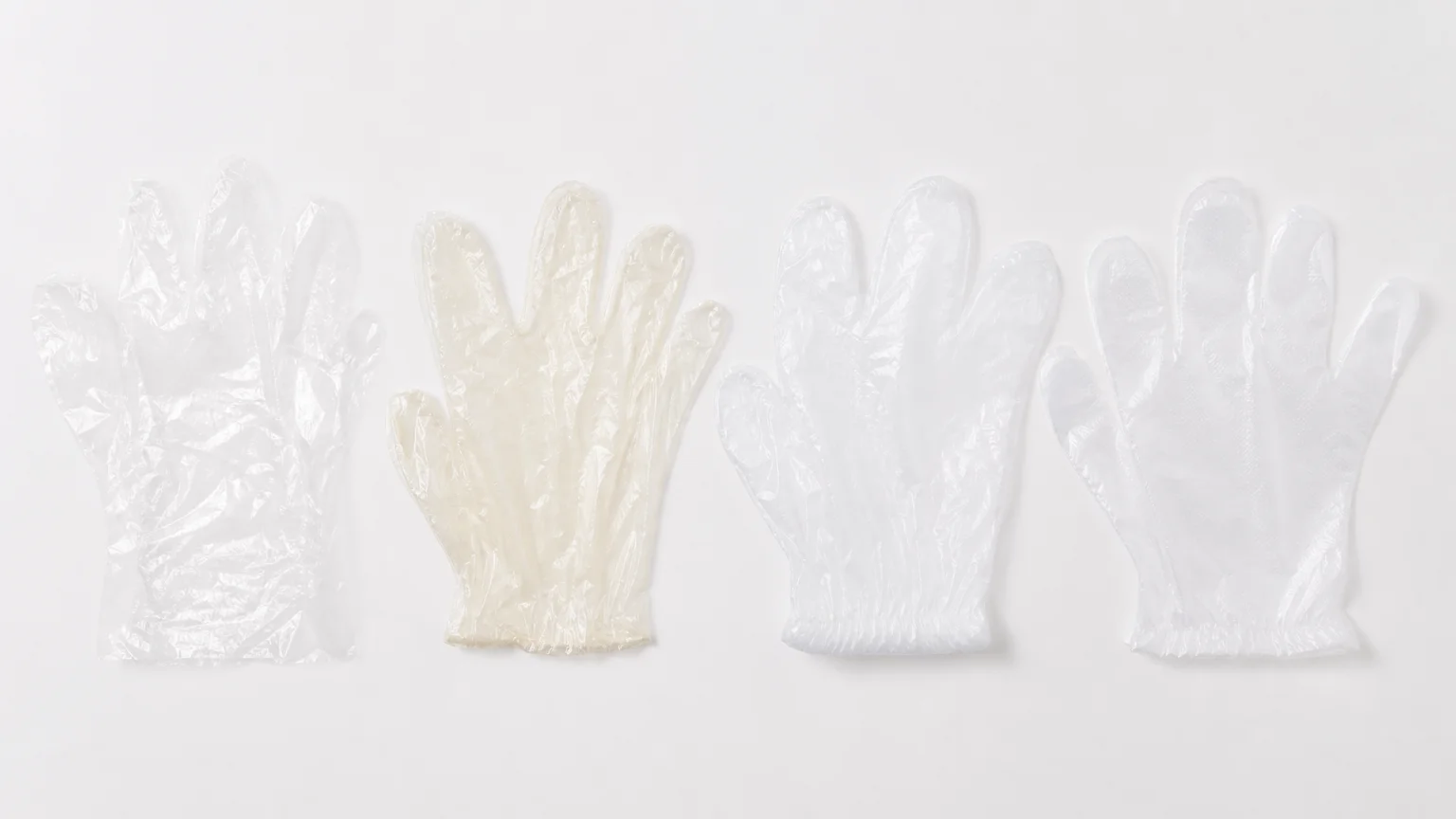
This guide is built for buyers who source gloves across materials, not just PE. It explains what "food safe" really means, the six dimensions for evaluating a supplier, how to match material to food task, and the Worldchamp supplier credentials that back each point. For a deeper look at PE material food safety and wear time, see our PE gloves food safety guide.
What "Food Safe Gloves" Really Means
Buyers often treat "food safe" as a single stamp. It is not. Food safety for gloves rests on two separate layers: a controlled factory system and product-level food-contact testing. Confusing the two is the most common sourcing mistake. A clean, certified factory lowers risk. It does not, by itself, prove a given glove passes migration testing.
In the United States, food-contact polymers are governed by 21 CFR Part 174 and the polymer-specific rules under 21 CFR Part 177. In the European Union, the plastic food-contact framework is EU No. 10/2011. Food safety programs such as HACCP then place gloves inside a larger process.
Factory Certificate vs Product Migration Test
This boundary matters more than any other. A facility quality certificate confirms the factory runs a controlled system. A migration test confirms the actual glove, under named food and temperature conditions, does not release substances above legal limits. They answer different questions.
For Worldchamp gloves, public files reference BRCGS Consumer Products and ISO 9001 certificates; request the current originals, validity and scope before relying on either claim. The gloves are widely used in food handling. If you need FDA 21 CFR or EU No. 10/2011 migration documents for a specific market, ask with your target country and we coordinate the right paperwork. We do not claim a food-contact test we do not hold.
The 6 Dimensions to Evaluate a Food Safe Gloves Supplier
Use this checklist to compare any two suppliers on the same terms. Each dimension maps to a risk you carry as the buyer. A supplier that fails one is not automatically disqualified, but the gap must be closed before bulk order.
- Migration test reports — third-party food-contact testing under the framework your market accepts, not just a factory certificate.
- Batch traceability and retained samples — every lot tracked with retained samples, so a field failure can be traced back to a batch.
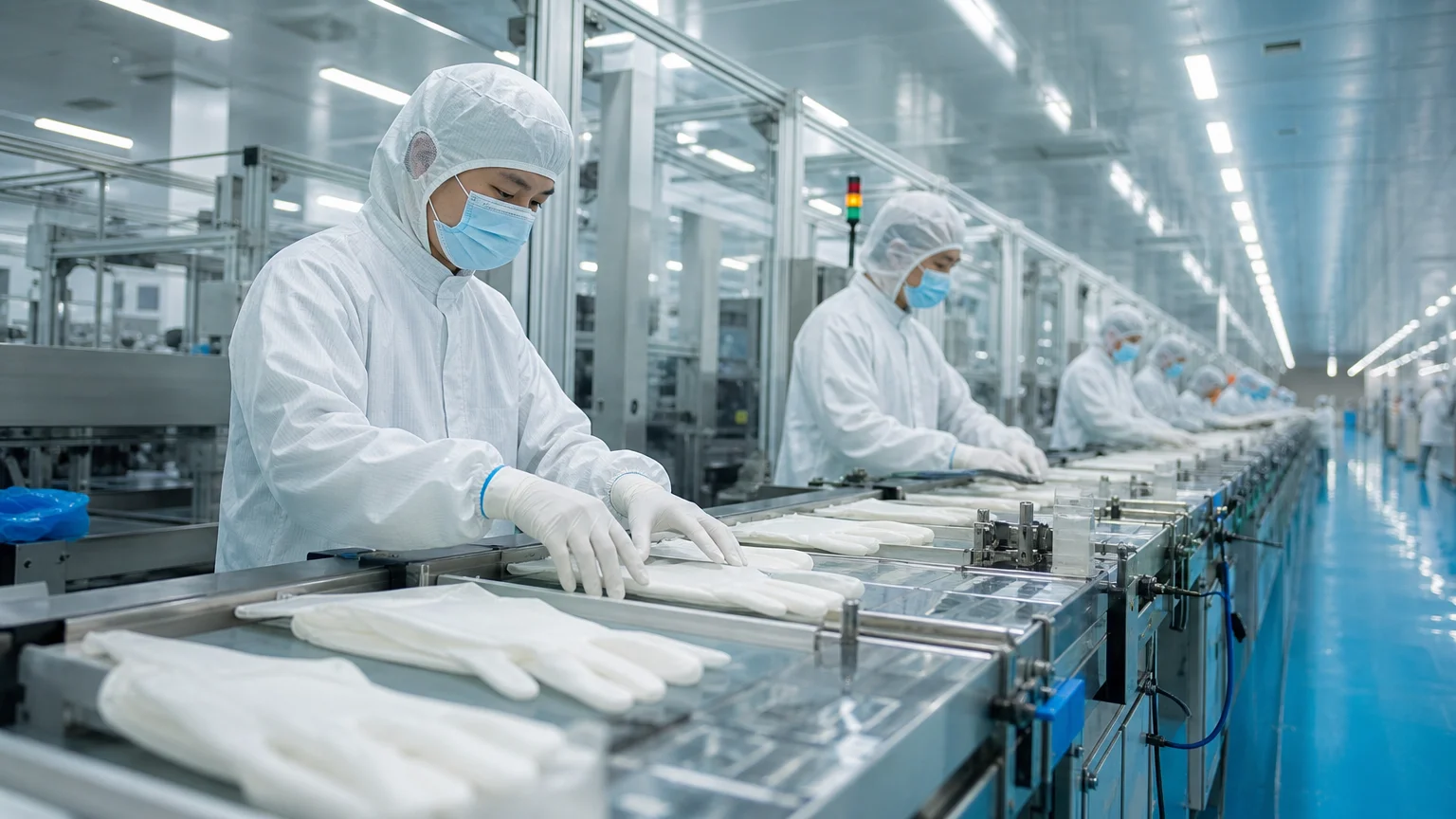
- Clean production environment — a controlled clean workshop that limits contamination risk before the glove is packed.
- Defect rate control — a measured, low defect rate with in-line inspection, because a torn glove is a contamination event.
- Private label and packaging capability — OEM packaging, country-specific labeling, and dispensing formats your channel needs.
The order is deliberate. Documents come first because they are the fastest to verify. Migration testing is second because it is the layer most often missing. Traceability and defect rate protect you after the order ships, when problems are most expensive.
Dimension 1: Compliance Documents
One note on wording. BRCGS Consumer Products is not the same as BRC Food Safety, which is for food processing plants. A glove factory holds the consumer products standard, not the food plant standard. Suppliers that blur this line are worth a closer look.
Dimension 2: Migration Test Reports
This is the dimension most often missing and most often faked. A real migration test names the testing lab, the regulatory framework, the food simulant, the contact temperature, and the result against the specific migration limit. Vague claims like "food safe tested" without a lab report are not evidence.
Dimension 3: Batch Traceability and Retained Samples
If a customer reports a torn glove, can the supplier trace it back to the production batch? Retained samples for every lot are the answer. They let you and the supplier investigate a failure instead of guessing. Worldchamp keeps retained samples for every lot and runs an under-0.1% defect rate standard (published reference; scope to be confirmed) across batches. Traceability turns a quality problem into a fixable one.
Dimension 4: Clean Production Environment
A food-contact glove packed in a dusty room is not food safe, whatever the certificate says. A Class 100,000 clean workshop controls particles and cross-contamination during forming and packing. It is the physical layer behind the paperwork. Ask to see the clean workshop test report, not just the certificate on the wall.
Dimension 5: Defect Rate Control
A glove that tears in use fails as a barrier. Each tear is a contamination event on the line. Low defect rate is therefore a food safety control, not just a cost control. Ask for the measured rate, the inspection method, and how rejects are handled. Worldchamp holds an under-0.1% defect rate (published reference; scope to be confirmed) with retained samples per lot, so failures are rare and traceable.
Dimension 6: Private Label and Packaging Capability
Food buyers rarely sell loose gloves. You need branded cartons, country-specific labeling, and dispensing formats that fit a kitchen or a retail shelf. A supplier with OEM packaging and low minimums lets you build SKUs without overcommitting. This is where sourcing meets merchandising, and a capable partner saves months of rework.
Match the Glove Material to the Food Task
Supplier qualification decides whether the glove is safe. Material choice decides whether the glove is fit for the task. A food safe glove that tears on a sharp bone is no longer safe. This section picks material by food scenario, without repeating the wear-time rules covered in our PE guide.
Across food handling, four materials cover most needs. Each fits a different mix of contact type, duration, and mess level.
| Food task | Best material | Why it fits |
|---|---|---|
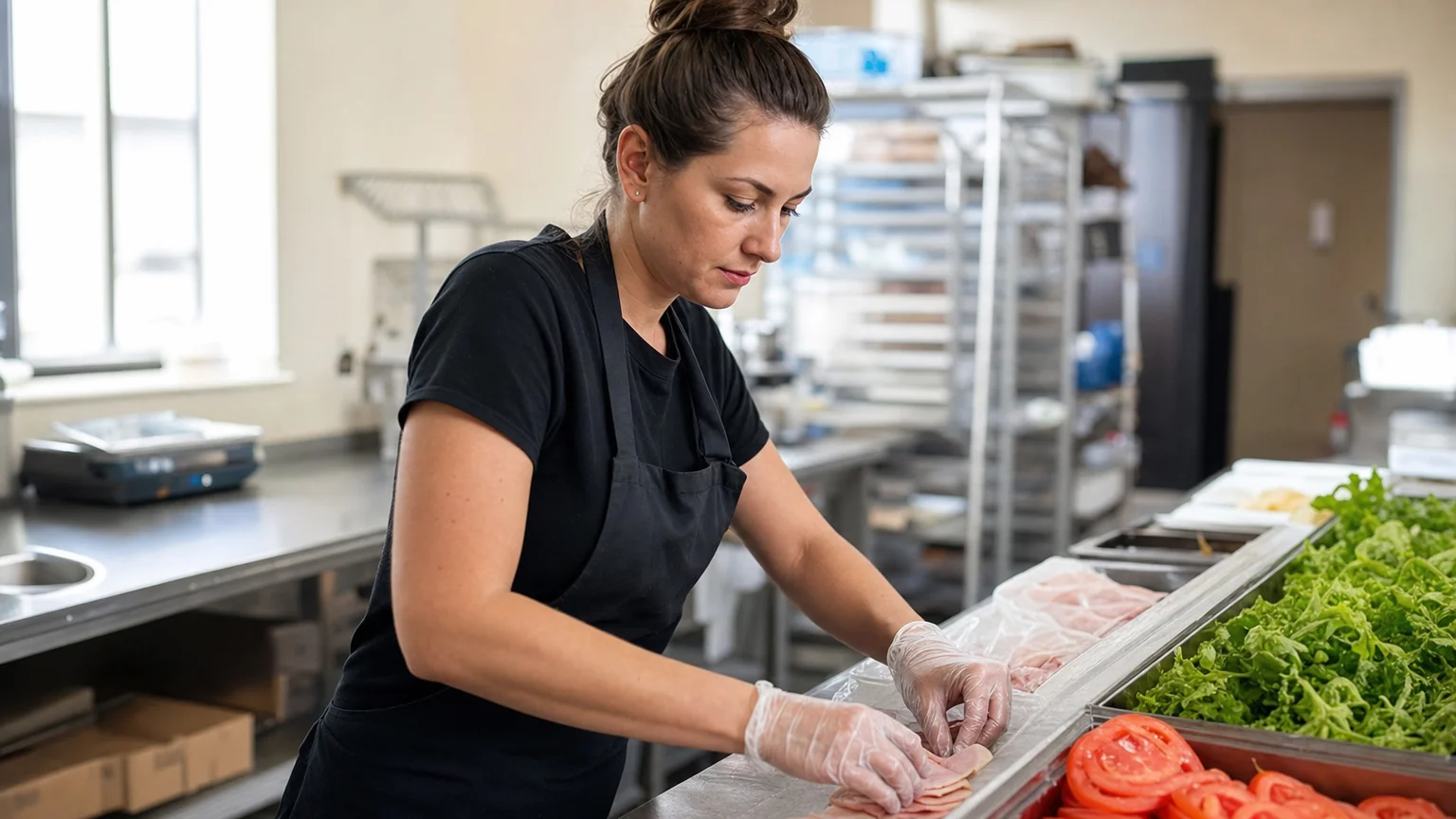
| Light, short contact — sandwich assembly, salad plating, cashier handoff | HDPE / LDPE | Thin, low-cost, ambidextrous; made for frequent changes |
| Ready-to-eat deli counter — longer fit, stretch, some dexterity | TPE | Elastic, stays fitted; a historical SGS food-contact report is available, so request a current report for the proposed SKU |
| Heavy or wet tasks — washing produce, oily cleanup, raw poultry | CPE | Thicker, textured film resists snags and water |
| Long precision work — butchery, fine cutting, hours of wear | POE | More durable than PE, economical vs latex; 2024 industry-first material |
The pattern is simple. Short and clean favors HDPE or LDPE. Longer and fitted favors TPE. Wet and heavy favors CPE. Long and precise favors POE. A good supplier carries several of these so you can mix formats in one order instead of juggling vendors.
When One Material Is Not Enough
Most food operations run more than one task. A deli may need HDPE at the counter and CPE at the sink. Sourcing all of them from one qualified supplier keeps compliance documents consistent and lowers your audit load. It also lets you negotiate volume across the bundle rather than per SKU. For plant-level workflow, see our food processing sourcing page. Browse the full range on our disposable gloves hub, including standard short gloves, extended length gloves, and dispensing retail glove formats.
Worldchamp Supplier Credentials for Food Buyers
Here is how Worldchamp maps to the six dimensions above, so you can compare us on the same checklist.
Traceability: retained samples for every lot, with full batch tracking.
Clean environment: a Class 100,000 clean workshop with automated production lines.
Defect rate: under 0.1% across batches, measured with in-line inspection.
Private label: OEM and ODM packaging, multi-language support across 13 languages, and country-specific export labeling under the Global Guardian framework.
Procurement Action Checklist
- Name your target market — country and regulatory framework first, so the supplier sends matching documents.
- Score the six dimensions — compliance, migration testing, traceability, clean workshop, defect rate, private label.
- Match material to task — HDPE for short, TPE for deli, CPE for wet, POE for long precision work.
Frequently Asked Questions
What makes a gloves supplier food safe?
A food safe gloves supplier can prove, batch by batch, that its gloves meet the food-contact rules of your market. That means facility certificates (BRCGS Consumer Products, ISO 9001), migration test reports under the right framework, batch traceability with retained samples, a clean workshop, low defect rate control, and private label packaging capability. A factory certificate alone is not enough.
Is a BRCGS Consumer Products certificate the same as food safe?
No. BRCGS Consumer Products confirms a controlled quality system for consumer goods like plastic gloves. It is not a product food-contact test, and it is not the BRC Food Safety standard used for food processing plants. To prove a specific glove is food safe for a market, you need migration testing under FDA 21 CFR or EU No. 10/2011.
Which glove material is best for food handling?
Choose the glove by task, wear time, fit, change frequency, and the food-contact evidence required in the destination market. PE suits frequent short tasks, while TPE or CPE may offer more stretch or strength; approve the final choice against a matched sample and product-specific documentation.
What documents should I ask a food safe gloves supplier for?
Request the current ISO 9001 and BRCGS factory-system certificates, then request product- and market-specific evidence for the proposed SKU, such as the applicable food-contact migration or material test report. Verify the holder, scope, validity, product identity, and target market instead of treating a factory certificate as product approval.
Why does batch traceability matter for food gloves?
If a customer reports a torn or contaminated glove, traceability lets you and the supplier trace it back to the production batch. Retained samples for every lot make that possible. Without it, a field failure becomes a guessing game. Worldchamp keeps retained samples per lot and holds an under-0.1% defect rate standard (published reference; scope to be confirmed).
Put this guide into a procurement workflow
When the product direction is clear, discuss the specification with Worldchamp. Share the task, destination, quantity, packaging and evidence requirements so the next review is specific.
Request a food-contact glove document brief
Share the application, market, quantity, pack format and scope of supporting documents. Worldchamp can then respond against a defined product rather than a generic material request.