What Are the Best Gloves for Food Service?
The best gloves for food service match the task, the wear time, and the food-contact rules of your market. For short prep tasks, thin PE gloves stay cheap and easy to change. For longer wear or wet hands, TPE gloves and CPE gloves add stretch and strength. For premium feel close to nitrile, POE gloves offer elasticity without natural latex.
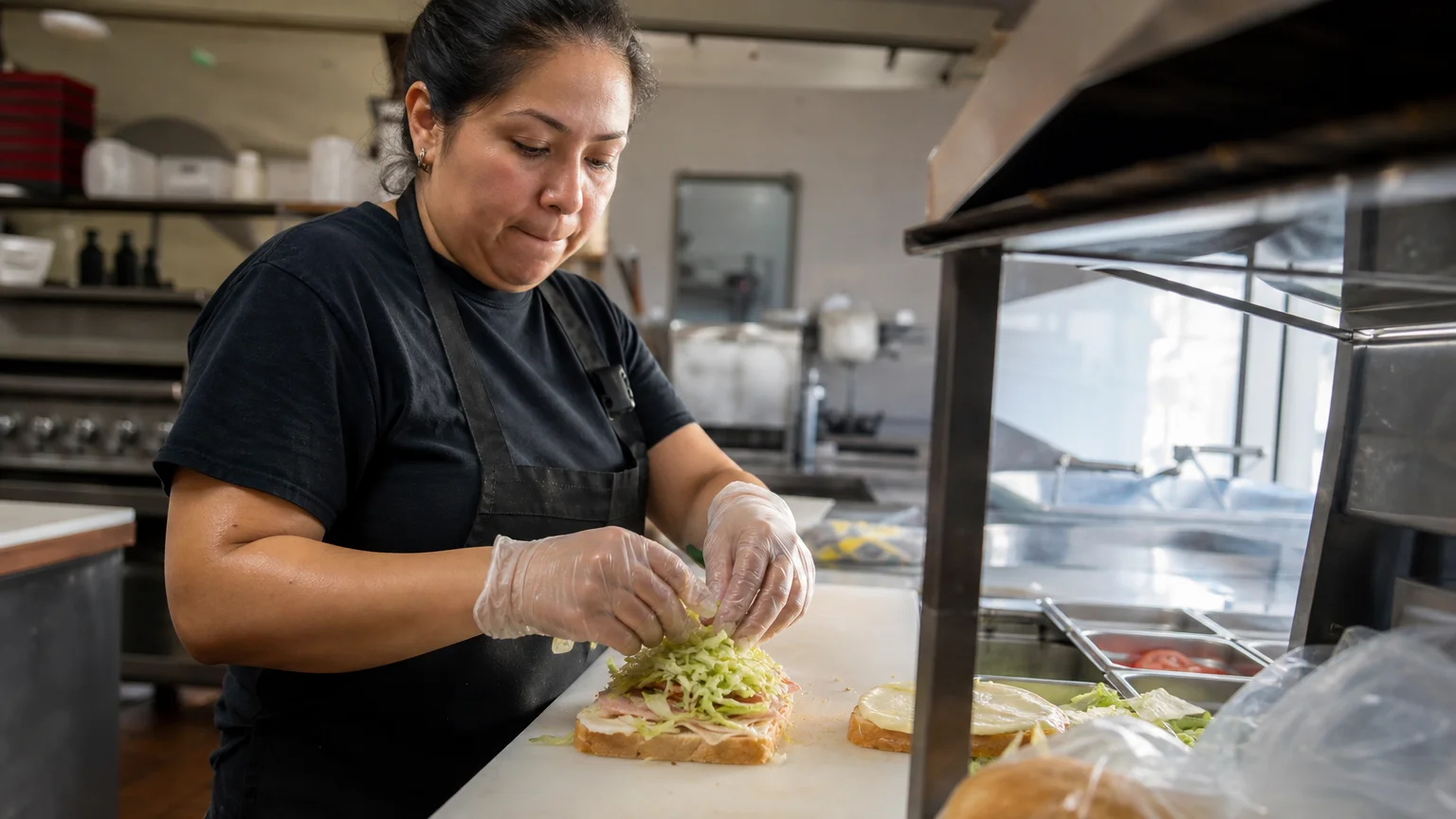
There is no single winner. The best choice is the material that fits each station in your kitchen or packing line without overpaying for performance you do not need. This guide compares the four main options so distributors and importers can build a mixed glove program.
Best Gloves for Food Service: Buyer Guide
Food service covers many stations: cold prep, hot line, sandwich assembly, salad bar, dish pit, and packaging. Each station has different glove demands. A busy deli needs gloves workers can change every 15 minutes. A meat room needs longer cuffs and puncture resistance. A bakery needs loose, food-grade gloves that do not stick to dough.
Buyers often default to one glove SKU to keep purchasing simple. That works for small operations. But multi-site distributors usually run two or three glove types in parallel to balance cost and safety. The goal is to put the right glove on the right hand, not the most expensive glove on every hand.
Food-contact rules add another layer. The U.S. framework is eCFR, 21 CFR Part 177, which covers indirect food-contact polymers. Buyers should ask suppliers for documentation under the right framework rather than assuming every glove is approved for food contact.
Key Factors to Compare
When you compare food service gloves, five factors matter most. Look at material, fit and elasticity, thickness and cuff length, food-contact documentation, and unit cost per change. A simple scorecard across these five points beats a single spec sheet.
Material and Stretch
PE is a stiff polyolefin film. It is food-grade and cheap, but it has almost no stretch. Wikipedia, Polyethylene gives background on the resin family. TPE and POE are thermoplastic elastomers, so they stretch and recover like rubber without natural latex. CPE sits in between, with a textured surface for grip.
Thickness and Cuff Length
Standard short gloves suit quick tasks under 30 minutes. For raw meat, cleaning, or deep sinks, choose longer cuffs that protect the wrist. Worldchamp groups these as standard short gloves and extended-length gloves. Matching cuff length to the task is one of the cheapest ways to cut glove waste.
Food-Contact Documentation
Food-contact language must match the finished SKU, use conditions, and destination market. Ask for the applicable migration or material test report for the exact glove, then confirm the holder, test method, date, scope, and validity. A factory quality certificate can support supplier qualification, but it does not replace product-level food-contact evidence.
Product and Material Recommendations
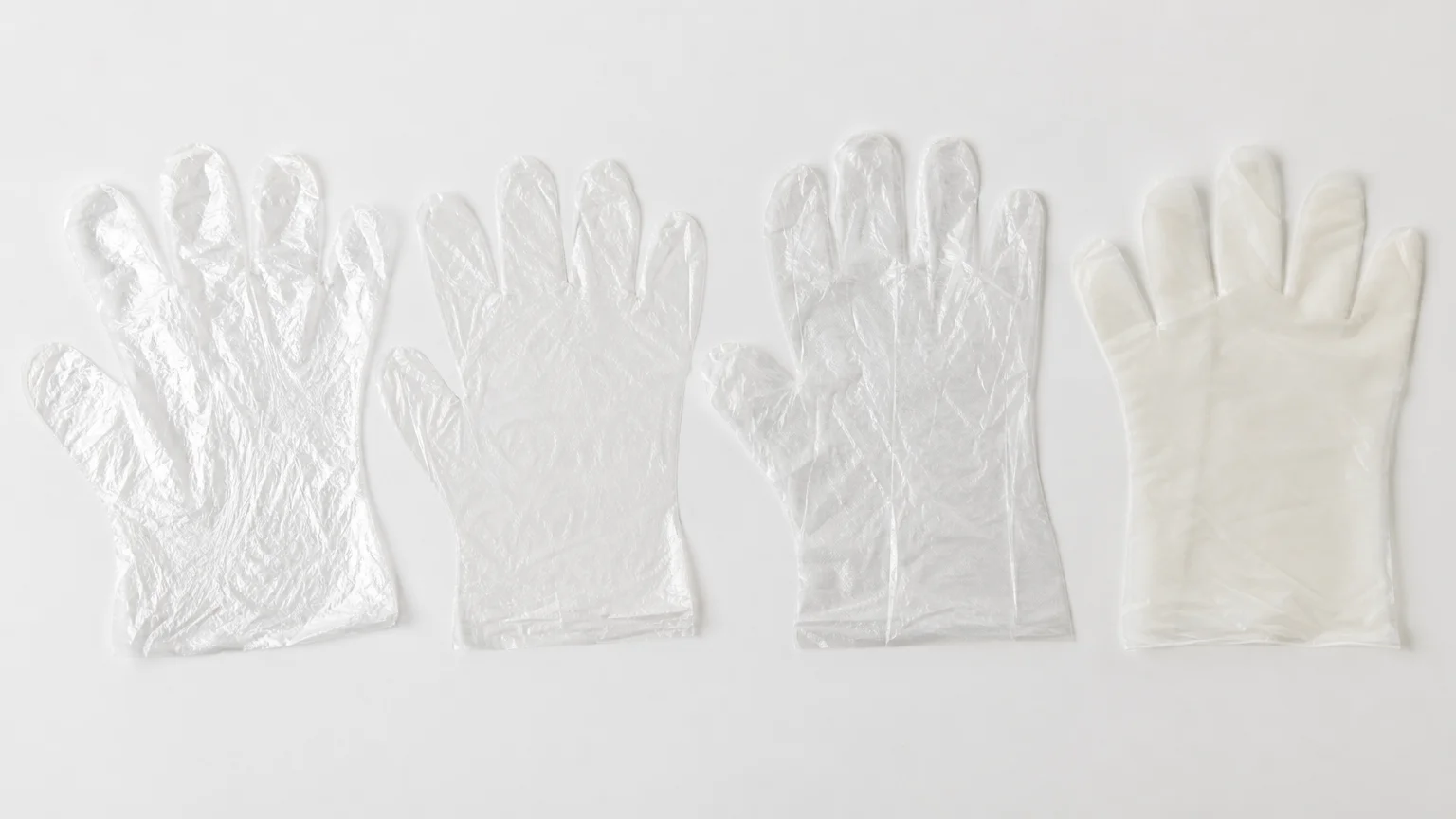
Four materials cover almost every food service need. The table below compares them on the factors buyers care about. Use it as a starting scorecard, then confirm details with your supplier.
| Material | Best for | Stretch | Food-contact data | Cost level |
|---|---|---|---|---|
| PE (HDPE/LDPE) | Short prep, sandwich, salad bar | Low | Facility-certified; no per-SKU migration report | Lowest |
| TPE | Medium-wear prep, packaging | High | SGS food contact test report | Mid |
| CPE | Wet tasks, dish pit, grip work | Medium | Facility-certified; no per-SKU migration report | Mid |
| POE | Premium feel, longer wear | High, nitrile-like | Newer material; confirm paperwork for your market | Higher |
When to Choose PE Gloves
Pick PE for high-change-rate stations where cost per change drives the decision. Sandwich lines, salad bars, and bakery prep fit here. PE is food-grade, loose, and easy to snap on and off. Explore the formats at dispensing and retail glove formats.
When to Choose TPE or CPE Gloves
Choose TPE gloves when workers wear gloves longer than 20 minutes and need stretch without latex. Choose CPE gloves for wet or oily tasks where a textured surface improves grip. Both beat PE on comfort while staying affordable for food service volume.
When to Choose POE Gloves
Pick POE gloves for stations that need a premium, nitrile-like feel, such as sushi prep or front-of-house plating. POE is Worldchamp's industry-first material, launched in 2024. It stretches well and carries no natural latex allergen. Because it is newer, confirm your target market accepts the available documentation before scaling.
Worldchamp Manufacturing Context
Worldchamp runs a 12,000 m² factory in Huizhou, China, with a Class 100,000 clean workshop and automated lines. Monthly capacity reaches 350 tons, with about 20 tons per day. That scale supports both large distributor orders and smaller restocks.

For food service buyers who want a combined PE and TPE program, the PE gloves for food service combo page groups the relevant SKUs. The broader catalog sits at disposable gloves, and food handling use cases are detailed at gloves for food handling.
Next Steps for Procurement
Once you know your station mix, the buying process is simple. Follow these four steps to move from inquiry to a stable glove supply.
- Map your stations by task and change rate so you know how many SKUs you need.
- Request samples of the two or three materials that fit, and test them on the actual line.
- Confirm compliance documents for your target market and food-contact framework before bulk order.
For a wider selection framework, see the companion guide on how to choose disposable gloves for business. If your buyers focus on PE specifically, the PE gloves food safety guide goes deeper on that material.
Frequently Asked Questions
Are PE gloves food safe?
PE gloves are food-grade and widely used in food handling. Worldchamp PE gloves are made in a BRCGS Consumer Products and ISO 9001 certified facility. They do not each carry a per-SKU food-contact migration test report. For market-specific documentation, request it for your target market and framework.
Which gloves are best for raw meat handling?
For raw meat, choose extended-length CPE or POE gloves. The longer cuff protects the wrist, and the stronger film resists puncture. Change gloves between tasks to prevent cross-contact. Pair them with disposable aprons for full coverage.
Can I use one glove type for my whole kitchen?
You can, but it usually costs more. A single premium glove on every station overpays for short prep tasks. A mixed program of PE for quick changes and TPE or CPE for longer wear often lowers total cost while improving safety.
Do Worldchamp food service gloves contain latex?
No. PE, TPE, CPE, and POE gloves are all synthetic and contain no natural latex. This suits food service operations with latex-allergic staff. For background on elastomer materials, see Wikipedia, Thermoplastic elastomer.
Put this guide into a procurement workflow
When the product direction is clear, discuss the specification with Worldchamp. Share the task, destination, quantity, packaging and evidence requirements so the next review is specific.
Turn the comparison into a sample and document brief
Share the application, market, quantity, pack format and scope of supporting documents. Worldchamp can then respond against a defined product rather than a generic material request.