Food-service sourcing / Material selection
PE vs Nitrile Gloves for Food Service
Compare polyethylene vs nitrile gloves for food service by task, fit, finished-product documentation, change frequency, and a consistent cost model.
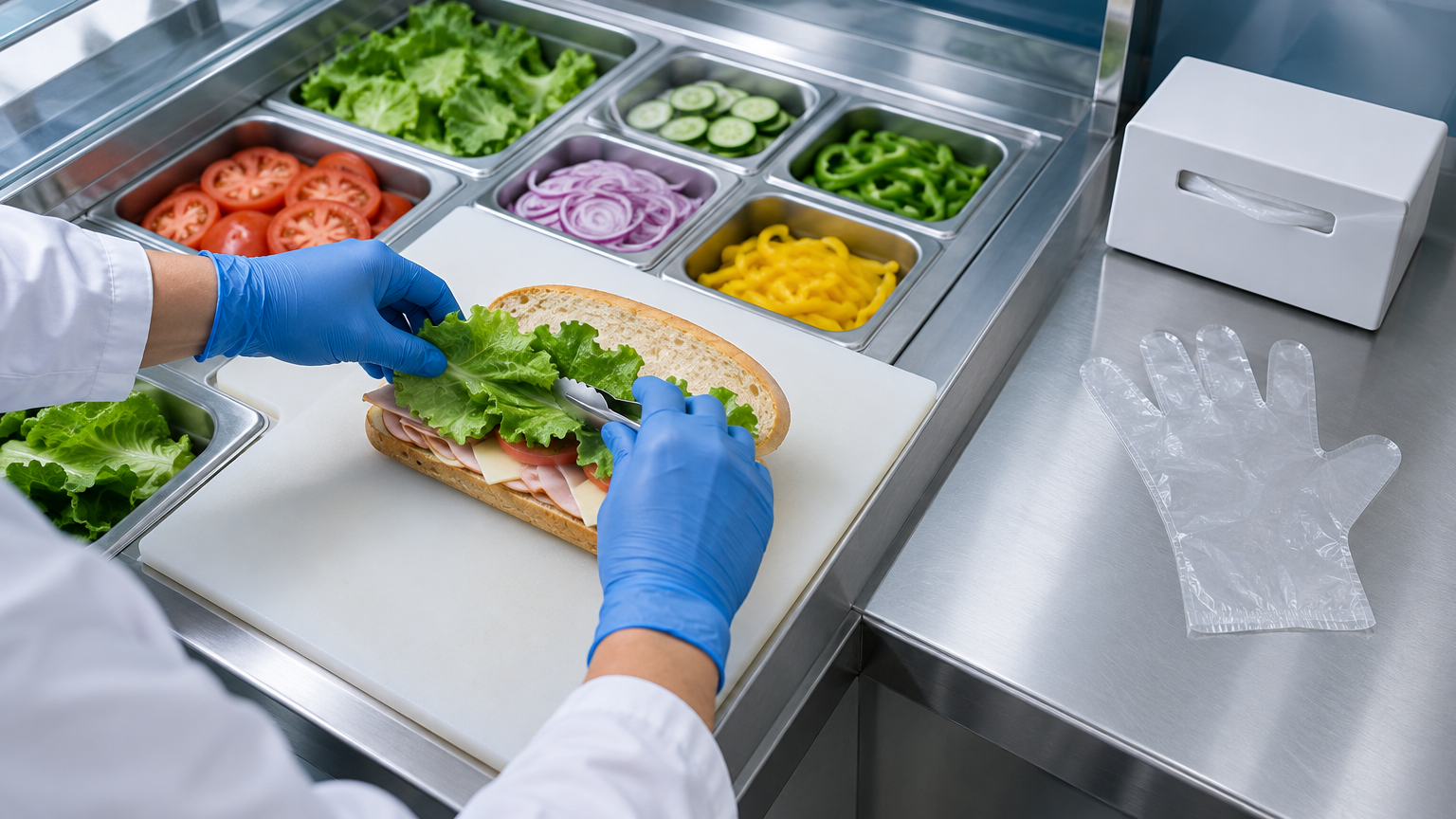
What Are You Actually Comparing: Ordinary PE Film or Fitted Nitrile?
Choosing polyethylene vs nitrile gloves starts with the finished glove, not a broad material ranking. This comparison concerns ordinary high-density polyethylene (HDPE) and low-density polyethylene (LDPE) film gloves used in food-service purchasing. It does not treat elastomer-modified polyethylene blends as interchangeable with these films. A successful choice depends on how the glove fits, how often workers change it, and what its documents actually cover.
Ordinary PE film gloves are commonly made by cutting and sealing film into a relatively loose hand shape. Nitrile disposable gloves are commonly formed by dipping, producing a fitted synthetic-rubber glove available in multiple sizes. These construction differences can affect movement, donning, and fingertip control. They do not establish a universal ranking for durability or protection across all products.
For PE, compare the actual dimensions, film specification, seal consistency, surface texture, and dispensing format. HDPE and LDPE names alone do not specify these features. For nitrile, compare sizing, thickness distribution, texture, and intended-use labeling. A thicker-looking sample or a closer fit is not evidence that a glove meets a particular food-contact or protective requirement.
Start with the disposable glove range, then shortlist products against a written task description. Keep ordinary film gloves separate from stretch-focused alternatives in purchasing records. Otherwise, a trial may appear to compare polyethylene with nitrile while actually changing formulation, fit, packaging, and intended use simultaneously.
When Do Rapid Changes Matter More Than Fingertip Control?
At a service counter, a worker may move between a food-handling task and another activity repeatedly. For suitable brief tasks, a loose PE glove can be convenient to put on and remove. That convenience must be demonstrated with the actual dispenser, hand sizes, and station layout. A film glove that clings inside its pack or slips during handling can erase the expected advantage.
Fitted nitrile products deserve evaluation where workers repeatedly manipulate small ingredients, operate utensils, or need consistent fingertip positioning. A closer fit may support these movements, but sizing matters: excessive fingertip space or uncomfortable tightness can interfere with the task. Wet or oily conditions also change handling, so dry sample demonstrations are not sufficient evidence for every station.
- For brief portioning or serving, observe access to a fresh glove, opening the cuff, and removal without touching food afterward.
- For detailed assembly, observe ingredient placement, utensil control, and whether the worker repeatedly adjusts the glove.
- For mixed duties, mark the required change points before comparing glove consumption or speed.
Gloves do not replace hand hygiene or prevent cross-contamination when the same pair moves between incompatible tasks. Follow the operation's hygiene procedures and applicable local requirements. Change gloves when required by those procedures, including when damaged or contaminated; do not extend wear simply to improve a cost calculation.
Neither option wins every workstation. A documented split specification can be more practical than imposing one glove everywhere, provided staff can identify the correct product and understand the change rules.
How Do the Two Options Compare Under the Same Task Conditions?
A useful polyethylene vs nitrile gloves comparison records observations that a supervisor can reproduce. Keep food type, utensils, work pace, hand hygiene, and required change points consistent. Use the table to plan your checks, not as a performance guarantee. Check the specifications and supporting documents for both products.
| Decision factor | Ordinary HDPE or LDPE film | Fitted nitrile product |
|---|---|---|
| Short, repeated changes | Check cuff access, opening, dispensing, and removal at the station. | Check donning time with the correct size and permitted hand condition. |
| Fine handling | Observe loose fingertips, glove movement, and adjustment frequency. | Observe sizing, fingertip positioning, and grip during the same movements. |
| Product integrity | Inspect film and seals against the agreed acceptance criteria. | Inspect the finished glove against its agreed acceptance criteria. |
| Food-contact suitability | Verify evidence for the supplied film glove and intended contact conditions. | Verify evidence for the supplied nitrile glove and intended contact conditions. |
| Operating cost | Measure usage, rejects, handling time, and landed price. | Use the same measurements and include the same costs. |
Do not turn an observed preference into an unsupported strength claim. A worker may prefer one sample because its shape suits their hands, while another size changes the result. Similarly, a successful serving trial says nothing about resistance to a cleaning chemical or a sharp edge.
When comparing HDPE glove specifications and LDPE glove options, request samples representing the quoted production specification. Record which sample was tested and retain its packaging. Keep the tested sample and packaging with the quoted specification so you know which product the results apply to.
Which Finished-Product Documents Should Buyers Check?
The words polyethylene or nitrile do not show whether a glove meets your food-contact requirements. The finished article includes its formulation, additives, manufacturing process, and intended conditions of use. Ask the supplier to identify the applicable destination-market requirements and provide evidence linked to the supplied glove. Check that the report covers the glove you will receive, not just a resin or a different model.
- Match the manufacturer, product reference, material description, and sample identification to the quotation and packaging.
- Check the intended food types, contact duration, temperature conditions, and any restrictions stated in the supporting documents.
- Review the report date, test methods, results, and whether changes to the product require reassessment.
- Keep batch traceability, agreed acceptance criteria, and a process for handling specification changes in the purchasing file.
A factory quality-system certificate serves a different purpose from product-specific food-contact evidence. Likewise, a report referencing an FDA regulation is not automatically an FDA certification or medical-device authorization. The food-safe glove selection guide provides a useful starting point for organizing these purchasing questions, but the actual product documents remain decisive.
Medical claims require a separate review. The FDA's medical glove guidance explains that medical gloves are regulated devices with specific premarket requirements. A nitrile material label does not make a glove suitable for examinations, surgery, or handling chemotherapy agents. Do not transfer a food-service approval decision into healthcare procurement without checking the intended use and the relevant regulatory evidence.
When Do You Need a Different Protective Glove?
Food hygiene and worker protection overlap, but they are not the same decision. Serving bread differs from cleaning equipment, handling a hot tray, or working near sharp tools. Before selecting either material, identify the hazards, exposure conditions, duration, and required controls. Some activities need different protective equipment rather than a different disposable food glove.
OSHA's hand-protection selection rule, 29 CFR 1910.138, bases selection on performance relative to tasks, conditions, duration, and identified hazards. It does not establish a preferred glove simply from its polymer name. For chemical exposure, require relevant finished-glove performance information for the actual substance, concentration, temperature, and contact pattern before approving use.
Do not advertise ordinary PE gloves as chemical-protective substitutes, and do not assume every nitrile glove protects against every cleaner. Ask the safety professional responsible for the operation to review the chemical assessment and manufacturer instructions. If suitable evidence is unavailable, the substitution is not justified by comfort, price, or a successful food-handling trial.
Sharp objects can puncture disposable gloves, including medical gloves, as the FDA guidance warns. Neither sample in a routine food-service trial should be treated as puncture-proof or cut-protective. Assess knife work, bone fragments, broken packaging, and equipment hazards separately. Keep thermal hazards separate too: ordinary disposable gloves should not be selected as heat protection based on material identity or appearance.
How Do You Compare the Total Cost of PE and Nitrile Gloves?
A lower carton price does not necessarily produce a lower operating cost. For polyethylene vs nitrile gloves, choose a common output, such as an equal number of correctly completed portions during a defined service period. Use the same hygiene rules, rejection criteria and tasks. Before comparing costs, exclude products that lack the required documents or fail your agreed checks.
Use a transparent model: total observed cost equals gloves consumed multiplied by landed cost per individual glove, plus measured glove-related labor cost, plus agreed disposal and attributable rework costs. Divide that total by accepted task output. If gloves are quoted in pairs, boxes, or cartons, normalize the units before comparison. State whether freight, duties, storage, and dispenser costs are included.
Measure glove-related labor consistently. Include dispensing, donning, required changes, and replacement after a failure under the same observation method. Avoid counting all preparation time as glove time, or assigning a wage saving when no labor capacity is actually released. Record torn or dropped gloves separately so that handling waste is not confused with a manufacturing defect.
Recalculate using your own data when glove use, size mix or delivered prices change. Report a range only when the inputs support it, and disclose the assumptions. No fixed saving percentage follows from the material name.
For a wholesale glove quotation, request consistent count definitions, packing details, specification tolerances, and delivery terms. That makes supplier quotes comparable before operational trial results are added.
How Should You Run a Side-by-Side Sample Trial?
Design the trial before opening the samples. Include ordinary HDPE and LDPE products separately rather than treating all PE gloves as one specimen. Add appropriately sized nitrile samples obtained from a qualified source. Give each product a code, retain the supplier reference, and confirm the documents before allowing food-contact use. A practical handling trial does not replace laboratory testing or compliance assessment.
- Define one station, representative tasks, food conditions, required change points, and pass or fail criteria in advance.
- Let the same workers test each option, rotating order where practical to reduce learning and fatigue effects.
- Record dispensing problems, donning time, adjustments, visible damage, dropped items, glove consumption, and accepted output.
- Repeat across representative shifts and hand sizes, then separate measured observations from worker preferences.
Stop any trial condition that creates an unacceptable risk. Investigate failures without assuming their cause: a split may involve fit, handling, a sharp contact, or product integrity. Keep the failed sample where appropriate and record the circumstances. Agree a corrective action and retest the relevant condition before approving a specification change.
Worldchamp supplies PE glove options, including HDPE and LDPE. Obtain nitrile comparison samples from a suitable supplier. Ask for PE samples with the proposed dimensions, packaging, and supporting documents. If vinyl is also on your shortlist, use the separate polyethylene versus vinyl food-service comparison to frame that evaluation. Approve the product that meets the documented task requirements, then confirm that repeat orders will follow the tested specification.
Frequently Asked Questions
Can a buyer approve one glove for every food-service workstation?
Only if that finished product meets the documented requirements at every station. Map the tasks first, including hygiene change points and worker hazards. Different stations may need different gloves. Label and store them clearly, and train staff to avoid mix-ups.
Should I compare quoted glove counts by box, pair, or individual glove?
Convert quotes to a cost and count per individual glove and confirm whether the stated count is nominal or subject to an agreed tolerance. Also check cartons per shipment, packaging format, size mix, and delivery terms. A box of pairs and a box of individual gloves are not equivalent purchasing units.
Does choosing a synthetic material guarantee that workers will not experience skin reactions?
No. The material name alone cannot establish individual skin compatibility. Review finished-product information, including relevant formulation disclosures, and investigate reported reactions through the operation's occupational-health process. Do not label a product allergy-proof or assume that switching polymers resolves every skin complaint.
What should I send Worldchamp when requesting PE glove samples?
Send the destination market, food-contact conditions, task description, hand-size range, change frequency, preferred dispensing format, and expected order volume. Request HDPE and LDPE samples linked to the quoted specification and available supporting documents. Obtain nitrile comparison samples separately from a suitable supplier.
Tell us what you need from your PE gloves
Send the task, target market, hand sizes, packaging and estimated quantity. We will confirm the proposed PE product, available documents and sample arrangements for comparison with your current glove.
Discuss a PE sample