What Is PLA Material? The Short Answer
PLA — short for polylactic acid — is a bioplastic made from plant sugars, most commonly corn starch or sugarcane. It is one of the most widely used compostable materials in single-use products like bags, cutlery, and food packaging.
Worldchamp manufactures certified compostable products at our ISO 9001 & BRCGS Consumer Products certified facility (Certificate No. CN-BRCCP-251634) in Huizhou, China. Our compostable glove line holds DIN CERTCO (No. 9G0275), SEEDLING (No. 7P1218), and BPI (No. 10529018-3) certifications. Our compostable bag line is supported by a third-party Biodegradable Plastic Bag Inspection Report (No. WT20103211073930WT1, CNAS-accredited lab).
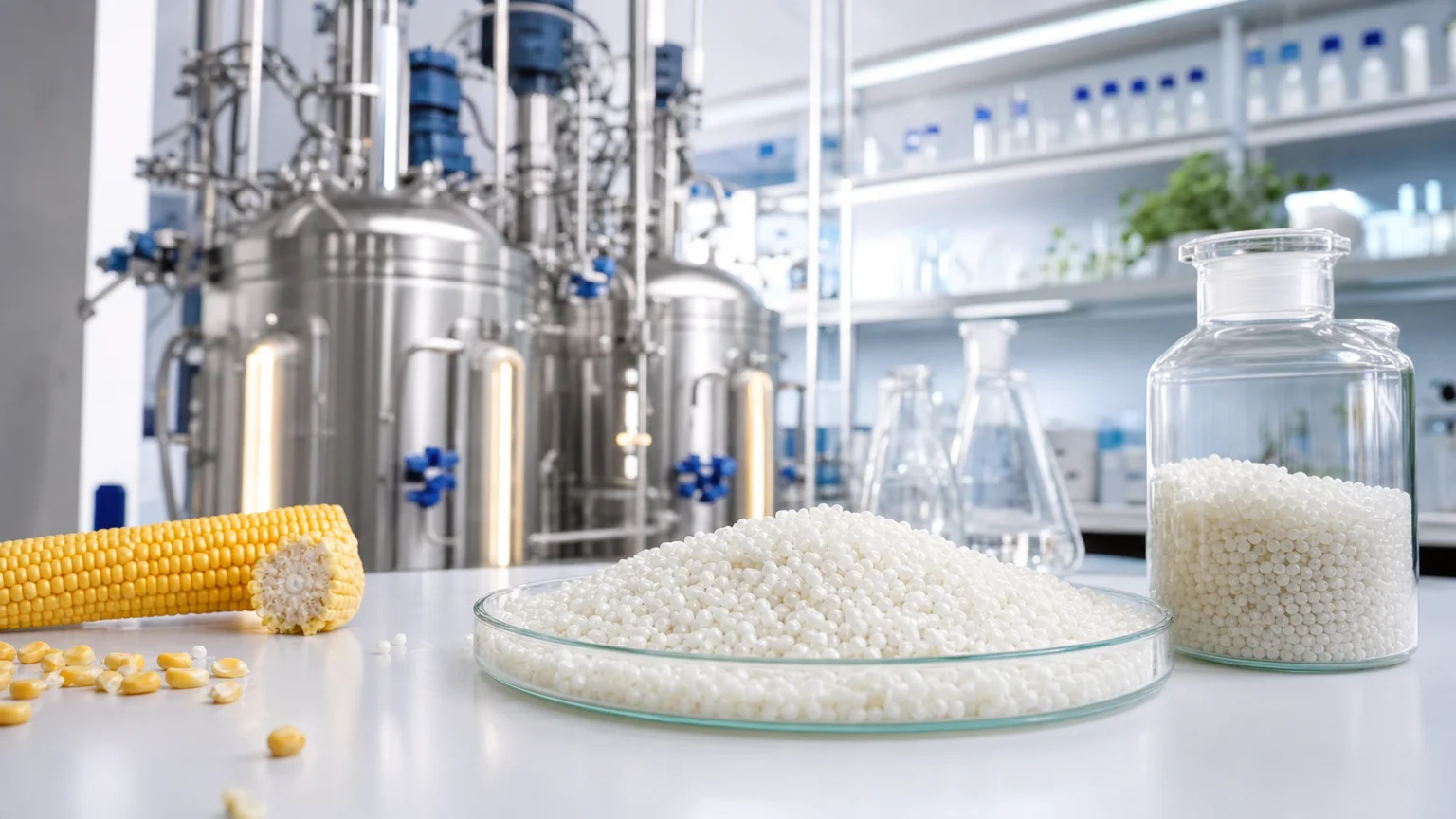
Unlike petroleum-based plastics such as polyethylene (PE), PLA is bio-based. That means its carbon comes from plants, not crude oil. Under the right composting conditions, PLA breaks down into water and carbon dioxide.
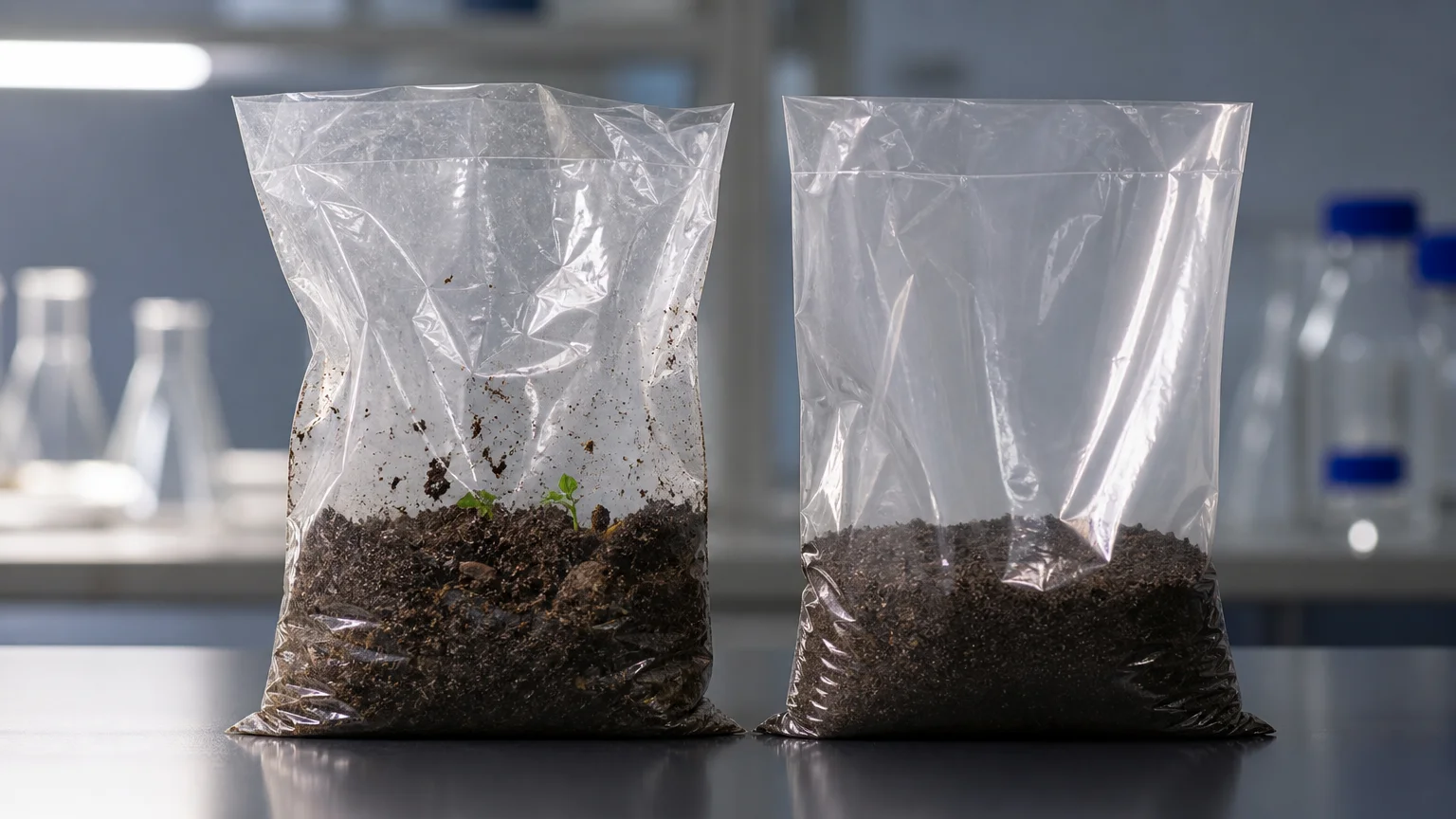
The catch: PLA does not break down in a home compost bin or a landfill. It requires the elevated temperatures of an industrial composting facility — typically above 55°C — to fully decompose within 90 days, as required by standards like EN 13432 and ASTM D6400.
How PLA Is Made: From Corn to Plastic
PLA starts with starch extracted from a crop — usually corn in North America, sugarcane or cassava in Asia. The starch is broken down into simple sugars through enzymatic hydrolysis. Those sugars are then fermented by bacteria to produce lactic acid.
Lactic acid molecules are then chemically linked to form long chains called polylactic acid. The result is a clear, rigid thermoplastic that can be processed with standard plastic equipment — blown into film, injection-molded, or extruded into fibers.
This plant-based origin is what makes PLA attractive for sustainability claims. But it also introduces some key differences from petroleum plastics that buyers need to understand before specifying it.
PLA vs PE: What Changes for Your Products
Most compostable bag and glove buyers come from a PE background. PLA behaves differently in several ways that matter for sourcing decisions.
| Property | PLA | PE (Polyethylene) |
|---|---|---|
| Raw material source | Plant starch (corn, sugarcane) | Crude oil |
| Compostability | Industrial composting required (EN 13432 / ASTM D6400) | Not compostable; landfill or recycling |
| Heat resistance | Low — softens around 60°C | Moderate — handles higher temps |
| Brittleness | More brittle at low temperatures | Flexible across wider temp range |
| Clarity | Naturally clear, glass-like | Clear (LDPE/HDPE) to milky (HDPE) |
| Unit cost | Higher than PE | Lower baseline cost |
| Moisture barrier | Adequate for dry goods; weaker for wet | Good moisture barrier |
The heat resistance point is important. PLA bags stored in a warm warehouse — or left in a delivery vehicle in summer — can deform. Buyers sourcing PLA products for warm-climate markets should confirm that storage and transit conditions stay well below 50°C.
Why PLA Needs Industrial Composting — Not a Home Bin
This is the most common misconception buyers encounter. A bag labeled "compostable" does not mean it will break down in your backyard pile or a household green bin.
PLA degradation requires three conditions working together:
- High temperature — typically above 55°C, sustained for several weeks
- High humidity — to drive hydrolysis of the ester bonds in the polymer chain
- Microbial activity — industrial composting facilities maintain optimized microbial populations
In a home compost heap, temperatures rarely exceed 30–40°C. The PLA bag will sit largely intact for months or years. In a landfill, without oxygen and heat, PLA behaves like a conventional plastic and persists for decades.
This is why the standards matter. EN 13432 (the European standard behind DIN CERTCO and TUV Austria OK Compost marks) and ASTM D6400 (the North American standard behind BPI certification) both define composting conditions as industrial-grade. A product certified to either standard has been tested to break down under those specific conditions — not in ambient environments.
Buyers sourcing compostable products for markets with limited industrial composting infrastructure should think carefully about whether a PLA-based product will actually reach a compatible disposal route. The certification is real; the infrastructure gap is also real. See our guide on whether compostable bags are really compostable for more on disposal route matching.
PLA in Compostable Bags: What Buyers Should Know
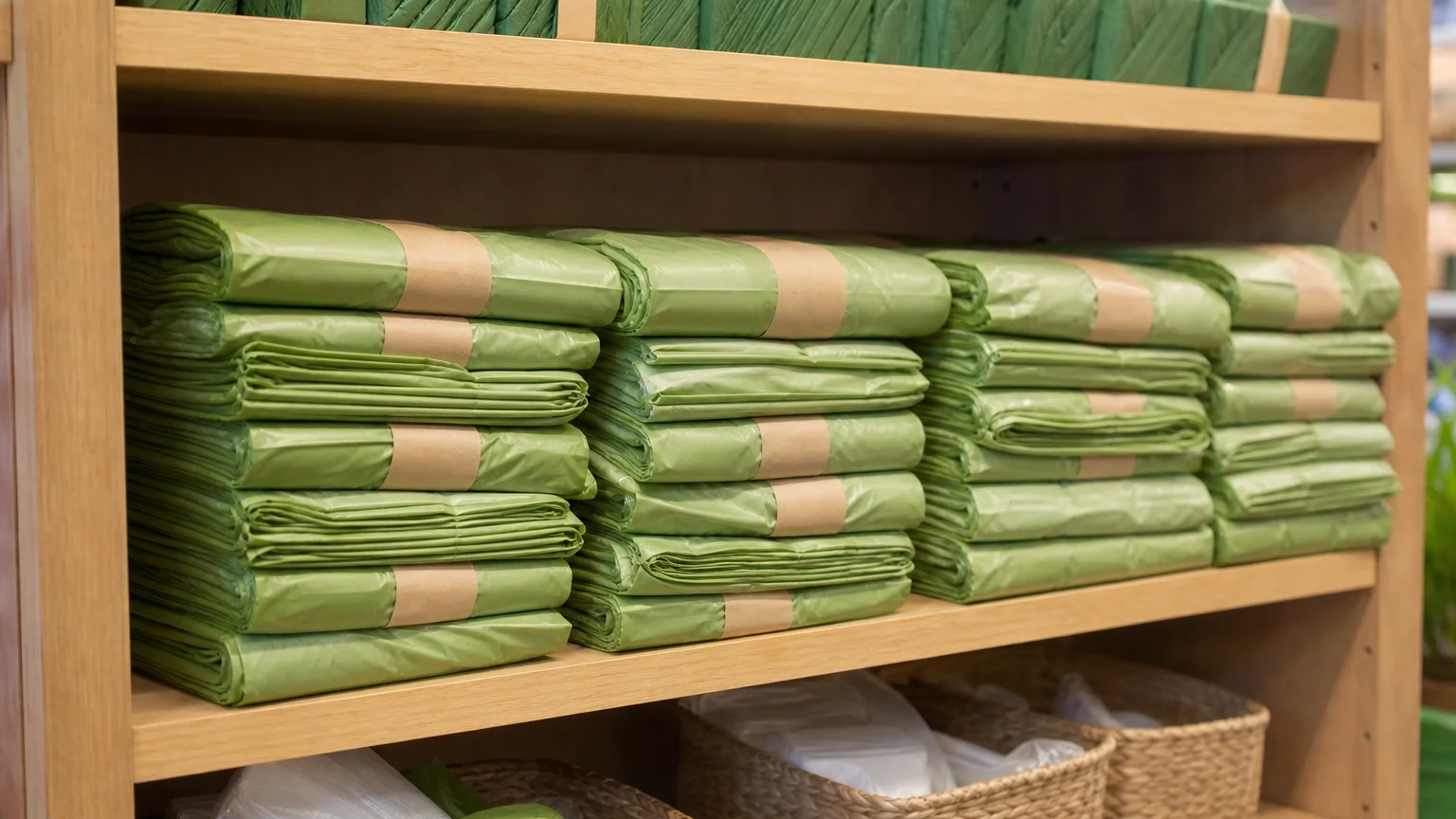
Pure PLA can be too brittle and heat-sensitive for many bag applications. Most compostable bags on the market use PLA blended with other biopolymers — most commonly PBAT (polybutylene adipate terephthalate), a flexible, biodegradable polyester.
A typical compostable bag compound might be 40–60% PLA blended with PBAT. The PLA provides structural strength and natural transparency; the PBAT adds flexibility and tear resistance. This blend is what makes certified compostable garbage bags and shopping bags functional for everyday use.
For buyers, the blend ratio affects:
- Stiffness — higher PLA content = stiffer, more crinkly feel
- Film thickness — blended films can be thinner for the same puncture strength
- Certification scope — the full blend must be tested, not just the PLA component
- Cost — PBAT adds cost; a cheaper blend with more filler may not meet certification standards
When reviewing a supplier's compostable bag certification, confirm that the certificate names the exact product model and includes the blended compound — not just a generic "PLA material" claim.
PLA in Compostable Gloves: A Narrower Role
PLA has a smaller role in compostable gloves than in bags. Gloves require high flexibility and elasticity, properties that PLA alone cannot provide. Compostable glove compounds typically use a proprietary biocompound — such as the blend behind Worldchamp's certified compostable glove line — with PLA or other biopolymers contributing structural elements alongside flexible bio-based elastomers.
Worldchamp has product-specific documents for its compostable disposable gloves. The current BPI sublicense No. 2486563-4, valid through April 30, 2028, lists only WPP-GL001 sold as Planetgards Medium, Large, and X-Large. It does not cover bag products or unlisted glove SKUs.
For a deeper look at what these certification marks cover, see our compostable glove certification guide and the DIN CERTCO vs BPI comparison.
PLA Versus Other Bioplastics: Quick Reference
PLA is not the only bio-based material in the compostable products space. Buyers sometimes encounter PBAT, PHA, TPS (thermoplastic starch), or branded compounds. Here is how they compare at a high level:
| Material | Bio-based origin | Compostability | Key property | Common use |
|---|---|---|---|---|
| PLA | Corn/sugarcane starch | Industrial (EN 13432 / ASTM D6400) | Rigid, clear | Bags, cups, cutlery |
| PBAT | Partially bio-based | Industrial compostable | Flexible, elastic | Film bags (blended with PLA) |
| PHA | Microbial fermentation | Industrial + some home compost grades | Flexible, marine biodegradable | Premium compostable packaging |
| TPS | Starch | Industrial compostable | Low cost, lower barrier | Filler in blends |
| PE (conventional) | Crude oil | Not compostable | Durable, low cost, moisture barrier | Most single-use bags and gloves |
For buyers choosing between single-use PE and compostable options, see our full single-use plastic vs compostable comparison.
What to Ask a Supplier About PLA Compostable Products
A PLA or compostable claim alone is not enough to qualify a supplier or product. Here is what to request before placing a bulk order:
- Certificate name and number — which certification body, which standard, and what the certificate number is (verify it live on the certifier's public database).
- Exact product scope — the certificate must name your specific product model. A glove certificate does not cover bags. A bag certificate does not cover gloves.
- Composting environment scope — industrial only (the common case) or both industrial and home compost (rarer, requires a separate home-compost certification mark).
- Underlying test report — request the third-party test report (from a CNAS-accredited or equivalent lab) that underpins the certificate. Verify the test methods cited match the standard claimed.
- Certificate expiry date — compostable certifications require periodic renewal. Confirm the certificate is current, not expired.
Frequently Asked Questions
What does PLA stand for in compostable products?
PLA stands for polylactic acid. It is a bioplastic polymer made from plant-derived lactic acid, most commonly fermented from corn starch or sugarcane. PLA is the most widely used bio-based material in certified compostable single-use products.
Is PLA the same as biodegradable plastic?
Not exactly. All PLA is bio-based, but "biodegradable" and "compostable" have specific technical meanings. PLA certified under EN 13432 or ASTM D6400 is industrially compostable — it meets a defined disintegration and biodegradation rate under controlled conditions. Standard PE labeled "biodegradable" through additive-based technology is a different category entirely and does not meet the same composting standards. Always look for a named certification mark, not just the word "biodegradable."
Why does PLA need industrial composting?
PLA's ester bonds only hydrolyze (break apart) efficiently at temperatures above 55°C with sustained humidity. Industrial composting facilities maintain these conditions. Home compost heaps, landfills, and marine environments rarely reach these temperatures, so PLA persists in those environments much like conventional plastic.
Can PLA compostable bags be certified for food contact?
Compostability certification (DIN CERTCO, BPI, TUV Austria) is separate from food contact compliance. A compostable bag certified under EN 13432 is not automatically cleared for direct food contact under FDA 21 CFR or EU Regulation No. 10/2011. Food contact compliance requires a separate migration test. Request both documents from your supplier.
Does Worldchamp make PLA-based compostable products?
Worldchamp manufactures compostable gloves and bags with product-specific documentation. The current BPI sublicense No. 2486563-4 is limited to the three listed Planetgards glove SKUs manufactured as WPP-GL001. The compostable bag line is supported by Biodegradable Plastic Bag Inspection Report No. WT20103211073930WT1, not by that BPI sublicense. Review the current documents for the exact scope.
What is the difference between PLA and PBAT in compostable bags?
PLA provides rigidity, clarity, and structural strength. PBAT provides flexibility and tear resistance. Most functional compostable bags blend both — typically 40–60% PLA with PBAT — to balance performance and compostability. The full blend must be certified, not just the PLA component alone. Ask your supplier for the certification scope document that names the exact product model.
Put this guide into a procurement workflow
Use the decision criteria above to narrow the product scope, then Compostable Bags Manufacturing Partner, Compostable Garbage Bags Bulk Supplier, Compostable Shopping Bags Wholesale Supplier, and Compostable Specialty Bag Sourcing. Compare the exact construction and pack instead of approving a material name alone.
When the product direction is clear, discuss the specification with Worldchamp. Share the task, destination, quantity, packaging and evidence requirements so the next review is specific.
Turn the comparison into a sample and document brief
Share the application, market, quantity, pack format and scope of supporting documents. Worldchamp can then respond against a defined product rather than a generic material request.