The Short Answer on What CPE Gloves Are
CPE gloves are disposable gloves made from cast polyethylene, a form of polyethylene film that is thicker and clearer than the basic high-density polyethylene (HDPE) glove most people know. The "C" stands for cast, the process that melts polyethylene resin and rolls it into a soft, stretchy film. The result is a glove that sits between a thin food-grade PE glove and a fitted TPE glove.
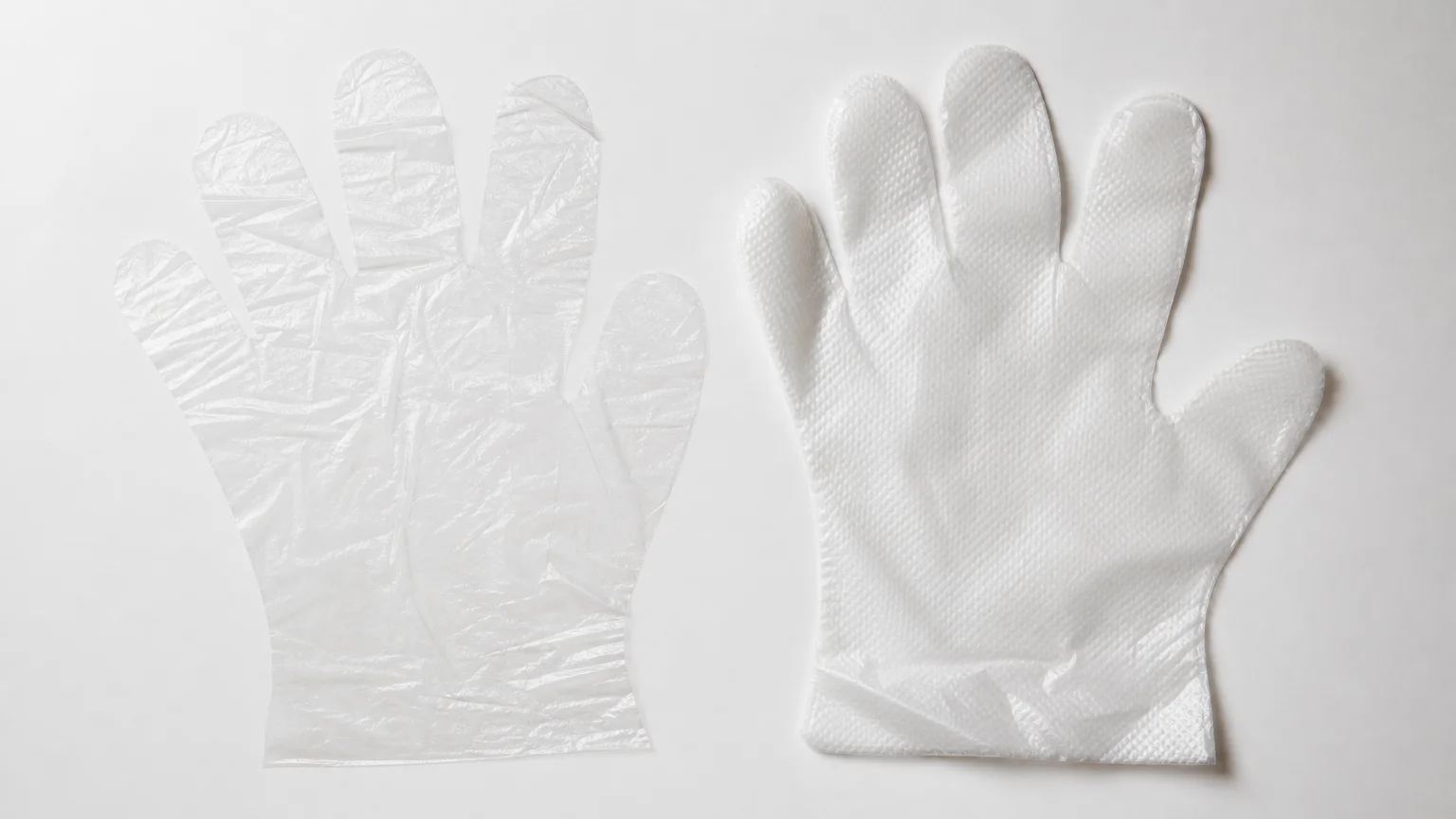
For buyers, the practical takeaway is this. CPE gloves are stronger and more comfortable than a plain HDPE or LDPE glove, yet they cost less than a TPE or POE glove. They are a mid-tier workhorse for light cleaning, food handling, beauty work, and short wear-time tasks where you need more strength than a basic PE glove gives.
CPE Gloves Explained: Buyer Guide
The question "what are CPE gloves" really has two layers. Buyers ask about the material, and they also ask about how to source it well. So this guide splits the answer the same way. First we explain what CPE is and how it differs from HDPE, LDPE, TPE, and POE. Then we walk through the buying factors that actually matter for importers and distributors.
CPE belongs to the polyethylene family. According to Wikipedia, Polyethylene, polyethylene is the most commonly produced plastic, formed by polymerizing ethylene into long chains. CPE uses that same base resin, but the cast film process gives it a softer hand, better clarity, and more stretch than the stiff HDPE film used in budget food gloves.
How CPE Fits in the Polyethylene Glove Family
It helps to place CPE on a simple scale. At one end sits HDPE, the thin, crinkly, transparent glove used for fast food prep and a single short task. Next comes LDPE, a little softer and clearer. CPE sits above both: thicker, embossed for grip, and flexible enough to pull on without tearing. TPE and POE are further along, with real elasticity and a closer fit. You can read a full TPE gloves vs PE gloves comparison to see that next step up.
The embossed texture on a CPE glove matters more than buyers expect. The raised pattern is not decoration. It channels liquid away from the palm and adds grip on wet or oily surfaces. That is why CPE gloves are common in cleaning, food handling, and beauty tasks where a plain PE glove would slip.
Key Factors to Compare
When importers compare CPE gloves from different suppliers, five factors separate a good buy from a costly mistake. Use these as your check list before you place an order.
1. Thickness and Weight
CPE gloves are sold by gram weight per glove, not by mil thickness alone. Common weights run from about 3 grams up to 6 grams or more. A 3 to 4 gram glove suits light food prep and short tasks. A 5 to 6 gram glove, or a long-cuff CPE glove, suits cleaning, dishwashing, and jobs that need arm protection. Always confirm the weight in writing, because two gloves can look identical and perform very differently.
2. Embossing and Grip
Check the embossing pattern. A clear diamond or pebble emboss on both sides gives better grip and lets the glove be worn on either hand. Single-sided embossing is cheaper but less safe on wet surfaces. For cleaning and food tasks, ask for double-sided embossing.
3. Cuff Length
Standard CPE gloves end at the wrist. Long-cuff CPE gloves extend up the forearm and protect against splashes, which matters in cleaning, agriculture, and slaughterhouse work. Compare the specifications and packaging options for standard CPE gloves and long-cuff CPE gloves before choosing the format for your task.
4. Food-Contact Compliance Framework
CPE is a polyethylene material, so the same food-contact frameworks that cover PE apply. In the United States, polyolefin food-contact use falls under 21 CFR Part 177, the FDA indirect food additive polymers rule. In the EU, the framework is Regulation (EU) No 10/2011 on food-contact plastics. A compliance framework is not the same as a product certificate. Worldchamp's CPE gloves are manufactured in a BRCGS Consumer Products and ISO 9001 certified facility, and food-contact migration testing for a target market is arranged on request. See our PE gloves food safety guide for the same rule applied to the wider PE family.
5. Latex-Free and Allergen Status
CPE gloves contain no natural rubber latex, so they carry no latex protein allergy risk. This is a real advantage over latex gloves in food and beauty settings where customers may be sensitized. For buyers building a latex-free product policy, CPE, TPE, and POE all qualify.
Product and Material Recommendations
Different jobs call for different points on the polyethylene scale. The table below maps the common tasks to the material that fits best, so you can build a glove mix rather than buying one type for everything.
| Task | Best material | Why it fits |
|---|---|---|
| Fast food prep, single short task | HDPE / LDPE | Cheapest, food-grade, meant for one quick use and discard |
| General food handling, light prep | CPE | Thicker than HDPE, embossed grip, resists tearing during prep |
| Dishwashing, surface cleaning | CPE long glove | Extended cuff protects the forearm from hot water and detergent |
| Hair coloring, beauty work | CPE or TPE | Latex-free, grips tint bowls, color does not bleed through easily |
| Longer wear, close fit needed | TPE / POE | Real elasticity and snug fit for sustained tasks |
If your business spans several of these tasks, you do not need to pick one glove. Most distributors order a small mix: a thin HDPE or LDPE glove for high-volume food prep, a CPE glove for the middle tasks, and a TPE or POE glove for the demanding ones. Browse the disposable gloves hub to see the full range in one place.

When to Choose CPE Over TPE
Pick CPE when cost per glove matters more than fit. CPE is loose-fitting by design, like all polyethylene gloves, so it is not the right choice for fine precision work. Pick TPE or POE when the worker wears the glove for a long stretch and needs a closer, more elastic fit. The trade-off is price: TPE and POE cost more per unit than CPE.
When CPE Is the Wrong Choice
CPE is not a chemical-resistant glove. It is a light physical-barrier glove for food, cleaning, and beauty use. Do not spec it for handling solvents, strong industrial chemicals, or chemotherapy drugs. For lab and chemical work, a dedicated CPE long glove tested against specific chemicals, or a different material entirely, is the safer call.
Worldchamp Manufacturing Context
Worldchamp manufactures CPE gloves on the same automated line that produces its PE, TPE, and POE gloves. The 12,000 sqm facility runs a Class 100,000 clean workshop and reports a defect rate below 0.1 percent (published reference; scope to be confirmed), with retained samples kept for every batch so orders stay traceable end to end.

Because CPE shares a production line with the other polyethylene gloves, you can bundle formats in one order. A single shipment can hold standard short gloves, extended-length gloves, and dispensing and retail glove formats together. That cuts logistics cost versus sourcing each format from a different factory.
Next Steps for Procurement
Once you know CPE is the right tier for your tasks, the buying path is short. Follow these four steps to move from interest to a confirmed order.
- Define the task and wear time — list every job the glove will do and how long each worker wears it, so we can confirm weight and cuff length.
- Confirm the compliance framework — tell us your target market so we arrange the right food-contact documentation for clearance.
- Request a sample — get a physical CPE sample in about 7 days to test grip, fit, and tear strength on your real line.
Ready to source? Contact Worldchamp with your task list and target market, and we will send a spec sheet, sample plan, and quote.
Frequently Asked Questions
What does CPE stand for in gloves?
CPE stands for cast polyethylene. It is a polyethylene film made by a cast process, which produces a thicker, clearer, and softer glove than basic HDPE or LDPE film.
Are CPE gloves food safe?
CPE is a polyethylene material, so it falls under the same food-contact frameworks as other PE gloves, such as FDA 21 CFR Part 177 in the US and EU Regulation No 10/2011. Worldchamp manufactures CPE gloves in a BRCGS Consumer Products and ISO 9001 certified facility, and arranges market-specific food-contact migration documentation on request.
Are CPE gloves latex free?
Yes. CPE gloves contain no natural rubber latex, so they carry no latex protein allergy risk. They are a good fit for food and beauty settings where latex-free policy matters.
What is the difference between CPE and TPE gloves?
CPE is a cast polyethylene film: thicker and stronger than basic PE, but still loose-fitting. TPE is a thermoplastic elastomer with real elasticity and a closer fit. CPE costs less and suits short tasks; TPE costs more and suits longer, closer-fit wear.
What MOQ and lead time should I plan for CPE gloves?
Pre-production sample timing is approximately seven days as a reference. Confirm the current sample and bulk-production schedule after the specification, packaging, artwork, and sample are approved, and state in writing whether the schedule starts from deposit, sample approval, or final artwork approval.
Turn the comparison into a sample and document brief
Share the application, market, quantity, pack format and scope of supporting documents. Worldchamp can then respond against a defined product rather than a generic material request.