The Short Answer on PE Gloves and Food Safety
Yes, polyethylene (PE) gloves are widely used for food handling. They are a low-cost, latex-free barrier for short, low-risk food tasks. But food safety is not a single stamp. Real food safety depends on the right glove type, correct wear time, hand washing, and food-contact compliance paperwork for your market.
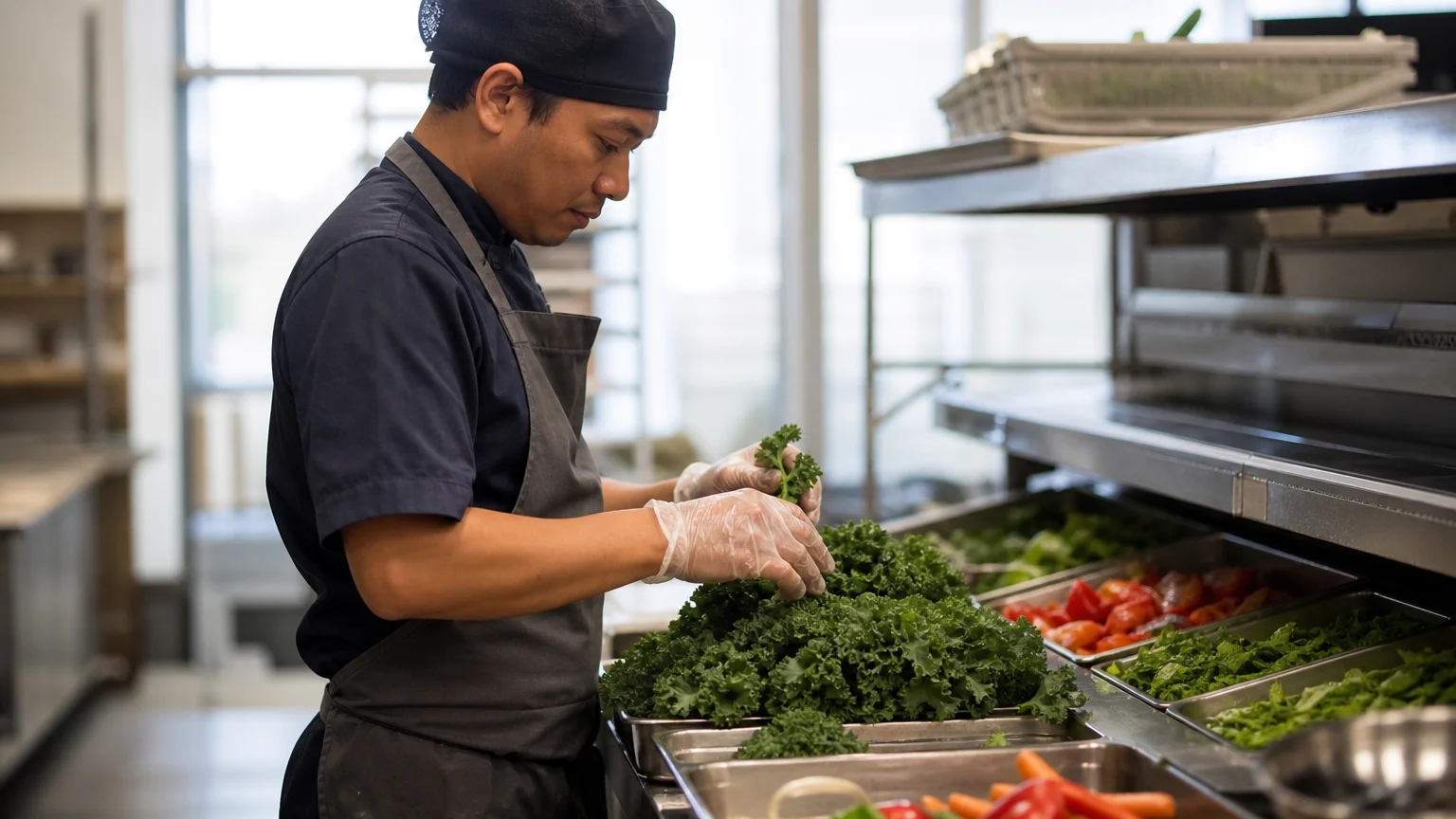
This guide covers what buyers actually need. It explains the limits of PE gloves, how PE compares with TPE and CPE for food use, the compliance frameworks that matter, and how to qualify a supplier. For a deeper material breakdown, see our TPE vs PE gloves comparison.
Can PE Gloves Touch Food? The Compliance Boundary
PE is a polyolefin. As a base material it is generally accepted for food contact. The Wikipedia, Polyethylene entry notes its broad use in food packaging and films. In the United States, food-contact polymers fall under 21 CFR Part 177 on indirect food additives.
One boundary matters more than any other. A facility quality certificate is not a product food-contact test. Our BRCGS Consumer Products and ISO 9001 certificates confirm the factory runs a controlled quality system. They do not, by themselves, prove that a specific glove passes migration testing for a given market.
What Food Safe Really Requires
For most markets, true food-contact compliance means third-party migration testing under a named framework. The two frameworks buyers cite most often are FDA 21 CFR in the United States and EU No. 10/2011 in the European Union. Good manufacturing practice for human food is set out in 21 CFR Part 110. Food safety programs such as HACCP then govern how gloves fit into a larger process.
For Worldchamp PE gloves, the correct statement is: manufactured in a BRCGS Consumer Products and ISO 9001 certified facility, widely used in food handling applications. If you need FDA 21 CFR or EU No. 10/2011 migration documents for a specific market, ask with your target country and we coordinate the right paperwork. We do not claim a food-contact test we do not hold.
How Long Can a Food Worker Wear Gloves?
This is one of the most searched questions, and the answer is shorter than buyers expect. Single-use PE gloves should be changed every 30 to 60 minutes of continuous use, and immediately whenever the task changes.
Continuous use is the key word. A glove worn for one task is not meant for the next. The four standard change points are:
- Task change — moving from raw meat to ready-to-eat food, or from food to trash.
- After 30 to 60 minutes — even within one task, to limit bacterial growth inside the glove.
- After any contamination — a tear, a sneeze, or touching the face or hair.
- Between batches — at the start of each new production batch or shift.
PE gloves are thin and low-cost, which is exactly why frequent changes are affordable. They are not built for long, dexterous work. If a worker needs a glove for hours of fine handling, a stronger material fits better.
Do You Have to Wear Gloves When Handling Food?
It depends on the country and the food type. In many rules, the requirement is no bare-hand contact with ready-to-eat food. Gloves are one way to meet that rule. Tongs, deli paper, and other barriers also qualify. So gloves are common, but they are not the only legal path.
For raw food that will be cooked, bare-hand contact is often allowed because cooking kills pathogens. The strict rules target ready-to-eat food that will not be cooked again. That is where single-use PE gloves earn their place in a food safety plan.
One rule is universal: gloves never replace hand washing. Workers must wash hands before putting gloves on, and again after removing them. A dirty hand inside a clean glove still contaminates the food.
PE vs TPE vs CPE: Which Glove Fits Your Food Task?
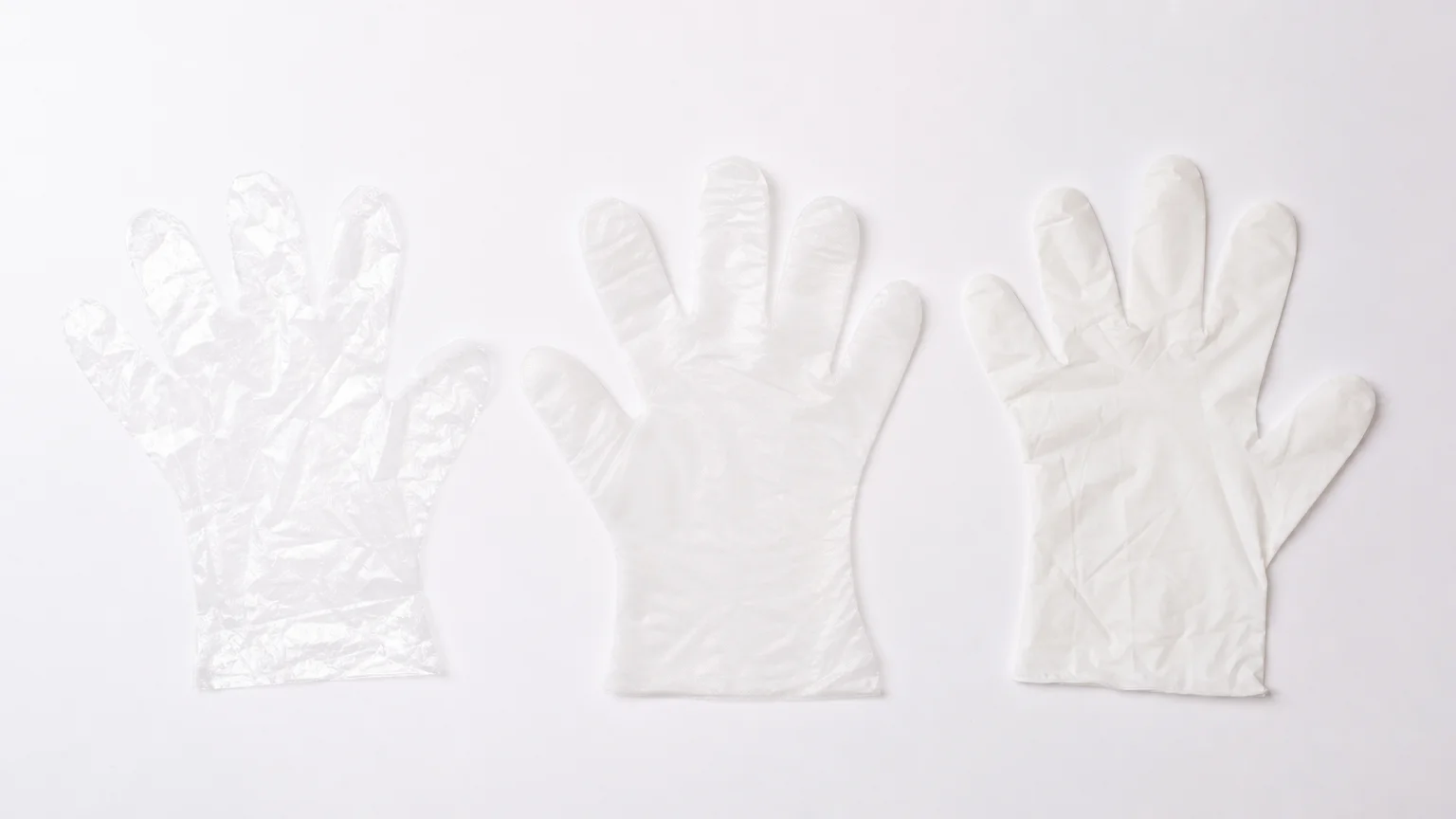
Not all PE family gloves behave the same. Food buyers usually choose among three forms. The right pick depends on wear time, dexterity, and budget.
| Glove type | Best food task | Wear time | Cost |
|---|---|---|---|
| HDPE / LDPE glove | Short, low-risk tasks; sandwich assembly; quick line changes | 15 to 30 min | Lowest |
| TPE glove | Longer food prep needing stretch and fit; deli counter | 1 to 2 hours | Mid |
| CPE glove | Heavier, wetter tasks; washing produce; cleaning around food | 30 to 60 min | Low to mid |
When to Pick Each One
- Choose HDPE / LDPE for high-volume, short-contact food lines where frequent glove changes are the norm.
- Choose TPE when workers need a glove that lasts an hour or more and stays fitted, with food-contact test paperwork.
- Choose CPE for wet or heavier food tasks where a textured, thicker film resists snags.
Browse the full range on our disposable gloves hub, or jump to specific forms: standard short gloves, extended length gloves, and dispensing retail glove formats.
Why PE Glove Material Matters for Food Safety
Food buyers sometimes ask why material choice changes safety outcomes. The answer is durability. A glove that tears mid-task fails as a barrier. PE film can split if it is too thin or if the worker grips a sharp edge. Each tear is a contamination event.
That is why we hold an under-0.1% defect rate standard (published reference; scope to be confirmed) across production batches, with retained samples for every lot. Low defect rates mean fewer in-use failures, which means fewer food safety incidents downstream. Material consistency is not just a spec; it is a food safety control.
For longer tasks where PE would tear, our POE vs nitrile comparison shows why POE, our 2024 industry-first material, bridges the gap between PE low cost and nitrile durability.
Worldchamp Manufacturing Context for Food Buyers
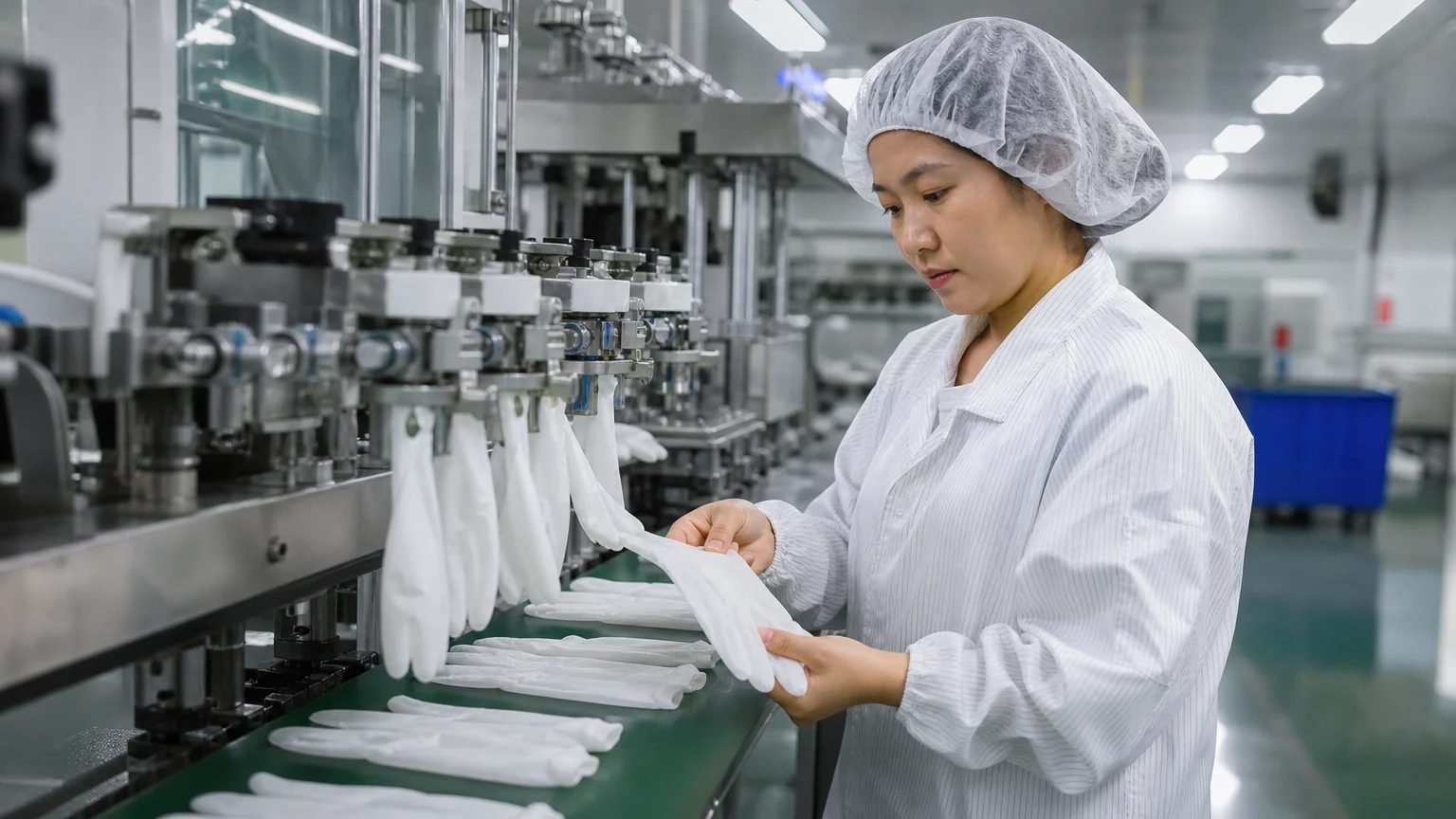
Food buyers care about more than the glove. They need a supplier who can hold quality across large volumes and back it with documents. Worldchamp runs 350 tons per month capacity (about 20 tons per day) from the 12,000 m² Huizhou plant. The Class 100,000 clean workshop keeps the production environment controlled.
For food-specific compliance, the buyer journey is: confirm target market, request the matching framework documents, approve a sample, then place the bulk order. See our how to choose disposable gloves guide for the full sourcing path.
Procurement Action Checklist
- Define the food task — note wear time, dexterity needs, and whether the food is ready-to-eat or raw.
- Pick the material — HDPE/LDPE for short tasks, TPE for longer fit, CPE for wet or heavy work.
- Request compliance documents — name your target market and ask for the matching FDA 21 CFR or EU No. 10/2011 paperwork.
Frequently Asked Questions
Are PE gloves food safe?
PE is widely accepted for food contact as a base material, and PE gloves are used in food handling worldwide. Food safety depends on more than material. It needs the right glove type, short wear times, hand washing, and food-contact compliance paperwork for your market. Worldchamp PE gloves are manufactured in a BRCGS Consumer Products and ISO 9001 certified facility. For market-specific migration documents, ask with your target country.
How long can a food worker wear disposable gloves?
Single-use PE gloves should be changed every 30 to 60 minutes of continuous use, and right away whenever the task changes or the glove is contaminated. PE gloves are thin by design for frequent, low-cost changes. They are not meant for hours of continuous wear.
Do you have to wear gloves when handling food?
Rules vary by country, but the common requirement is no bare-hand contact with ready-to-eat food. Gloves are one accepted way to meet that rule. Tongs and deli paper also qualify. For raw food that will be cooked, bare-hand contact is often allowed. Gloves never replace hand washing before and after use.
Which is better for food handling: PE or TPE?
Choose the glove by task, wear time, fit, change frequency, and the food-contact evidence required in the destination market. PE suits frequent short tasks, while TPE or CPE may offer more stretch or strength; approve the final choice against a matched sample and product-specific documentation.
What compliance documents should I ask a PE glove supplier for?
Request the current ISO 9001 and BRCGS factory-system certificates, then request product- and market-specific evidence for the proposed SKU, such as the applicable food-contact migration or material test report. Verify the holder, scope, validity, product identity, and target market instead of treating a factory certificate as product approval.
Put this guide into a procurement workflow
When the product direction is clear, discuss the specification with Worldchamp. Share the task, destination, quantity, packaging and evidence requirements so the next review is specific.
Turn the comparison into a sample and document brief
Share the application, market, quantity, pack format and scope of supporting documents. Worldchamp can then respond against a defined product rather than a generic material request.